The Public Examinations (Prevention of Unfair Means) Amendment Bill, 2026, will be introduced in the Lok Sabha on Monday. It aims to strengthen the anti-paper leak law with provisions for fast-track courts, time-bound probes, and enhanced punishments.
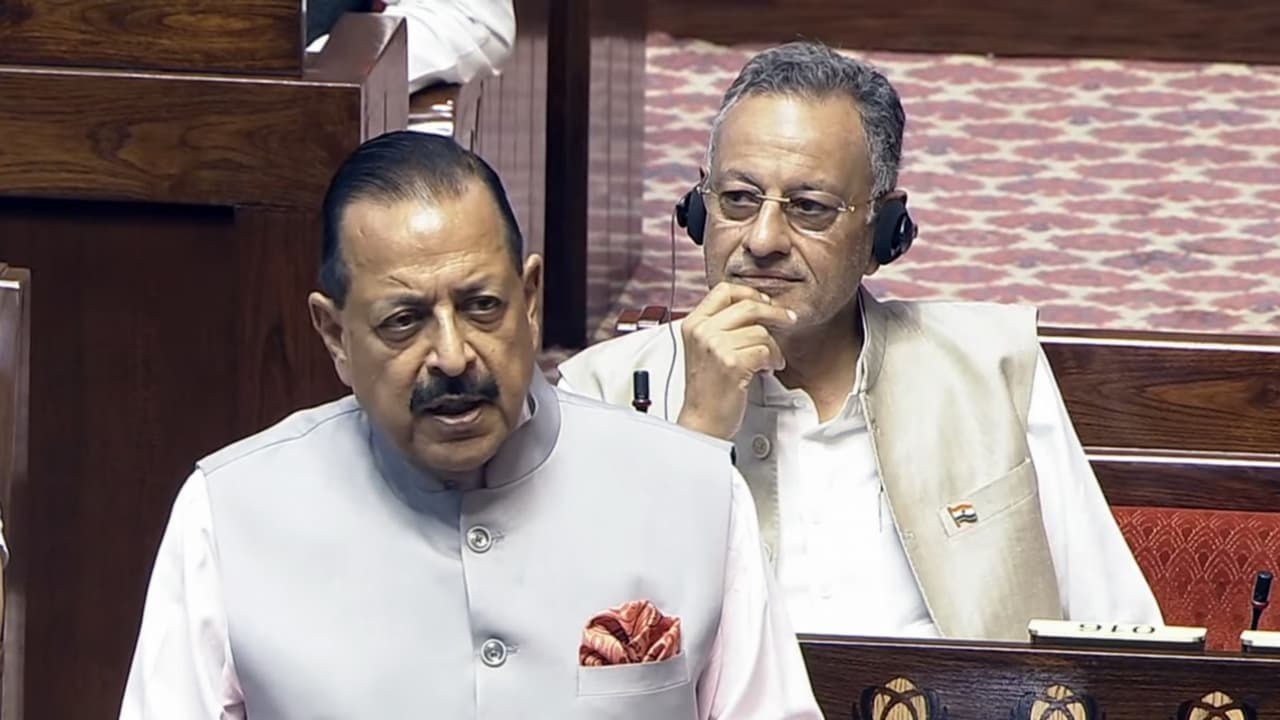
The Public Examinations (Prevention of Unfair Means) Amendment Bill, 2026, will be introduced in the Lok Sabha on Monday. Minister of State for DoPT Jitendra Singh will move the Bill in the House.
The discussion on the Bill is likely to be held for four hours, as decided at the Business Advisory Committee (BAC) meeting, sources told ANI. The NDA has lined up several young MPs to speak on the Bill. From the BJP, Bansuri Swaraj and Tejasvi Surya will participate in the discussion. Other MPs who are expected to speak include JDU’s Alok Kumar Suman, TDP’s Lavu Sri Krishna Devarayalu, Shiv Sena’s Shrikant Shinde, NCP’s Sunil Tatkare, Apna Dal’s Anupriya Patel and LJP (Ram Vilas)’s Arun Bharti. From the allies, Sharmila Sarkar and Mitali Bagh will also speak.
Key Amendments Proposed
The Bill aims to strengthen provisions against unfair means in public examinations. The Central government has proposed seven key amendments to the Public Examinations (Prevention of Unfair Means) Act, 2024, aimed at strengthening the anti-paper leak law through time-bound investigations, fast-track trials, enhanced punishments and a stronger enforcement framework.
The proposed amendment Bill is likely to be tabled in Parliament on Monday, sources said. The bill has been circulated for introduction in the Lok Sabha. According to sources, the amendments seek to expedite the investigation and trial of offences related to public examinations while enhancing accountability and deterrence against paper leaks and examination malpractices.
One of the key proposals empowers State Governments and Union Territory Administrations to designate any Court of Session as a Special Fast Track Court to try offences under the Act.
The proposed amendments also mandate that proceedings in such courts be conducted on a day-to-day basis and that trials be completed within three months from the date of filing of the chargesheet.
The Centre has also proposed empowering the Central Government to constitute a Special Task Force (STF) to investigate offences under the Act whenever required. To ensure speedy investigations, the Bill proposes that probes into offences under the Act be completed within two months.
Another amendment empowers State Governments and Union Territory Administrations to appoint one or more Special Public Prosecutors for conducting cases under the Act. The proposed legislation also seeks to enhance the terms of imprisonment and fines for offences committed under the Act.
Additionally, the Bill provides for an appeal mechanism under which appeals against any judgment, sentence or order would lie before a Division Bench of the High Court and are proposed to be disposed of within three months of admission.
Background: NEET Protests and Cabinet Approval
The proposed amendments come amid intensified nationwide protests over the alleged NEET-UG paper leak and examination irregularities, with student groups and Opposition parties demanding greater accountability and reforms in the examination system.
On Friday, the Union Cabinet approved the proposed amendments to the Public Examinations (Prevention of Unfair Means) Act, 2024, to strengthen the anti-paper leak law, even as Parliament witnessed continued disruptions over the NEET issue, sources said.
The move follows Prime Minister Narendra Modi’s late-night video message on X, in which he assured the country that stricter action would be taken against paper leaks and announced that the Union Cabinet would take up the draft amendment Bill. The proposed changes are aimed at strengthening the legal framework to prevent unfair means in public examinations and enhancing the transparency, fairness and credibility of the country’s examination system, sources added.
The legislative push comes after a complete washout of the ongoing Monsoon session of Parliament, which commenced on July 20, as Opposition parties and student groups maintained unrelenting pressure on the Centre over paper leaks.
Overhauling the Original 2024 Framework
The proposed legislation seeks to significantly overhaul the original 2024 framework by instituting strict time bounds for both investigations and judicial proceedings.
State Governments and Union Territory Administrations will be empowered to designate Courts of Session as Special Fast Track Courts dedicated exclusively to trying offences under the Act. Proceedings in Special Fast-Track Courts must be conducted on a day-to-day basis, with trials mandated to conclude within three months from the date the chargesheet is filed.
The Centre retains the authority to constitute a dedicated Special Task Force to handle high-stakes or cross-state examination fraud. Investigations into offences under the Act must be completed within two months to prevent procedural delays.
State Governments and UT Administrations will be authorised to appoint specialised legal counsel specifically for prosecuting examination malpractices.
Enhanced terms of imprisonment and heavier financial penalties for individuals, coaching centres, and service providers found guilty of organised paper leaks.
The passage of the 2026 Amendment Bill will serve as a crucial test for the Centre as it attempts to restore institutional credibility, safeguard the future of competitive exam aspirants, and rebuild public trust in national testing agencies.
PM Modi Announces High-Powered Task Force
Meanwhile, a day after the resignation of Dharmendra Pradhan as education minister, Prime Minister Narendra Modi announced the formation of a high-powered task force to recommend comprehensive reforms to the examination system in India.
“Friends, for the future of students, the government of India is continuously taking several steps. Those who played with the future of students are rotting in jails. We have established fast-track courts; in Parliament too, tomorrow we are moving towards making a new law with tough provisions. But we have to think of the future. Our education system becomes reliable, transparent and uses technology to the maximum,” the PM said on social media. (ANI)
(Except for the headline, this story has not been edited by Asianet Newsable English staff and is published from a syndicated feed.)