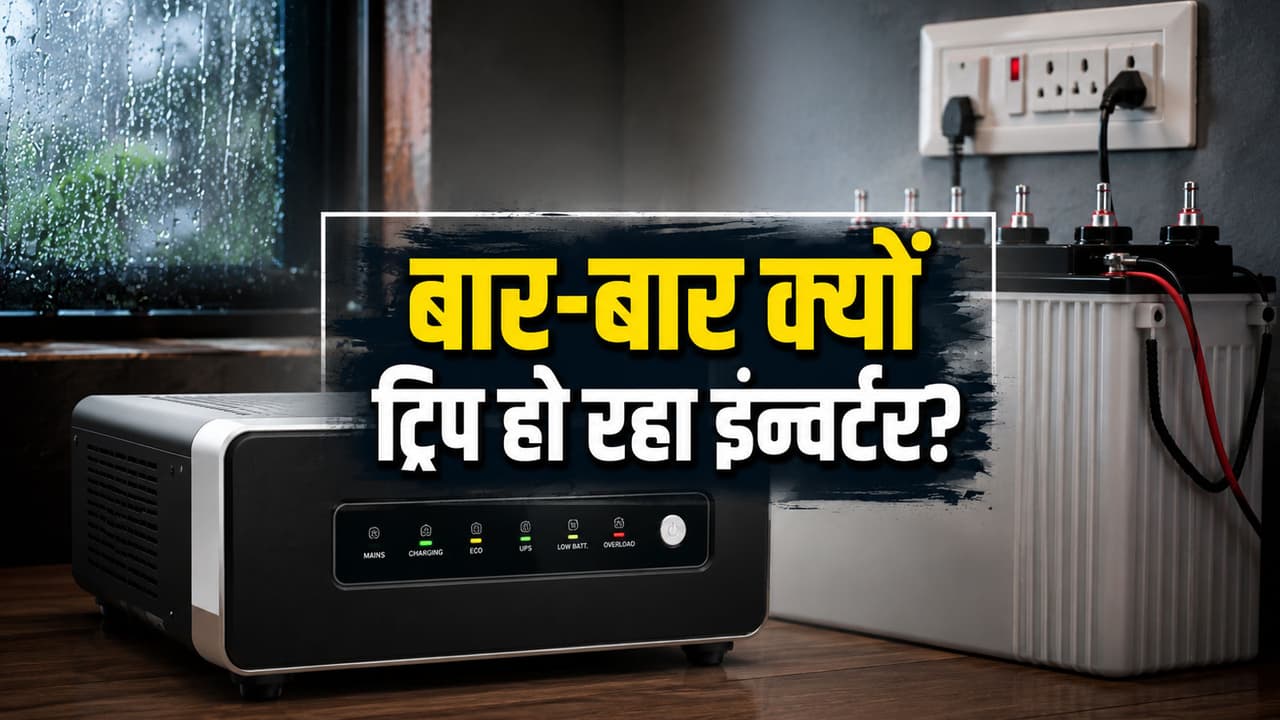
Inverter Tripping Problem: Frequent tripping of the inverter is a common problem during the rainy season. Know what is the reason for this and how it can be kept right without spending a lot.
Inverter Maintenance Tips: As soon as the rains start, a problem is often seen in many houses. The inverter turns on as soon as the power goes off, but after some time it trips or starts beeping again and again. People think that the battery has gone bad, whereas in many cases the cause is just a small fault. If your inverter is also repeatedly tripping or showing overload in this rain, then there is no need to worry. For this, there is no need to call a mechanic, spend money or buy a new inverter. You can fix this problem yourself in just 2 minutes. Let us know what that problem is and how to fix it…
What causes inverter trip?
During rainy days, humidity or moisture in the air increases a lot. Due to this moisture, a blue or white layer gets deposited on the terminals of the inverter battery, which we call ‘carbon deposition’ or ‘sulfation’. When this carbon accumulates too much, the supply of current from the battery to the inverter does not reach properly. Due to which as soon as the light goes off, the inverter is unable to take the load and immediately trips by showing ‘low battery’ or ‘overload’.
How to fix inverter problem
1. Turn off the inverter
Before starting any work, remove the main switch (Power Plug) of the inverter from the board and also turn off the power button on the front of the inverter.
2. Clean carbon with hot water
Take some lukewarm water in a cup. Now take an old toothbrush, dip it in water and scrub off the white-blue carbon deposited on both the terminals of the battery. As soon as hot water is added, the carbon will immediately melt and become clean. Keep in mind that pour water only on the terminals and not on the inverter machine.
3. Wipe with a dry cloth and apply petroleum jelly.
After the terminals are cleaned, wipe them thoroughly with a dry cotton cloth to ensure that there is no moisture. Now, to prevent carbon from getting stuck again, apply a little petroleum jelly or grease on those pegs. By doing this, the connection between your battery and inverter will become as strong as new and the problem of tripping will go away immediately. Now you can plug it back in and turn on the inverter.
2 ways to keep your inverter working properly in the rain
check distilled water
Battery water often reduces after summer. If the water level indicator (green-red floating indicator) has gone down, top up it with distilled water immediately. Do not add tap water or filtered water even by mistake.
dry out moisture from plug socket
Sometimes due to dampness in the wall due to rain, moisture comes into the socket in which the main plug of the inverter is installed, which causes sparking. Remove the plug, clean it with a dry cloth and reinstall it.
Don’t make this mistake regarding inverter
During monsoon i.e. rain, do not make the mistake of running heavy appliances like refrigerator, geyser or water heater on the inverter. In this season, the voltage often fluctuates, due to which the risk of the inverter fuse blowing increases.
FAQ
1. Why does the inverter trip again and again in the rain?
Moisture, loose connection, corrosion on the battery terminals or overload can be common causes.
2. Does every trip mean the battery is bad?
No. Sometimes this problem occurs just due to lack of connection or maintenance.
3. Should the inverter be kept off during rain?
No. Just keep it in a dry and ventilated place and protect from water.
4. How often should the inverter be serviced?
Generally it is considered good to get service done once every 6 to 12 months.
Disclaimer: The information given in this article is based on simple home remedies and technical facts available on the internet. The model, company and condition of inverter and battery may be different in every house. Be careful while doing any work related to electricity or inverter and do not forget to switch off the main switch. If the problem is serious or is not resolved by these measures, contact a certified electrician or the company’s service center.