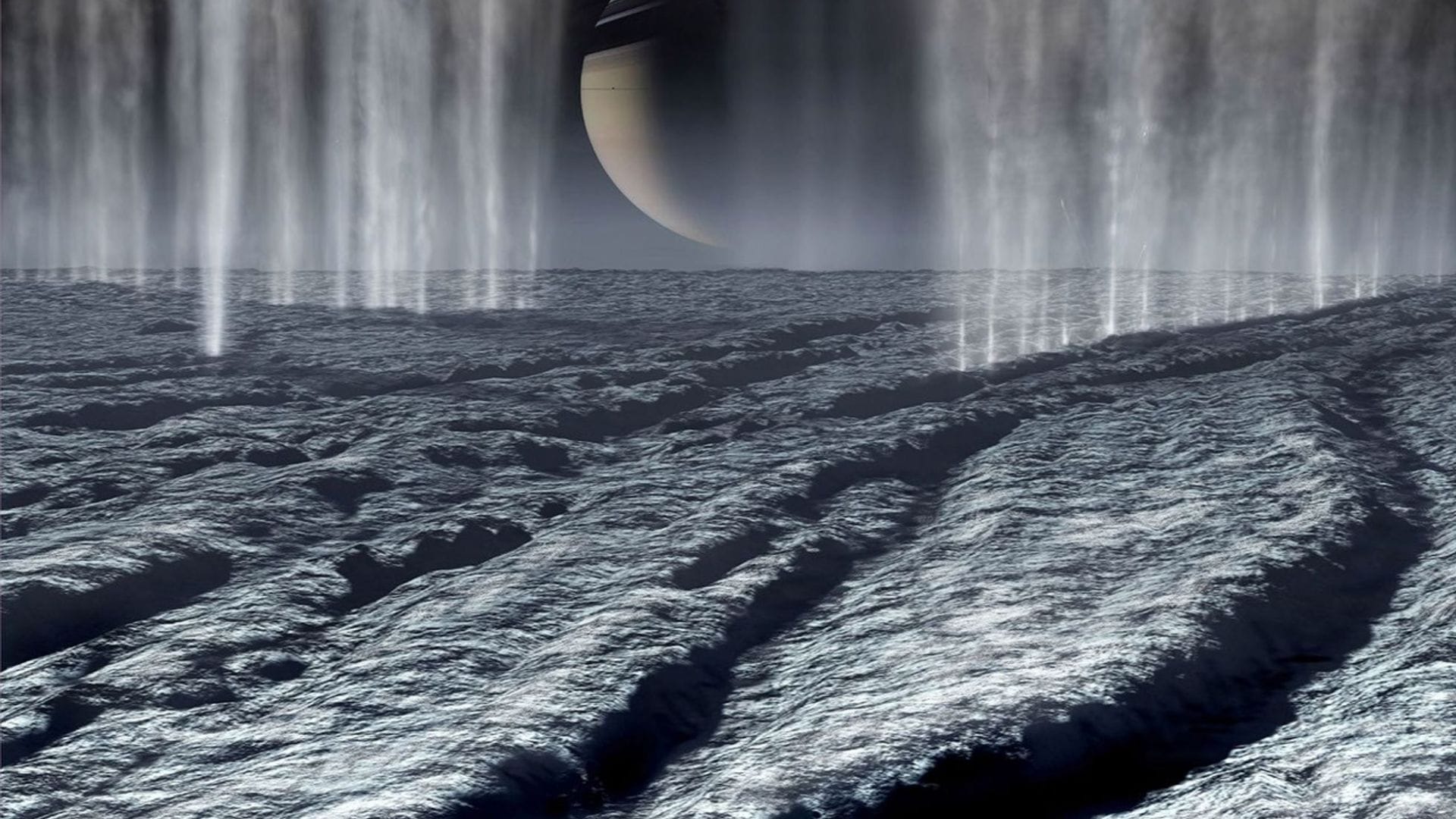
New Delhi: Researchers collected samples from carbon-dioxide-driven cold-water geysers in the Utah desert, known as the soda pop geysers to better understand how material changes during transport from subsurface reservoirs to plume ejecta. The research identifies these geysers as reliable Earth analogues for plume eruptions on ice ocean worlds such as Saturn’s moon Enceladus and Jupiter’s moon Europa. Both of the gas giants are suspected to harbour multiple ‘ice moons’ with shells of ice kilometres in thickness covering global subsurface saltwater oceans. Plumes rising up to the surface through cracks in the ice can provide a crucial route for exchange of material between the surface and the subsurface oceans.
The same mechanisms operating in the cold-water geysers in eastern Utah are likely to drive plume activity at a region close to the South Pole of the ice moon of Enceladus, and may contribute to carbon dioxide-rich deposits recently discovered on the surface of Europa. The plumes from these moons are key targets for future sampling and analysis, because they provide access to the subsurface oceans, and can indicate their potential habitability. The alternative are expensive and complex missions that would require to drill down into the kilometres-thick ice shell, to access the subsurface oceans.
Interpreting observations by spacecraft
In 2024, the team sampled effluent from the Crystal Geyser and the smaller Champagne Geyser in Green River for chemical and biological analysis. The results showed that the discharge volume, eruptive energy, and proximity to the subsurface reservoir influenced the composition of the plume ejecta and surface deposits. Compositional differences, including in acidity, expired between the ejecta and measurements of the reservoir. The research will better help interpret the findings from a pair of upcoming missions that can sample plumes from ice moons, NASA’s Europa Clipper mission, and ESA’s Jupiter Ice Moons Explorer. A paper describing the research has been published in Astrobiology.