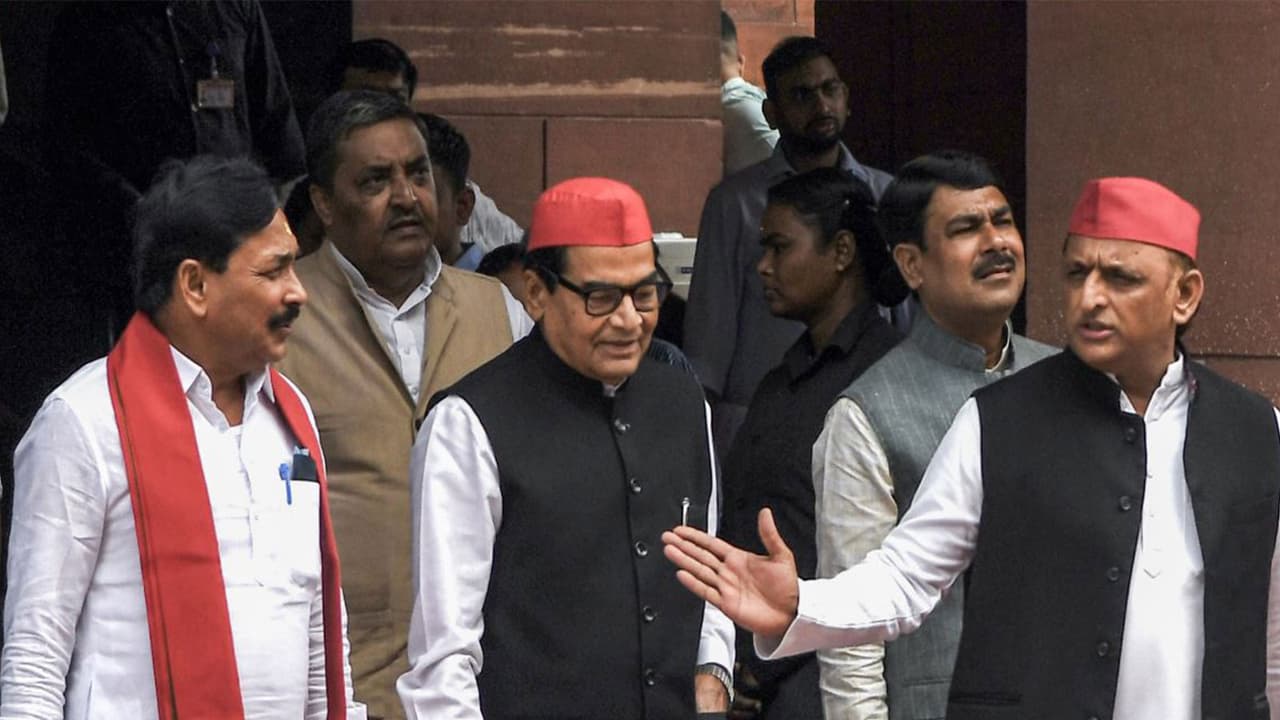
The Samajwadi Party alleged massive irregularities in the Anupshahr Assembly voter list in Uttar Pradesh, claiming names and details of over 27,000 voters were altered on religious grounds. The party demanded a comprehensive probe from the CEO.
The Samajwadi Party (SP) on Tuesday submitted a memorandum to the Chief Electoral Officer (CEO) of Uttar Pradesh, alleging large-scale irregularities in the voter lists of the Anupshahr Assembly constituency and demanding a comprehensive probe into the matter.
In its representation, the opposition party claimed that the names and relative details of over 27,000 voters across 448 polling booths were altered, including the selective addition and removal of surnames. The party further alleged that the electoral roll contained entries modified on religious grounds.
The Samajwadi Party also accused election authorities of altering the Electoral Photo Identity Card (EPIC) numbers of nearly 800 voters without valid justification, demanding that updated identity cards be issued to all affected voters.
Ahead of the 2027 Uttar Pradesh Assembly elections, the SP urged the Chief Electoral Officer to initiate an immediate investigation into the alleged discrepancies and ensure a thorough purification of the electoral rolls to maintain electoral integrity.
ECI’s Special Intensive Revision of Electoral Rolls
Earlier, on July 26, the Special Intensive Revision (SIR) of electoral rolls is being carried out in phases across the country to ensure that electoral rolls are accurate, up-to-date and free of ineligible or duplicate entries, while ensuring that no eligible elector is left out.
According to the Press Note of the Election Commission of India (ECI), the SIR was first undertaken in Bihar ahead of the 2025 State Legislative Assembly elections. The exercise involved house-to-house enumeration by Booth Level Officers (BLOs), distribution and collection of enumeration forms, publication of a draft electoral roll, a specific period for filing claims and objections, and publication of the final electoral roll after due verification.
A similar process was followed during Phase II in Chhattisgarh, Goa, Gujarat, Kerala, Madhya Pradesh, Rajasthan, Tamil Nadu, Uttar Pradesh, West Bengal, and the Union Territories of Andaman and Nicobar Islands, Lakshadweep and Puducherry between October 2025 and April 2026.
He further informed the House that Phase III of the SIR is presently underway or proposed in the remaining States and Union Territories not covered in the first two phases, including the National Capital Territory of Delhi, in accordance with a schedule notified by the ECI, which is subject to revision from time to time based on operational requirements.
Supreme Court Upholds SIR Process
The Supreme Court, in its judgment dated May 27, 2026, in Association for Democratic Reforms & Ors. vs. Election Commission of India & Ors. [W.P. (C) 640 of 2025], held, inter alia, that the SIR exercise is within the statutory mandate of the ECI under the Representation of the People Act, 1950, and aligns with the Election Commission’s constitutional obligation under Article 324 to ensure free and fair elections.
ECI’s Quality Checks and Grievance Redressal
As per the ECI’s Press Note, the Commission carries out internal quality checks at each stage of the SIR, including cross-verification of BLO enumeration through supervisory officers, random sample audits of deleted entries, and public disclosure of draft and final rolls to enable scrutiny by political parties and electors. Grievances received during the claims and objections period are examined and, where found valid, names are restored before finalisation of the roll. (ANI)
(Except for the headline, this story has not been edited by Asianet Newsable English staff and is published from a syndicated feed.)