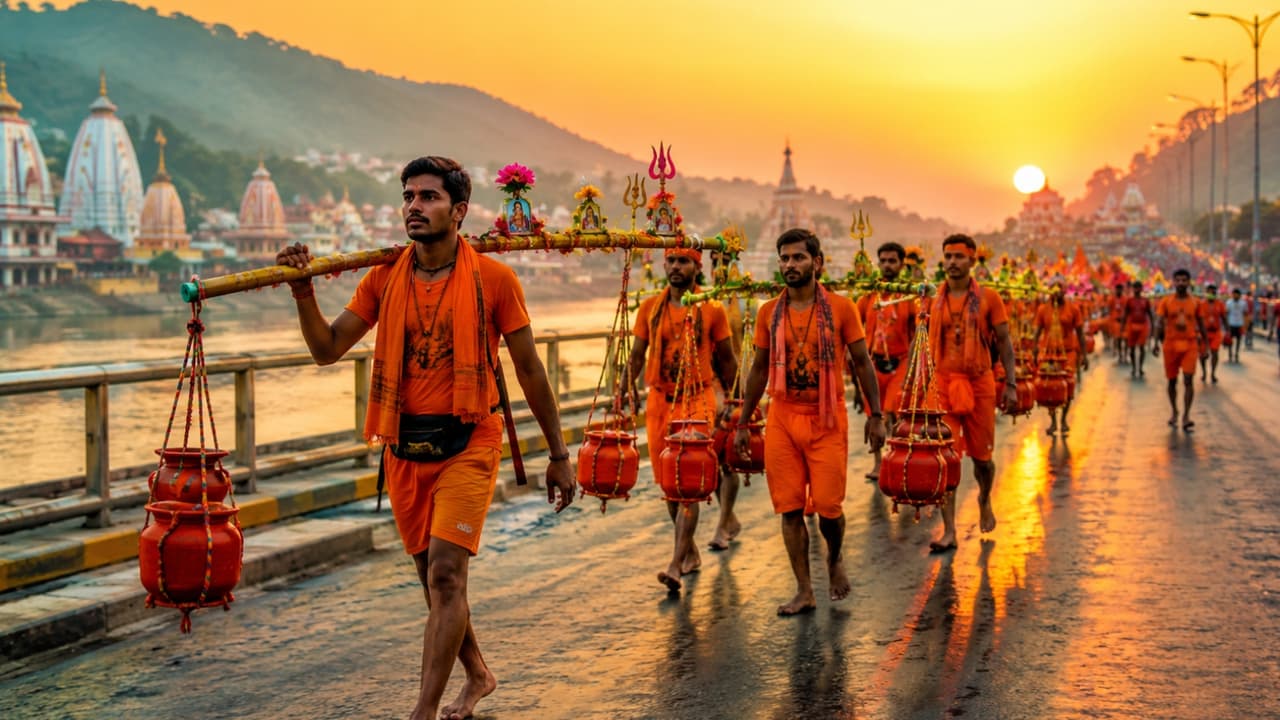
Barefoot Kanwar Yatra: Why do devotees walk barefoot in Kanwar Yatra? Know its religious, mythological, spiritual and scientific significance, as well as important rules and interesting facts related to travel.
Kanwar Yatra Significance: Every year, as soon as the month of Sawan arrives, lakhs of Shiva devotees across the country go on Kanwar Yatra. Some walk hundreds of kilometers and some complete a journey of thousands of kilometers. During this time you must have noticed that most of the Kanwariyas walk barefoot. The question arises why is this so? Is this just a tradition or is there any religious and spiritual reason behind it? Let us know the importance of walking barefoot in Kanwar Yatra.
Symbol of dedication to Lord Shiva
In Hindu religion, Kanwar Yatra is considered a symbol of rigorous penance and devotion to Lord Shiva. Walking barefoot is a sign that the devotee is serving Bholenath with full devotion by sacrificing his comforts and luxuries. Just as shoes and slippers are removed before entering the temple, many devotees adopt the same sentiment during the entire journey.
What is mythology?
According to belief, when Halahal poison came out during the churning of the ocean, Lord Shiva drank it to protect the entire creation. After this, to cool down the heat of his body, the gods poured water from different holy rivers on him. This incident is seen in connection with the tradition of Kanwar Yatra. Devotees bring water from Ganga or other holy rivers and offer it to Shivalinga. Enduring hardships and walking barefoot during this journey is a symbol of penance, sacrifice and devotion towards Lord Shiva.
Spiritual importance of walking barefoot
According to religious beliefs, walking barefoot reduces a person’s ego. During the journey, the devotee connects directly with the earth, which increases his sense of humility and patience. Difficult journey disciplines the mind and strengthens faith in God.
Is there a scientific side to this also?
Although Kanwar Yatra is mainly associated with religious faith, some experts also connect walking barefoot with grounding. According to some research, walking barefoot on the ground for some time helps in reducing stress and feeling peaceful.
Read this also- Sawan 2026: If these 5 rules are not followed while offering Belpatra to Lord Shiva, then the worship is incomplete!
Is it necessary for all Kanwadis to walk barefoot?
No. It is not necessary that every Kanwariya will have to walk barefoot. Many devotees also travel wearing slippers or shoes due to their health, age or other reasons. The most important thing is considered to be reverence, following the rules and true devotion towards Lord Shiva.
What things should be kept in mind during Kanwar Yatra?
- Keep drinking plenty of water.
- Rest according to the season.
- If there is injury or disease in the feet, consult a doctor.
- Follow the route and safety rules decided by the administration.
- Also respect the beliefs and convenience of others.
Read this also- Sawan 2026: Which fruits can be eaten during the fast and which not? Know important rules
Some important things related to Kanwar Yatra…
- During Sawan, crores of devotees participate in Kanwar Yatra across the country. Uttar Pradesh, Uttarakhand, Haryana, Delhi and Bihar are its main centres.
- Many devotees travel 200 to 500 km on foot to reach their village or city with Ganga water.
- In Dak Kanwar, devotees complete the journey by running without stopping and do not keep Ganga water on the ground.
- Haridwar, Gangotri and Gaumukh of Uttarakhand are counted among the most important water sources of Kanwar Yatra.
- In many states, thousands of policemen and volunteers are deployed to handle security and traffic arrangements during the Kanwar Yatra.
Content Source: Shiva Purana, Skanda Purana, religious studies published on Indian archeology and culture, Ministry of Culture, Government of India, traditional interpretations of various Akharas and religious scholars.