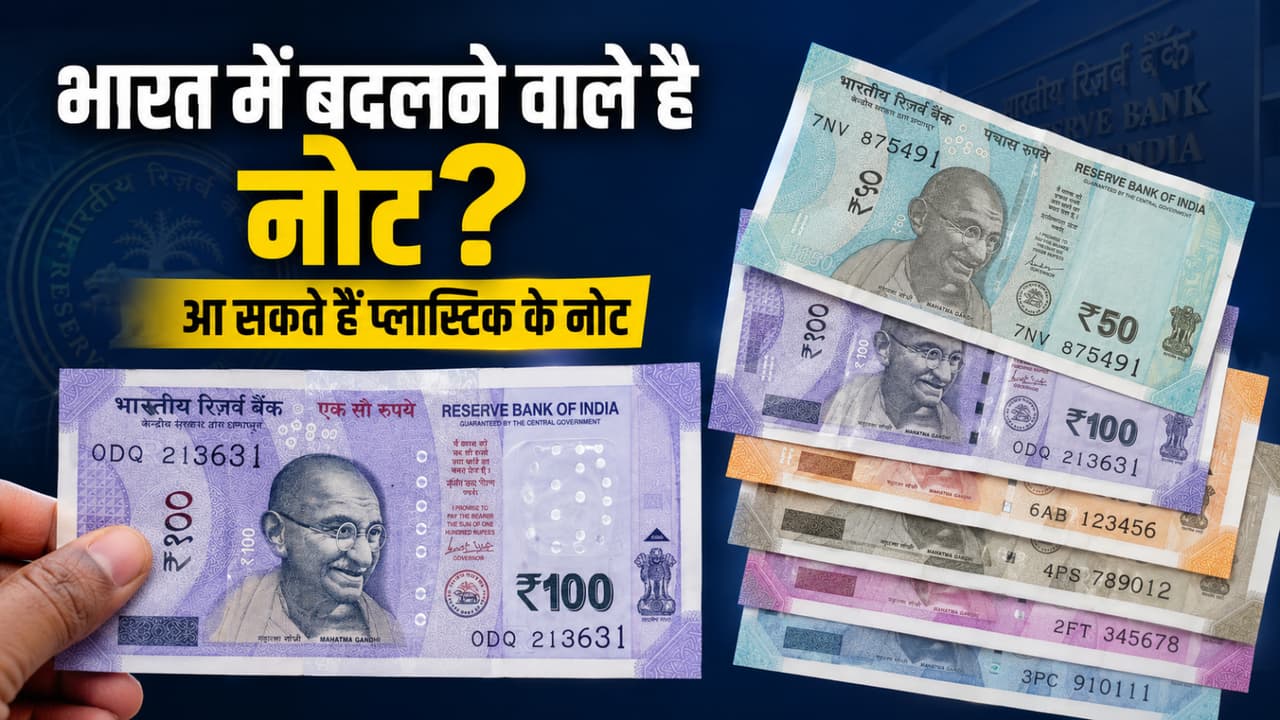
RBI Polymer Notes: Why is RBI considering introducing polymer i.e. plastic notes in India? How safer and more durable are plastic notes than paper notes? Which NIA countries have fully adopted polymer currency?
RBI News: The note kept in our pocket is not only a medium of transaction, but is also considered a symbol of the country’s economy and trust. But now these notes may change completely in the coming years. The Reserve Bank of India (RBI) is seriously considering introducing polymer i.e. plastic notes in place of traditional paper notes. If this plan goes ahead, it will be considered the biggest change in India’s currency system.
According to media reports, polymer notes were discussed in detail in the recent board meetings of RBI held in Patna and Mumbai. In view of issues like increasing demand for cash, problem of early spoilage of notes and ban on fake notes, this option has now become more serious than before.
Also read: Now will India run on coal? Will petrol and gas become cheaper due to the government’s big plan?
Why does RBI want to change?
In a huge country like India, crores of notes are used in the market every day. Due to frequent change of hands, paper notes quickly get torn, become dirty and also get spoiled. It costs a lot for the government and the central bank to print them again and again. This is where polymer notes are being considered a better option. According to banking experts, plastic notes last about two and a half times longer than normal paper notes. The effect of water, moisture and dust is very less on them. This is the reason why many countries gradually started adopting polymer currency by removing paper notes.
There may be a big ban on fake notes
The biggest feature of polymer notes is considered to be their security. Transparent windows, special ink and advanced security features are added to these notes, which are very difficult to copy. This is the reason why countries struggling with fake notes adopted this technology rapidly. In India too, the problem of fake notes has been coming up from time to time. In such a situation, polymer notes can prove to be a big solution in terms of security.
These countries of the world have already adopted plastic currency
- Australia : Australia was the first to introduce plastic notes. Polymer notes were launched here in the year 1988. Today Australia is considered the leading country of this technology.
- New Zealand : In 1999, New Zealand replaced all its paper notes with polymer notes. Here the notes ranging from 5 dollars to 100 dollars are completely plastic based.
- vietnam : Vietnam introduced polymer notes in the year 2003. Today almost the entire currency there is plastic based. The largest note is of 5 lakh Vietnamese dong.
- romania : Romania became the first country in Europe to convert all its notes into polymer in 2005.
- brunei and papua new guinea : These countries also completely adopted plastic currency to deal with the challenges of fake notes and bad weather.
This trend has reached 60 countries
Today polymer notes are being used in some form or the other in about 60 countries of the world. Countries like Canada, Singapore, Malaysia, Indonesia and Thailand have also made it a part of their currency system. However, the world’s most popular currency, the US dollar, is still not completely made of plastic. US notes are made from a special blend of cotton and linen, which makes them stronger than ordinary paper.
What will change when implemented in India?
If RBI approves this plan, then Indian citizens may get to see notes with new design and new technology in the coming years. This will increase the life of the notes, curb fake notes and may also reduce the cost of printing in the long run. However, such a big change will not be easy. Printing machines of new notes, ATM system and banking infrastructure will also have to be updated accordingly. Therefore, experts believe that polymer notes can be introduced in India in a phased manner.
Is India changing its cash system with digital payments?
On one hand the country is rapidly moving towards digital payments, while on the other hand the demand for cash also remains constant. This is the reason why RBI is now working towards making the cash system more durable, secure and modern. If everything goes according to plan, then in the future the notes in your pocket may not be made of paper but of plastic.
Also read: Deal almost finalized! After many months of tension, America and Iran finally came closer!