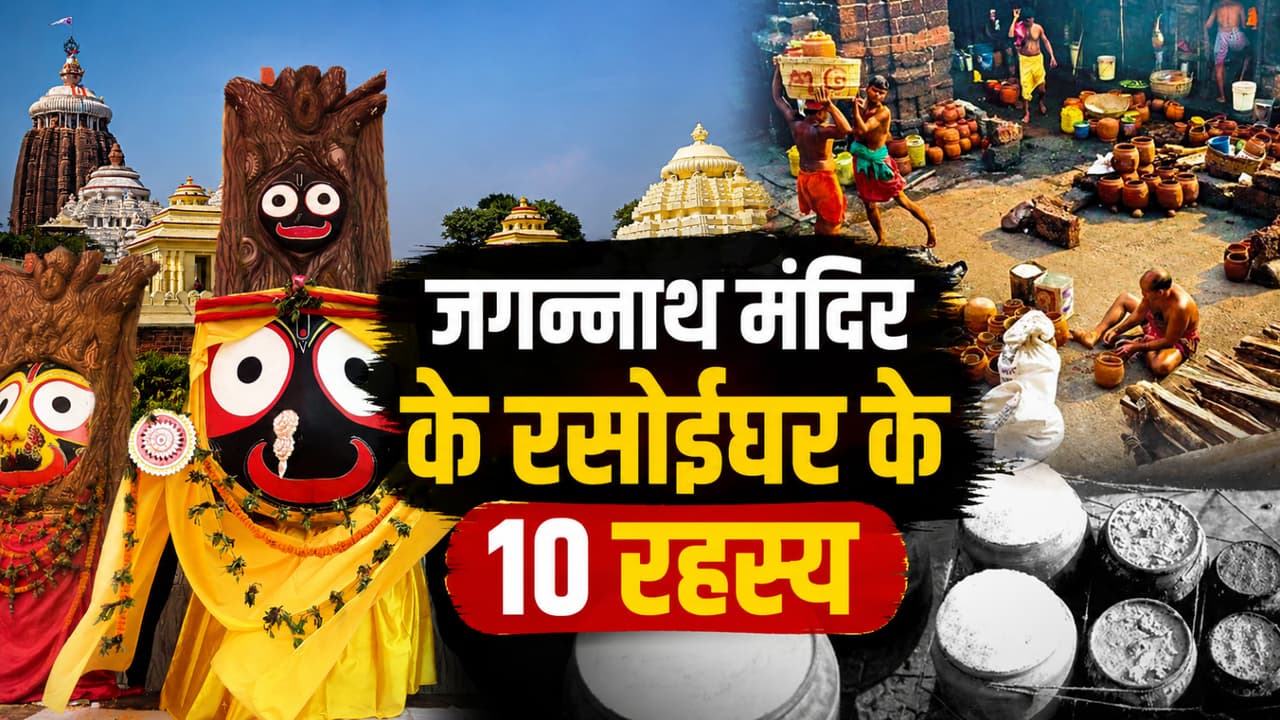
Jagannath Temple kitchen facts: The kitchen of Lord Jagannath Temple of Puri is counted among the largest temple kitchens in the world. Here Mahaprasad is prepared using earthen pots, wooden stoves and according to age-old traditions. Know 10 interesting and unique facts related to this.
Jagannath Temple Kitchen Facts: The kitchen of Lord Jagannath temple in Puri, Odisha, also known as Rozaghar, is counted among the largest temple kitchens in the world. Here Mahaprasad is prepared for thousands of devotees every day. The specialty of this kitchen is not only its size, but also its age-old traditions, unique methodology and discipline. Let us know 10 interesting facts related to this kitchen.
1. Food for thousands of people is prepared here every day
Even on normal days, Mahaprasad is prepared for thousands of devotees in the kitchen of Jagannath temple. This number multiplies during Rath Yatra and big festivals. According to the temple administration, the quantity of food is decided according to the number of devotees.
2. Food is still cooked in earthen pots
Instead of big steel or aluminum utensils, traditional earthen utensils are used here. New earthen utensils are used every time. This is associated with the tradition of maintaining traditional taste and purity.
Also read: What is the Ram Mandir donation theft case? What has happened till now? Complete report on SIT-Court, Government and accused
3. Food is cooked by placing utensils on top of each other.
The most unique thing about the kitchen is that many earthen pots are placed one above the other and only one fire burns at the bottom. Steam and heat also reach the utensils placed above, due to which food is cooked in all the utensils. This is an old cooking system in which food is cooked with the help of hot steam emanating from boiling water.
4. Hundreds of cooks together prepare Mahaprasad
The work of preparing food is done by the traditional Sevayat community called Suara and Mahasuara. This service has been going on from generation to generation. The responsibility of every person is fixed in advance.
5. The rules for making Mahaprasad have remained almost the same for centuries
The time, ingredients, method of preparing food and the process related to puja are according to the prescribed traditions.
6. Dozens of types of dishes are prepared here
The offerings to Lord Jagannath include rice, pulses, vegetables, khichdi, sweet dishes and other traditional dishes. On some other special occasions, the type and number of offerings keep changing.
7. Mahaprasad is equal for all
The biggest feature of Jagannath temple is that Mahaprasad is considered a symbol of social equality. According to tradition, caste, class or economic condition of a person is not considered while taking Mahaprasad.
8. Food is cooked only on wood stoves
Even today, wood stoves are used in the temple kitchen. This system is part of a centuries-old tradition, even today food is prepared using the same system.
9. ‘Mahaprasad’ is made through a special process
The food prepared in the kitchen is first offered to Lord Jagannath, Balabhadra and Subhadra. After this there is a tradition of offering it to Goddess Bimala. According to religious belief, only after this this food is called Mahaprasad.
10. This is not just a kitchen, it is a center of service and discipline.
Those working in the kitchen serve as per the set rules. From preparing food to distributing Prasad, every work is done with a fixed system and responsibility.
Also read: Jagannath Rath Yatra 2026: Why is Lord Jagannath’s Rath Yatra held? What is the secret of the 3 chariots? Know the answer to every question
Content References: Shree Jagannath Temple Administration (SJTA), Puri, Odisha Tourism, Ministry of Culture, Government of India, Skanda Purana (Purushottama Mahatmya), Ananda Bazaar.