Menstrual Hygiene Day.
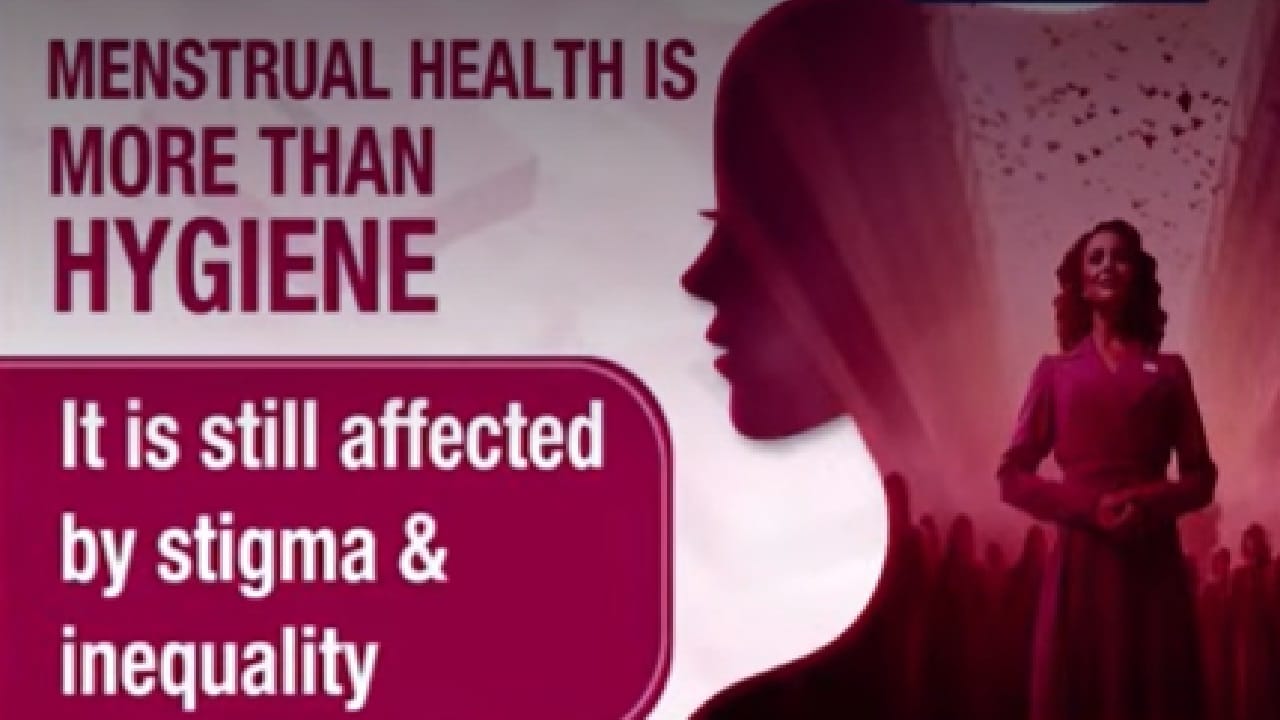
World Menstrual Hygiene Day is celebrated every year on 28 May, which reminds that making menstruation safe and private is still a challenge for millions of women and girls in the country. From lack of toilets in schools to non-acceptance of menstrual pain at the workplace, these barriers are deeply rooted. To celebrate this day, News9 organized ‘The SHEEconomy Agenda, Period Power’. In this, those issues were discussed by bringing together doctors, policy makers, legal experts and athletes.
Research shows that menstruation affects workplace productivity to a great extent. Yet most workplaces in the country do not have any formal policy to deal with it. The problem is not just about leave, but also about clean toilets, dustbins, flexible leave and a culture where there is no punishment for disclosing menstruation.
Nirja Bhatnagar, Director (Programme and Advocacy), Sulabh International Social Service Organization, said, our work culture is still largely male dominated. The workplace needs to be more gender inclusive. They should have flexible working arrangements and seriously consider policies like menstrual leave.
There should also be a provision for menstrual leave.
At the same time, senior Supreme Court advocate Geeta Luthra said, clean and accessible toilets are the first requirement. Just as other types of leave are available at workplaces, there should also be a provision for menstrual leave. Pointing to the deep social stigma associated with menstruation, Dr. Surveen Ghuman Sindhu, Head of IVF Department at Max Healthcare, said that until it gets formal recognition through systems like menstrual leave, people are hesitant to talk openly about menstruation. We have to accept that menstruation is a natural part of life and this issue has to be addressed without any discrimination.
Policy Objective and Implementation
Urvashi Prasad, former director of NITI Aayog, said that despite increasing awareness, policy action remains limited. Many policies are not translated into implementation. There is still a mindset problem where measures introduced for women are often seen as open to abuse. To implement these policies effectively, we need a change in mindset. Dr. Kiranpreet Kaur, consultant, The Human Capital Company, said, there is a need to create more awareness among people about menstrual health and related issues.
Sunita Singh Choken’s touching story
Perhaps the most poignant story is that of Sunita Singh Choken, who conquered Mount Everest. She said, I was menstruating while climbing Everest and had to face many difficulties during the expedition. Despite limited oxygen and physical challenges, I motivated myself to reach the summit. She emphasized that women often achieve extraordinary achievements during menstruation. Often they do not get enough support or recognition.