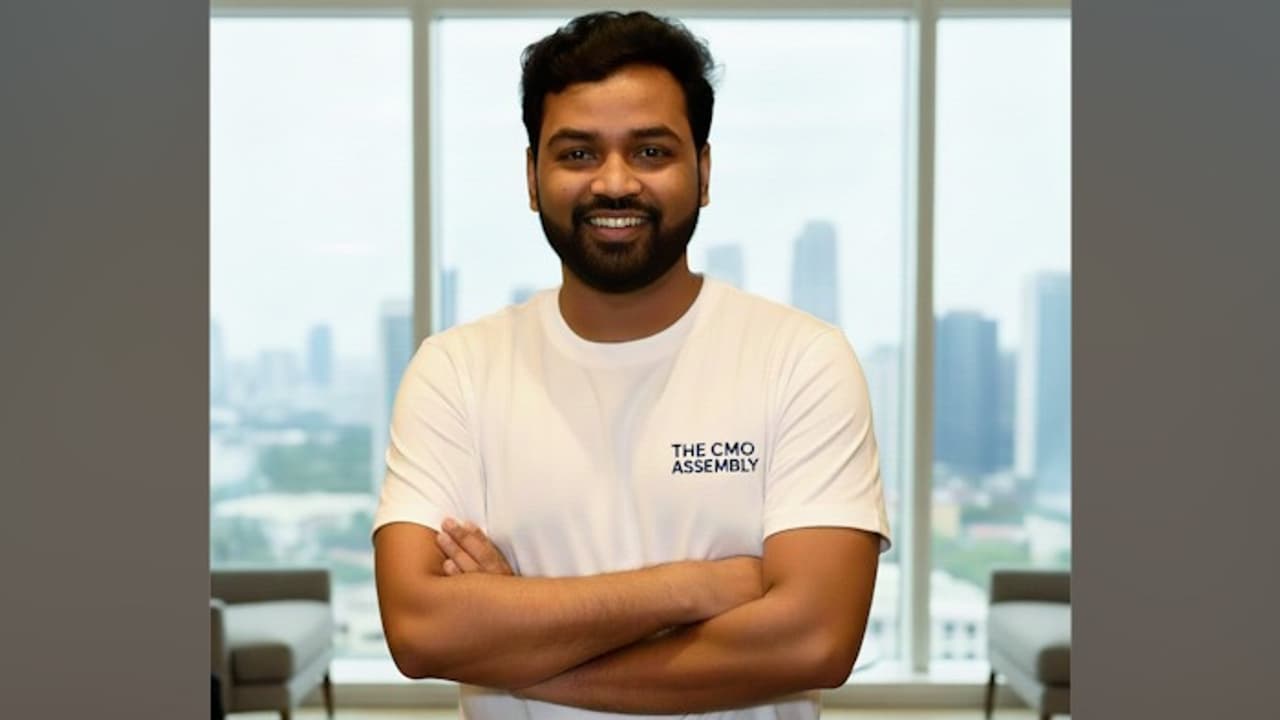
The CMO Assembly offers an exclusive, high-trust circle for Indian marketing leaders to have raw, honest discussions. Founder Vivek Sheth reveals the private anxieties of CMOs, the impact of AI, and the constant struggle between short-term metrics and long-term brand building.
Every year, the marketing industry produces plenty of polished optimism. But what do CMOs actually say when there is no stage, no panel, and no judgment? The CMO Assembly is an exclusive, peer-led community designed specifically for Chief Marketing Officers and senior marketing practitioners from consumer-facing brands. Moving past the superficiality of traditional public forums and polished keynotes, the platform offers an intentional, high-trust circle for raw and honest discussions about the operational realities, hard-earned lessons, and emerging innovations shaping modern marketing. The CMO Assembly just dropped The India CMO Index 2026, collecting anonymous, unfiltered insights from 121 marketing leaders across 11 industries. The Index outlines the unique contradictions currently defining Indian marketing leadership—including the constant tug-of-war between short-term performance metrics and long-term brand equity.
Take a look at excerpts from the exclusive interview with Vivek Sheth, Founder of The CMO Assembly, his insights, why he founded this organisation and much more.
1. What gap did you see in India’s marketing ecosystem that made you feel the need to build The CMO Assembly?
Answer: I felt there was a serious absence of honest spaces for CMOs in India. There were plenty of conferences, panels, awards, and networking groups – but very few places where CMOs could actually speak without performance theatre. Most conversations were heavily polished, PR-driven, or transactional. The reality is that CMOs today are dealing with enormous complexity – pressure from boards, AI disruption, shrinking attention spans, performance expectations, internal politics – but nobody was creating an environment where they could discuss these things honestly with peers. The CMO Assembly was built to solve that. Not another industry platform, but a trusted community for real conversations among people carrying similar pressures.
2. You’ve repeatedly said most marketing communities “talk at CMOs” instead of “with CMOs.” What exactly is broken in the current model?
Answer: Most ecosystems today are designed around visibility, not vulnerability. The format is usually the same: a stage, a moderator, predictable questions, polished answers, sponsor narratives, and everyone pretending they have figured everything out. But that is not how real leadership conversations happen. CMOs do not need more generic inspiration. They need peer-level honesty. They need spaces where they can say: This campaign failed. I am struggling to prove long-term brand ROI. AI is changing my organisation faster than I can adapt. I do not know what marketing will look like in three years. The current model rewards certainty. But the best conversations often begin with uncertainty.
3. Was there a specific moment or conversation that triggered the idea for this platform?
Answer: Yes. I remember being in conversations with CMOs after industry events – not on stage, but afterward over coffee or dinner. The private conversations were radically different from the public ones. People who sounded extremely confident on stage would privately admit they were overwhelmed, questioning traditional marketing playbooks, struggling with board expectations, or unsure about where AI was taking the industry. That contrast stayed with me. I realized the most valuable marketing conversations in India were happening unofficially, behind closed doors. The CMO Assembly was born from the idea that maybe those conversations deserved a real home.
4. What are the biggest anxieties CMOs are privately discussing today that the public doesn’t see?
Answer: Three things come up repeatedly. First, relevance. Many marketers are wondering whether traditional brand-building frameworks still work in an AI-first, attention-fragmented world. Second, measurement. There is enormous pressure to justify every rupee spent, but not everything valuable is immediately measurable. CMOs are caught between short-term performance expectations and long-term brand building. Third, identity. AI is forcing leaders to rethink what marketing teams should even look like in the future. Many are asking: What becomes uniquely human in marketing?
5. Are CMOs today under more pressure than ever before to justify marketing spends and ROI?
Answer: Absolutely. Marketing used to have the luxury of delayed attribution. Today, leadership teams expect immediate clarity on outcomes, efficiency, and business impact. The challenge is that marketing operates across two timelines: short-term revenue impact and long-term brand memory. The danger is when organizations over-optimize only for what is measurable in the short term. You may improve quarterly efficiency while slowly weakening brand distinctiveness. CMOs today are not just expected to drive growth – they are expected to defend every decision in real time.
6. Has AI fundamentally changed the tone of conversations happening between marketing leaders?
Answer: Completely. A year ago, AI conversations were mostly curiosity-driven. Today, they are existential. The tone has shifted from: “What can AI help us do?” to “What happens to marketing organizations if AI changes everything?” CMOs are discussing leaner teams, AI-generated creativity, synthetic consumers, personalization at scale, and how quickly consumer behavior itself may evolve. What is interesting is that the smartest leaders are not treating AI as just a productivity tool. They are treating it as a structural shift in how brands are built.
7. What’s the one uncomfortable truth marketers are finally admitting in these closed rooms?
Answer: Nobody fully knows what the future of marketing looks like anymore. For years, the industry rewarded confidence and certainty. But privately, many leaders are admitting that old playbooks are becoming less reliable. Consumer attention is fragmented. Brand loyalty is weaker. Algorithms shape visibility. AI is reshaping creativity. And performance marketing alone cannot build enduring brands. The uncomfortable truth is that even the most experienced marketers are learning in real time again.
8. Building trust among competing CMOs sounds difficult. How do you create a space where people genuinely speak openly?
Answer: Trust comes from intent. The moment people feel a platform exists primarily for optics, selling, or extraction, honesty disappears. At The CMO Assembly, we focus heavily on creating environments where there is no pressure to excel. Smaller groups. Non-recorded sessions and more. Ironically, once people realize they do not need to impress anyone, the conversations become far more valuable. Senior leaders do not actually want more networking. They want fewer but more meaningful conversations.
9. What has surprised you most since launching The CMO Assembly?
Answer: How deeply CMOs were craving honesty. I expected interest. I did not expect the level of emotional openness we have seen from CMOs. A lot of CMOs carry pressure very privately. From the outside, marketing leadership looks glamorous. Internally, it can be isolating. What surprised me most was how quickly leaders responded once they realized this was a space where they did not have to maintain the everything-is-under-control image.
10. Was it difficult convincing senior leaders to trust a new, unconventional platform?
Answer: Initially, yes. Because trust in this space is earned slowly. Senior leaders have seen too many communities become transactional and overly commercialized. We never tried to grow aggressively or manufacture hype. We focused on depth over scale and conversations over visibility. Over time, trust compounds. When one respected leader has a meaningful experience, they bring others in. That organic trust-building has been far more powerful than traditional growth tactics.
11. Five years from now – what do you want The CMO Assembly to become?
Answer: A network, a movement, a think tank, or something bigger? I want it to become one of the most trusted ecosystems for CMOs in the region – not because it is the largest, but because it is the most honest. A place where real industry thinking emerges, meaningful research gets built, future marketing leaders are shaped, and difficult conversations happen before they become mainstream. I think the future belongs to communities that create clarity, not just visibility. We also run something called as – The Marketing Assembly – Which is open to all marketing ecosystem – the intent of that is same too – people help people grow!
12. If you could force every CMO in India to answer one brutally honest question privately, what would that question be?
Answer: I would ask: If nobody was watching, what would you stop doing in marketing tomorrow? Because that question reveals everything: the metrics we secretly do not believe in, the campaigns we run for optics, the meetings that create no value, the reports nobody reads, and the industry habits we continue simply because everyone else does. That is where honest marketing conversations begin.