rules of worshipImage Credit source: pexels
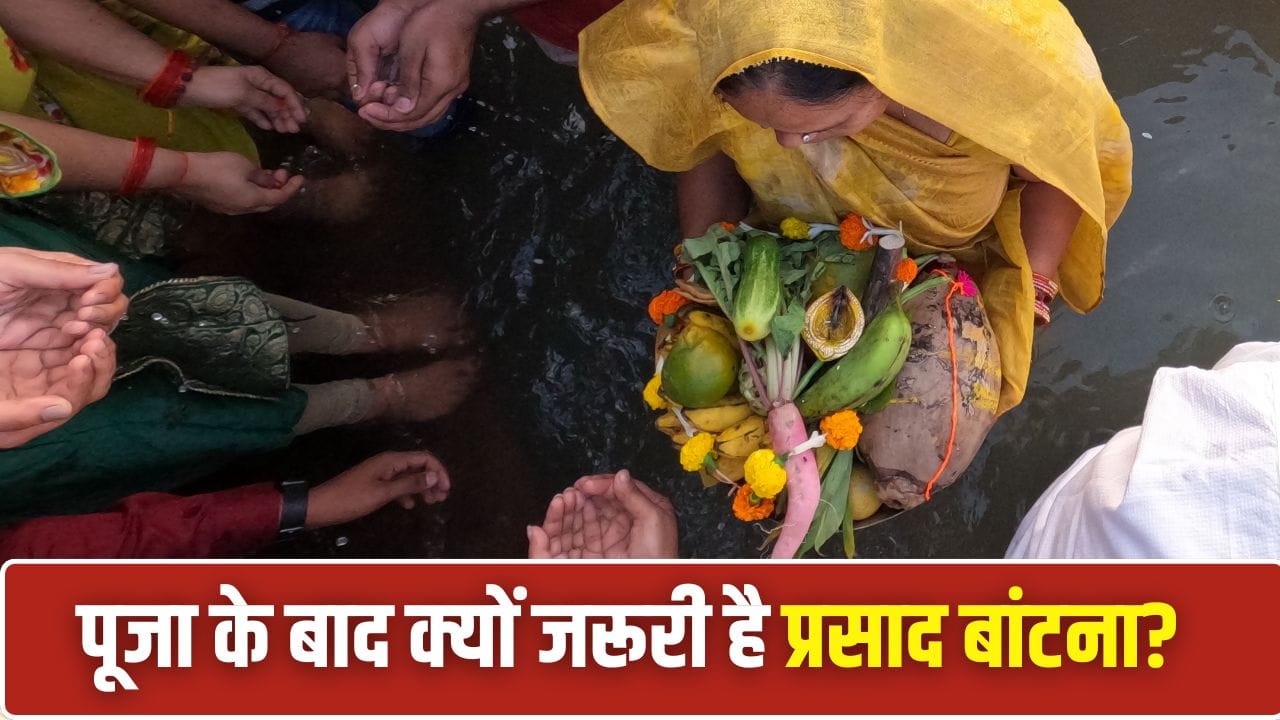
In Hindu religion, worship, chanting, penance and yagya have special importance, but do you know that any puja is considered incomplete unless its prasad is distributed among others? Often, after the puja is over, people consume the prasad themselves or keep it limited to their family only, whereas the scriptures have described a very special and deep significance of distributing the prasad. Let us know why distributing Prasad after puja is considered so auspicious, what are the religious rules related to it and what effect it has on our lives.
Why is distributing Prasad considered auspicious?
There is a religious belief that by distributing Prasad after puja, God’s blessings reach everyone. When a person shares Prasad with others, he not only shares food, but also good wishes, love and positive energy. It is believed that by distributing Prasad and accepting it, there is happiness and peace in the house, there is no shortage of money and grains and one gets the full results of the puja. Therefore, there has always been a tradition of sharing Prasad with family and people around.
Find Your Mulank with a Simple Calculation
Check Your Moolank
Prasad of sugar or sugar candy should also be distributed.
Many people offer sugar, sugar candy or candy to God during worship. According to religious belief, if sugar or sugar candy has been offered to God, then it should not be eaten alone. It is considered auspicious to distribute it among all the family members and other people.
Distribution of Prasad is a symbol of completion of puja.
In religious traditions, the puja is considered concluded with the distribution of Prasad. Just as mantra, aarti and bhog have their own importance in puja, similarly distributing prasad is also considered a part of puja.
Keep these things in mind while accepting Prasad
Prasad should always be accepted with reverence and respect. It should never be taken with disrespect nor thrown away. If the Prasad is in excess, it is considered better to distribute it among the needy people or other devotees. There is a religious belief that respecting Prasad is equivalent to showing respect towards God.
What does religious belief say?
The purpose of distributing Prasad in Sanatan tradition is not only to complete the religious rituals but also to increase the feeling of love, equality and cooperation among the people. This is why Prasad is distributed to thousands of people together in temples. It gives the message that everyone has equal right to the grace of God.
Also read: Belpatra with three leaves has special significance, know what is the belief behind offering it on Shivalinga.
Disclaimer: The information given in this news is based on religious beliefs and general information. TV9 Bharatvarsha does not confirm this.