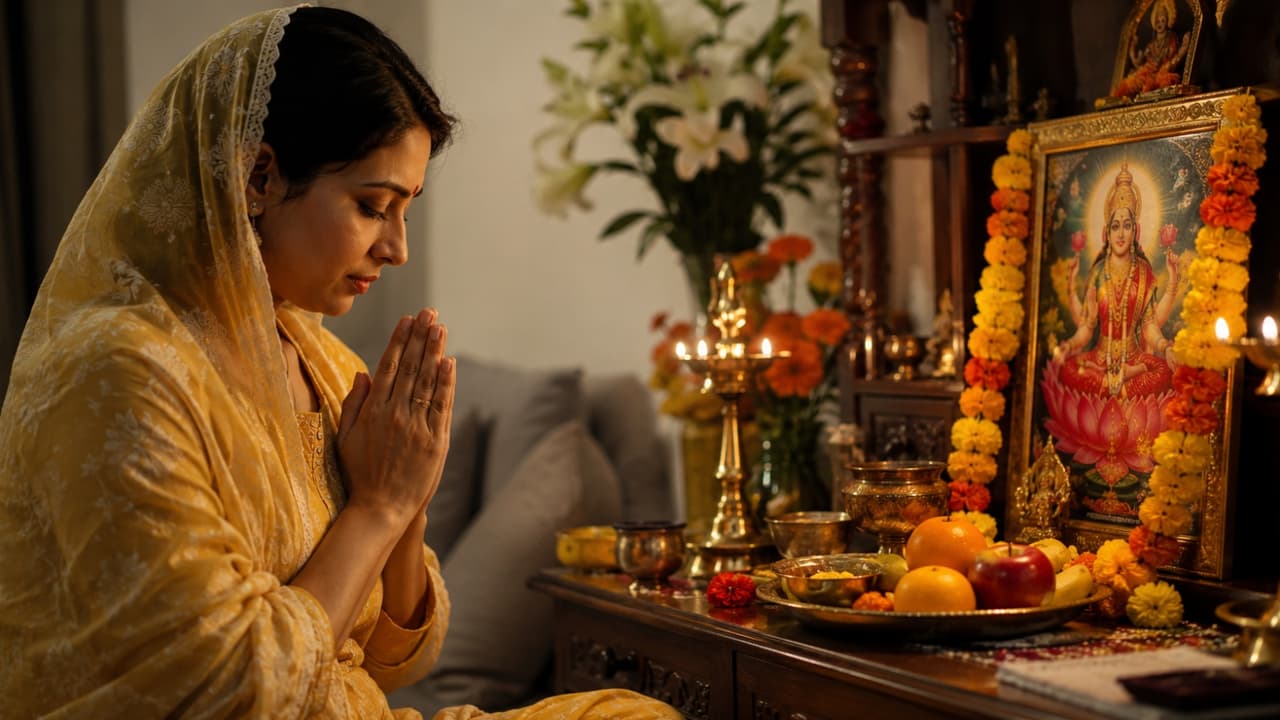
Why We Fast: Why is fasting observed? Know the religious, spiritual and scientific importance of fasting, fasting traditions of different religions, motivational stories and health benefits.
Importance of fasting: Vrat (fasting) is not just a religious tradition but also a symbol of self-control, discipline and faith. Some keep fast on Monday, some keep fast on Ekadashi, Navratri, Karva Chauth or Ramzan. Fasting traditions may vary from religion to religion, but their basic purpose is to discipline the mind and body, increase spiritual contemplation, and learn self-control. Let us know why the fast is observed and what the religious and scientific thinking says behind it.
What is fasting?
The word ‘Vrata’ comes from the Sanskrit word ‘Vrata’, which means resolution, rule or self-discipline. That is, fasting is not just the name of giving up food, but also the practice of controlling one’s behavior, thoughts and lifestyle. The purpose of fasting is considered to be to express reverence towards God and to engage the mind in devotion.
Why is fasting observed?
1. For faith and devotion
In Hindu religion, fasts like Monday, Thursday, Ekadashi, Navratri, Shivratri and Karva Chauth are associated with the worship and reverence of particular deities. For example, Ekadashi fast is kept for the worship of Lord Vishnu, while Monday fast is dedicated to Lord Shiva.
2. To learn self-control
Fasting teaches us to control our desires. When a person has control over food, taste or other amenities for some time, self-discipline is strong.
3. To calm the mind
During the fast, people worship, meditate, chant mantras and recite religious texts. This gives an experience of mental peace and positive thinking.
4. Relax the digestive system
Experts believe that not taking food for some time gives rest to the digestive system.
5. Discipline in eating habits
During fasting, people eat less fried and highly processed food, which develops the habit of a balanced diet.
Does every religion have a tradition of fasting?
- Hinduism- Ekadashi, Navratri, Shivratri, Monday fast and others….
- Islam- Ramadan fasting.
- Christianity- Fasting during Lent.
- Buddhism – the rule of limited eating in some traditions.
- Jainism- Fasting on Paryushan and other occasions.
Read this also- Why do we light lamps in puja?
Some interesting examples related to the power of fasting
1. Story – Savitri’s fast brought back her husband’s life from Yamraj.
This is one of the most famous fast stories. The death of Savitri’s husband Satyavan was already decided. When Yamraj came to take her life, Savitri kept a strict fast and followed Yamraj with full patience. Pleased with his loyalty, intelligence and penance, Yamraj first granted boons and ultimately returned Satyavan’s life.
- Lesson: Determination, patience and faith can transform difficult situations.
2. Story – Ekadashi fast of King Ambarish and Maharishi Durvasa
King Ambarish was a great devotee of Lord Vishnu and regularly observed Ekadashi fast. Once the time of Parana of Dwadashi was approaching and at the same time Maharishi Durvasa came for food. Seeing the time passing, the king drank only water so that his fast would not be broken. Durvasa became angry, but later he was protected by Lord Vishnu’s Sudarshan Chakra due to Ambarish’s devotion.
- Lesson: True faith and adherence to rules are considered more powerful than ego.
3. Story – Story of Veervati of Karva Chauth
Veervati had observed the fast of Karva Chauth for the long life of her husband. Seeing their sister’s hunger, her brothers deceived her and created the illusion of the moon rising. The fast was broken prematurely and the husband was in trouble. Later, Veeravati observed the fast again with full devotion, after which her husband’s life was saved.
- Lesson: The importance of fasting is not only in staying hungry, but in rules, patience and devotion.
Read this also- What to do if an idol breaks at home?
4. Mahatma Gandhi’s fast played a big role in stopping violence
Mahatma Gandhi considered fasting not just a religious practice but a medium of self-purification and social change. When communal violence spread after the partition of the country in 1947-48, Gandhiji fasted unto death several times. His fast had such a deep impact that violence stopped in many places, leaders appealed for peace and people gave up their weapons.
- Lesson: Sometimes fasting becomes a medium to change the minds of society and people more than the body.
5. Gen G intermittent fasting is changing lives
Millions of people fast not for religious reasons but for health reasons (Intermittent Fasting). Many people have adopted regular fasting under the supervision of doctors and dieticians.
- lost weight
- controlled blood sugar
- correct fatty liver
Content Source: Bhagavad Gita, Padma Purana, Skanda Purana, New England Journal of Medicine, Harvard Medical School, National Institutes of Health (NIH), Indian Council of Medical Research (ICMR).