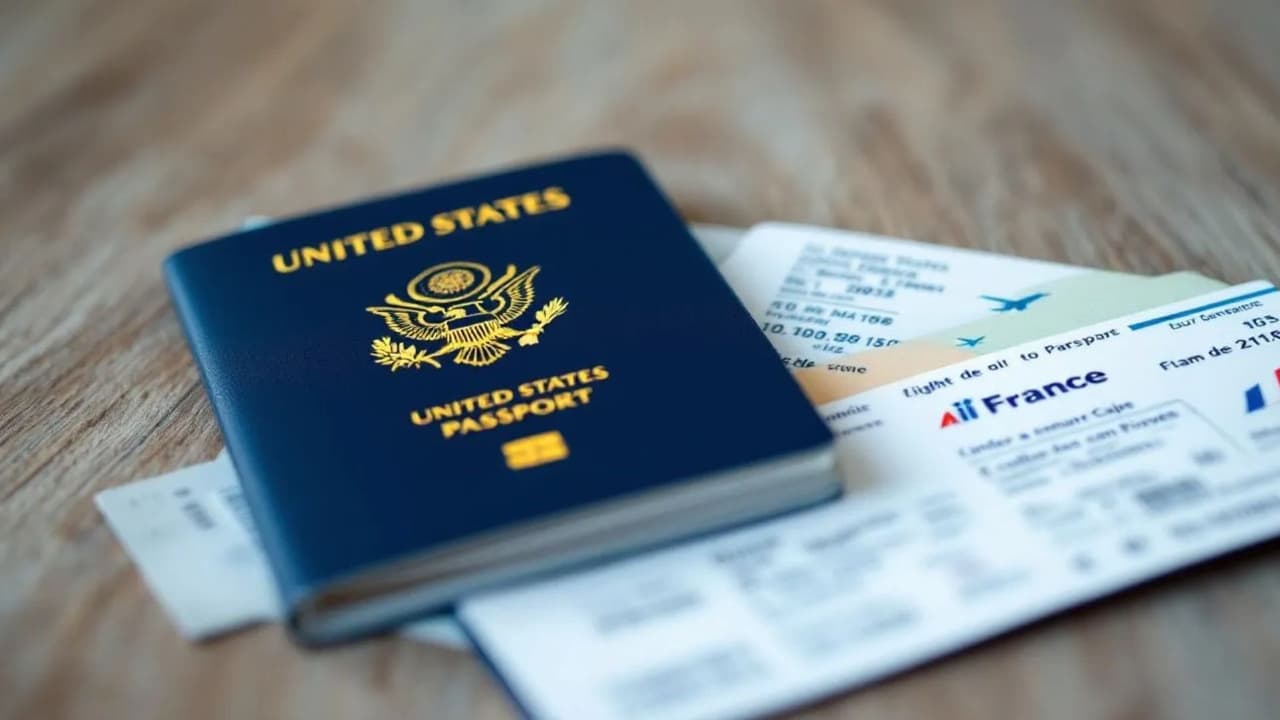
What is Visa: Often people know that when someone goes abroad to study or work or travel, he only needs a passport. But there are many countries where visa is very important, so let us know about both…
If you want to go to another country for travel, study, job or business, then passport alone is not enough. Visa is also required for entry in many countries. Visa is a permission given by the government of that country, which tells for what purpose, for how long and with what conditions you can enter that country. Let us know why visa is necessary? How does Visa work?
What is visa?
Visa is an official permission, which is issued by the government of a country to a foreign tourist. This permission tells whether a person can enter that country or not, for how long he can stay and what is the purpose of his travel. Today, in many countries, instead of visa sticker, e-Visa or digital travel authorization is also issued.
Why do you need a visa?
1. For the security of the country
Every country wants to know who is coming to its place, why is he coming and for how long will he stay. During the visa process, the applicant’s identity and purpose of travel are verified. For example, if a person is going abroad for studies, then he is given a student visa. A different type of work visa is required for that job.
2. To stop illegal migration
Visas help ensure that a person does not overstay or enter the country for the wrong purpose.
3. To maintain law and order
Through the visa system, governments decide under which rules foreign citizens will stay in their country and which activities they will be able to do.
4. To decide the purpose of the trip
Every visa is issued for a specific purpose. As-
Tourist Visa – for travel Student Visa – for studies Work Visa – for job Business Visa – for business travel Medical Visa – for treatment
Your Visa may be rejected due to these 10 reasons?
1. Incomplete or incorrect documents
This is the most common reason for visa rejection. If you have not submitted any required documents, given wrong information in the form or the information in the documents does not match, the application may be rejected. Like: Name is different in passport and different in bank statement.
2. Not having proof of sufficient money
The embassy checks whether you have enough money to cover your accommodation, food and travel expenses abroad. If bank balance or financial documents are week, the visa may be rejected.
3. The purpose of the trip is not clear
The visa officer wants to understand why you are leaving. If your travel plan, hotel booking, invitation letter or study/job purpose is not clear, your application may be suspect.
4. Not giving proper answers in the interview
In some countries (like America), interview is important for visa. If your answers do not match the documents or the officer does not trust you, the visa may be rejected.
5. Not being able to assure return to one’s country
Many countries require assurance that you will return within a stipulated time. If you do not have a strong ‘home country tie’ such as your job, business, family or property, your application may be rejected.
6. Bad previous immigration record
– If you have already overstayed your visa – If you have already broken the rules of any country – If you have tried to stay there before or illegally
So there may be trouble in getting a visa in future.
7. Giving fake documents
If fake bank statements, fake job certificates or wrong information is provided, the visa may be immediately rejected.
8. Criminal record
Many countries may deny a visa if there are serious criminal cases or security related records.
9. Medical or health related reasons
In some countries, medical examination is necessary for long-term visas. Many times applications are rejected due to some special health conditions or lack of necessary medical documents.
10. Application in wrong visa category
If you are going to study but apply for a tourist visa, or select the wrong category for work, your application may get rejected.
In which countries of the world can Indian citizens take Visa-Free entry…
- Nepal
- bhutan
- Thailand
- Malaysia (till fixed time)
- maldives
- mauritius
- Seychelles
- kazakhstan
- Philippines (with some conditions)
- Hong Kong (Pre-Arrival Registration requirement applies)
- Macau
- fiji
- barbados
- Dominica –
- Grenada
- Jamaica
- haiti
- Trinidad and Tobago
- Saint Vincent and the Grenadines
- serbia
- Angola (Fixed Time)
- Gambia
- wanda
- Senegal (in some categories)
Most popular countries in the world offering Visa on Arrival
In these countries, visa can be obtained by reaching the airport or border…
- Indonesia (Bali)
- Sri Lanka (ETA/Simple Online Permission in some cases)
- Jordan
- madagascar
- laos
- cambodia
- tanzania
- Zimbabwe (in some categories)
Is visa required for every country?
No. There are agreements between some countries, under which their citizens can travel without visa or with Visa on Arrival facility. For example, Indian citizens get the facility of Visa-Free, Visa on Arrival or e-Visa in some countries.
What is the difference between visa and passport?
- Many people consider passport and visa to be the same thing, whereas both are different.
- Passport is your official document of citizenship and identity. A visa is permission to enter another country.
- Example: Passport is your identity, while Visa is the ‘entry permit’ of the country you want to visit.
Is entry confirmed after getting visa?
No. Getting a visa does not mean that your entry will be possible under any circumstances. The final decision rests with the Immigration Officer of that country, who allows entry after checking the documents at the airport, port or border.
Content Source: International Air Transport Association (IATA) Travel Centre, Ministry of External Affairs (India), Bureau of Immigration, Government of India, Henley Passport Index, UN Tourism (United Nations World Tourism Organization).