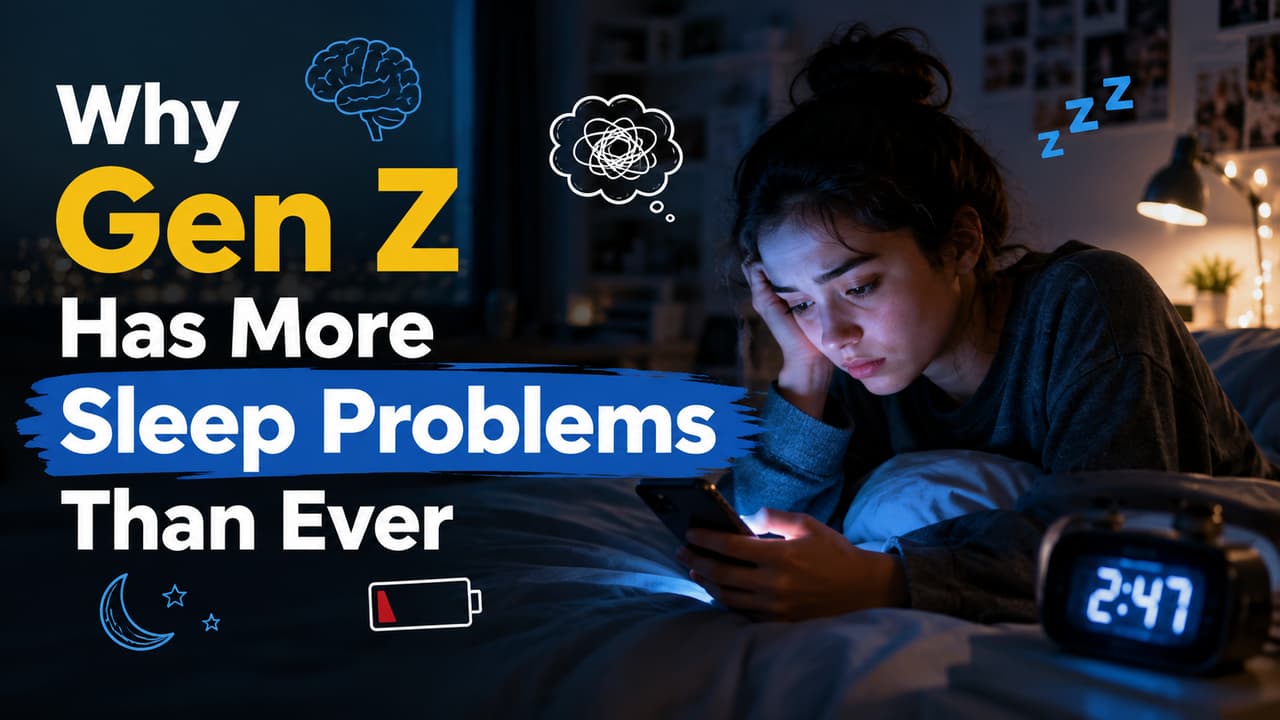
Why is Gen Z sleeping less than previous generations? Learn how smartphones, stress, caffeine and modern routines are contributing to poor sleep quality and long-term health concerns.
It appears to be increasingly difficult for Gen Z adults to get proper sleep. With more awareness of health and fitness, research still confirms that young people get less sleep and experience worse sleep quality than before. Sleeping at 3am or even 5am became a normal routine for Gen Z.
Specialists think there is much more behind it than staying awake too late—it is all related to modern life style, increased levels of stress and changes in routine. Occasional insomnia is quite normal; however, these seemingly harmless habits may be silently transforming into a problem.
Late-Night Screen Use
Modern smartphones seem to be the last thing many young people see before going to bed. According to scientific evidence, prolonged screen exposure during night hours affects one’s ability to fall asleep naturally, while endless scrolling makes the brain work longer than needed.
Stress of Modern Day Life
The stress associated with studying, career concerns, monetary constraints and peer pressure has made youth prone to mental stress. Experts have found that people with an overactive brain cannot easily switch off their brain to go to sleep, even after having a stressful day.
Inconsistent Sleeping Patterns
Watching movies late at night, oversleeping on weekends, and the flexible nature of work or studies can disturb one’s internal body clock. As per sleep experts, irregular sleeping patterns lead to poor-quality sleep regardless of the fact that the person spends sufficient time in bed.
Caffeine Takes the Place of Sleep
Coffee, energy drinks, and sweetened drinks are now the most common drinks for staying awake during prolonged periods of study or work. They provide instant energy but can disturb sleep in the later parts of the day.
More Sitting, Less Moving Around
Young adults spend much time seated in classrooms, workplaces or glued to their gadgets. Gen Z stays online on phone and social media more than they go out of their home or even room. Scientific studies show that exercise is associated with improved sleep. Thus, it means that a sedentary lifestyle does not contribute to getting enough quality sleep.
Available 24/7 and Online
Notifications, messages and other social network updates create an impression of always being on duty. The “always on” society does not provide any mental relaxation, which makes it impossible for the brain to relax and switch off at night. One ping of notification is hard to resist even when they try hard not to touch the phone. The average screentime of Gen Z is reported to be 7 to 9 hours daily which is significantly higher than the other generations.
Final Thoughts
As most jobs are also shifting to digital mode, it increases the screentime usage. Gen Z suffers from poor sleeping habits due to several factors. Such simple actions as establishing a stable sleep schedule, limiting usage of gadgets and taking physical exercises may positively affect sleep. Given the increasing number of studies dedicated to the significance of sleep, it might be considered as one of the wisest steps for this generation.