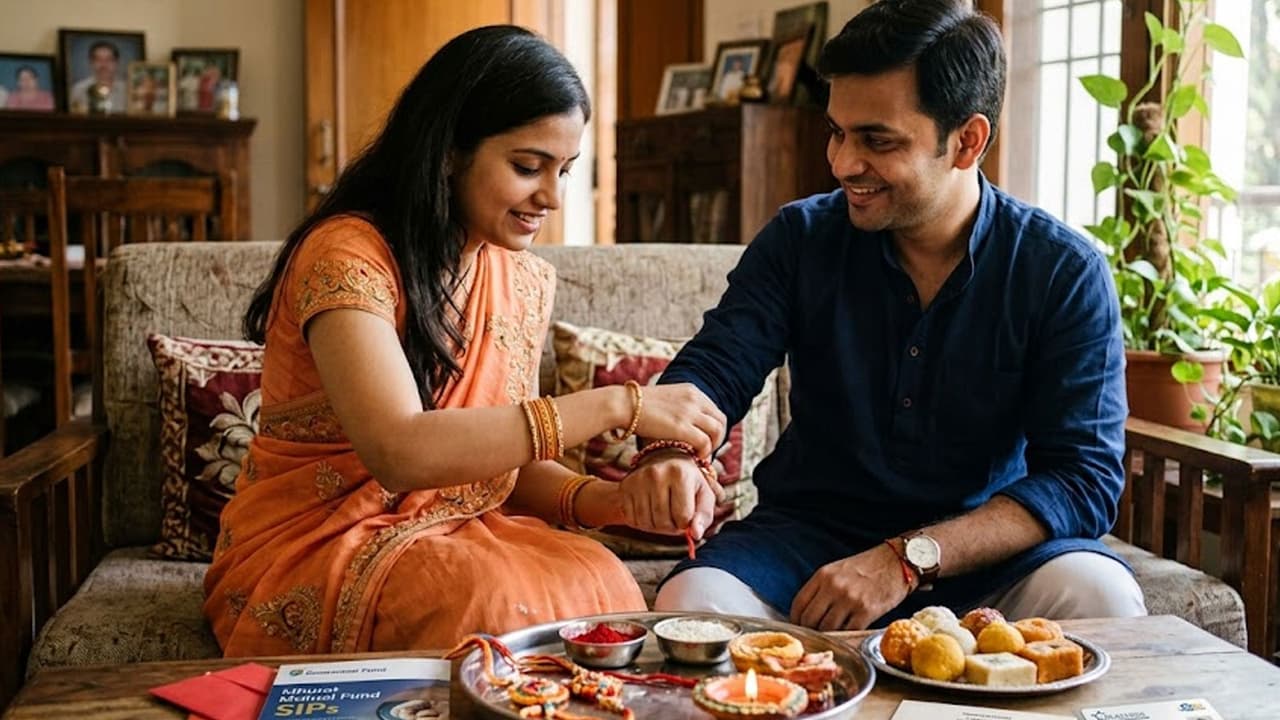
Raksha Bandhan celebrates the cherished bond between brothers and sisters. Discover the festival’s fascinating history, ancient myths, popular legends and the deeper significance behind tying the sacred Rakhi.
By Gavissiddesh.K Kalgudi, Teacher, Varthur.
The festival of Raksha Bandhan, which falls on the full moon day of the Shravana month, is a beautiful symbol of the love, trust, and care between brothers and sisters. This day is also known as Noolu Hunnime. For many, it’s also the day of Upakarma, a significant Vedic tradition. On Raksha Bandhan, a sister ties a rakhi on her brother’s wrist, performs an aarti, and prays for his health and long life. In return, the brother honours her love and trust with a promise to always stand by her. A rakhi isn’t just a thread. It’s a symbol of love that can’t be put into words, a bridge that connects hearts even when they are far apart, and a sweet reminder of childhood memories.
The Real Meaning of Raksha Bandhan
Since ancient times, Shravana Purnima has held a special place in India. Our culture has always given women the highest respect. As the saying goes, ‘Yatra naryastu poojyante ramante tatra devatah’—where women are honoured, divinity blossoms. So, we shouldn’t see Raksha Bandhan in a limited way, as just a day where the ‘brother must protect the sister’. It’s better to see it in a broader sense: a promise that siblings will support each other through thick and thin.
The thread itself might be small, but when touched by love, its value becomes immense. A single strand of silk can join two hearts. It makes invisible trust visible. It can emotionally connect people who have been apart for years in just a moment. That’s why a rakhi is not just a symbol of protection; it’s a symbol of love, affection, trust, and responsibility.
Also read: Raksha Bandhan 2026: How Is Its Ritual Performed? Complete Guide For Timing, Purnima, Ritual
The Story from the Mahabharata
A very popular story connected to Raksha Bandhan is about Shri Krishna and Draupadi. According to the Mahabharata, Krishna once injured his finger. Seeing this, Draupadi immediately tore a piece of her saree and tied it around his wound. Touched by her care, Krishna promised to always protect her. Later, during the infamous incident in the Kaurava court, it was Krishna who saved Draupadi’s honour. The moral of this story is deep: even a small act of love can build a bond that lasts a lifetime.
Also read: Raksha Bandhan 2026: When Should You Tie Rakhi? Check August 28 Shubh Muhurat and Purnima Tithi
Tales from Our Mythology
Another famous mythological story is about Indra and his wife, Shachi Devi. During a great war between the Devas and Asuras, the gods were facing a tough time. It is said that Indra sought advice from his guru, Brihaspati, who suggested performing a protection ritual on Shravana Purnima. Following this, Shachi Devi tied a sacred thread, or Raksha Sutra, to Indra’s wrist. The famous mantra chanted during this ritual goes:
‘Yena baddho Baliraja danavendro mahabalah। Tena twam anubadhnami rakshe ma chala ma chala॥’
This translates to: ‘I tie upon you the same rakhi that was tied to the powerful demon king Bali. O sacred thread, be strong, do not falter in protecting me.’
This mantra captures the true spirit of Raksha Bandhan—protection, trust, and good wishes. Some traditions also link the festival to the story of King Bali and the Vamana avatar of Vishnu.
Also read: Raksha Bandhan 2026: What Goes Into Perfect Rakhi Thali? Items-Timing, Here’s All You Need To Know
Popular Legends
History and folklore also have many stories about Raksha Bandhan. One is about Alexander the Great and King Puru (or Porus). According to legend, when Alexander invaded India, his wife Roxana sent a rakhi to King Puru, asking him not to harm her husband. Honouring the rakhi, Puru spared Alexander’s life in battle. Similarly, the story of Rani Karnavati of Chittor and the Mughal Emperor Humayun is also very popular. It’s said that she sent a rakhi to Humayun, seeking his help. While historians might debate how accurate these stories are, the values they represent—honour, protection of women, and mutual trust—still resonate with people today.
Upakarma and Sanskrit Day: Shravana Purnima is also a big day in the Vedic tradition. Many Brahmin communities perform the Upakarma ceremony, which is about spiritual cleansing and renewing their commitment to studying the Vedas. At the same time, Sanskrit lovers celebrate this day as Sanskrit Day. So, this one full moon day beautifully brings together the emotional bond of Rakhi, the Vedic tradition of Upakarma, and the knowledge tradition of Sanskrit.
Also read: Raksha Bandhan 2026: Samosa To Shakar Pare, 5 Homemade Snacks To Make For Your Family
The Message for Today: Times have changed. Families have become smaller. For jobs, education, and other opportunities, siblings often move to faraway cities and countries. Brothers and sisters who once lived under the same roof might now be thousands of kilometres apart. Yet, a single rakhi can erase that distance in an instant. Today, the rakhi is a symbol that should be tied not just to a brother’s wrist, but to the heart of every person who values love, trust, and humanity. If we broaden its message, it applies to all relationships—between friends, teachers and students, and different communities in society.
One Thread, So Many Feelings: The real beauty of Raksha Bandhan isn’t in the price of the rakhi, but in the love of the hand that ties it. That one thread a sister ties on her brother’s wrist brings back memories of childhood mischief. It makes you forget old fights. It brings distant relatives closer. It conveys deep love without a single word. It carries a silent prayer: ‘May you be happy, wherever you are.’ The moment a sister’s love and a brother’s care come together—that is Raksha Bandhan. The thread is small, but the bond it creates is huge. The thread is delicate, but the love in it is unbreakable. A rakhi is tied on the wrist, but its real place is in the heart. Today, we need to celebrate Raksha Bandhan not just as a tradition, but by understanding the values behind it. The love between siblings, mutual trust, family unity, respect for women, and social harmony—all these are wrapped up in this one tiny rakhi.
Also read: Raksha Bandhan 2026: 5 Movies to Watch With Your Sibling for Perfect Family Night, Where to Watch Them