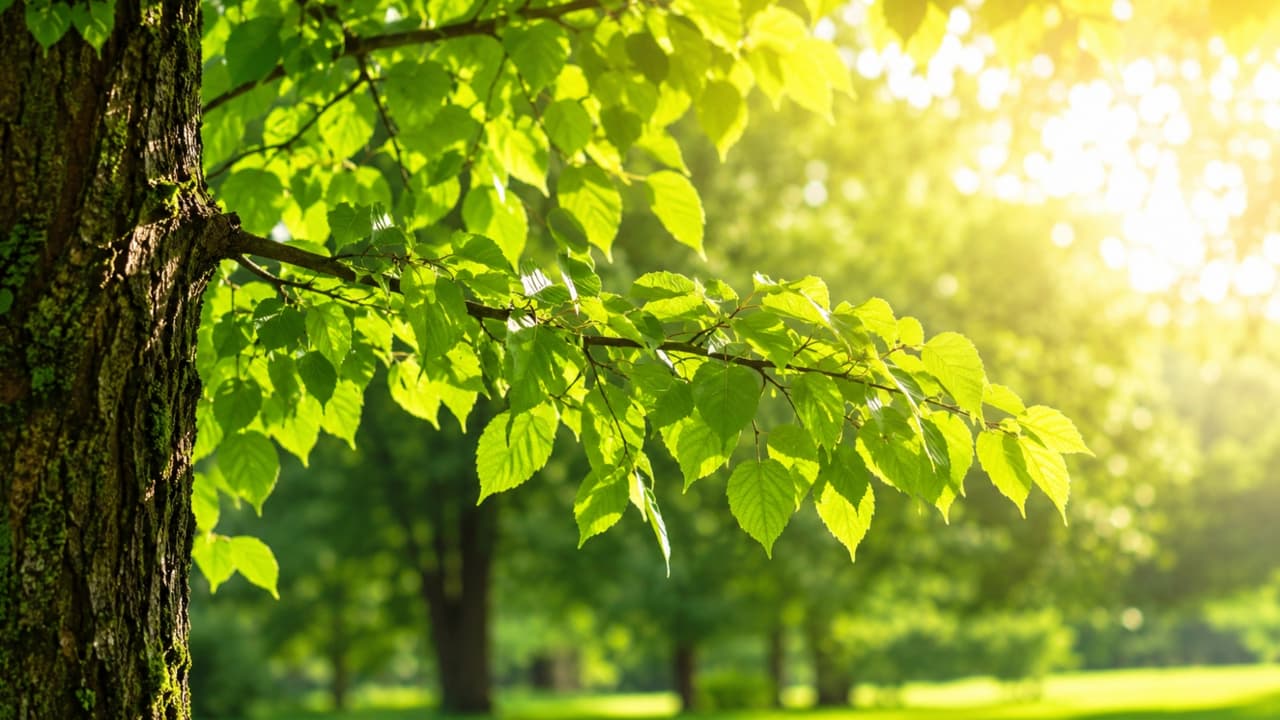
Why Trees Produce Oxygen: Why do trees produce oxygen? Know the entire process of photosynthesis, the truth about oxygen day and night and interesting science facts related to trees.
How Trees Make Oxygen: Whenever there is talk of environment, the first thing that is said is that trees provide oxygen, hence plant trees. But do you know why trees provide oxygen? Do they do this to help humans? The answer to this is hidden in science. Trees do not produce oxygen for humans, rather they produce oxygen on their own during the process of producing their food. This oxygen later gets mixed in the environment. This is useful for humans and all other living beings.
How do trees make their food?
Trees also have life. They also need energy to stay alive. But like animals they cannot eat food. So they cook their own food. This process is called Photosynthesis. Photosynthesis is the biological process by which green plants, algae and some bacteria make their food with the help of water and carbon dioxide in the presence of sunlight and release oxygen. Trees need 3 things for this process-
- sunlight
- Water
- Carbon dioxide (CO₂) present in the air
- The green color (chlorophyll) present in leaves catches sunlight and with its help trees make their food.
How is oxygen made?
When the tree receives sunlight, during-
- Trees take carbon dioxide from the air.
- Takes water from the soil through the roots.
- And then makes food with the help of sunlight.
In this entire process, oxygen is produced as a by-product, which trees release into the air through small holes (stomata) in their leaves. Meaning, trees release oxygen because it is part of their natural process of making food.
Do trees provide oxygen day and night?
It is a misconception that trees keep releasing oxygen 24 hours a day. In fact, most trees take in light (synthesize) and release oxygen during the day, when sunlight comes out. There is no light at night. At that time most trees also respire like other organisms and release carbon dioxide using a small amount of oxygen. The amount of oxygen produced during the day is generally much more than at night.
Do all plants give oxygen?
Yes, almost all green plants and trees release oxygen with the help of light. However, this quantity may change in different plants according to their size, age, species, season and availability of light.
Why are trees important for us?
Trees not only provide oxygen, but also…
- Help in keeping the air clean.
- Take carbon dioxide.
- Helps in reducing the temperature.
- Prevent soil erosion.
- Provide space to birds and animals to live.
- Help maintain the natural cycle of rain.
- For example, if there are more trees in a city, the temperature there in summer is lower compared to the surrounding areas with less greenery.
Do only trees make oxygen?
No. A large amount of Earth’s oxygen is also produced by phytoplankton and other aquatic plants living in the oceans. Therefore the ocean also plays a major role in the Earth’s oxygen cycle.
2 facts related to trees and oxygen
- According to science, about 50% to 80% of Earth’s oxygen comes from marine phytoplankton and other microorganisms.
- The amount of oxygen in the Earth’s atmosphere is about 21%.
Content Source: NASA Earth Observatory, National Geographic, Encyclopaedia Britannica, NOAA (National Oceanic and Atmospheric Administration).