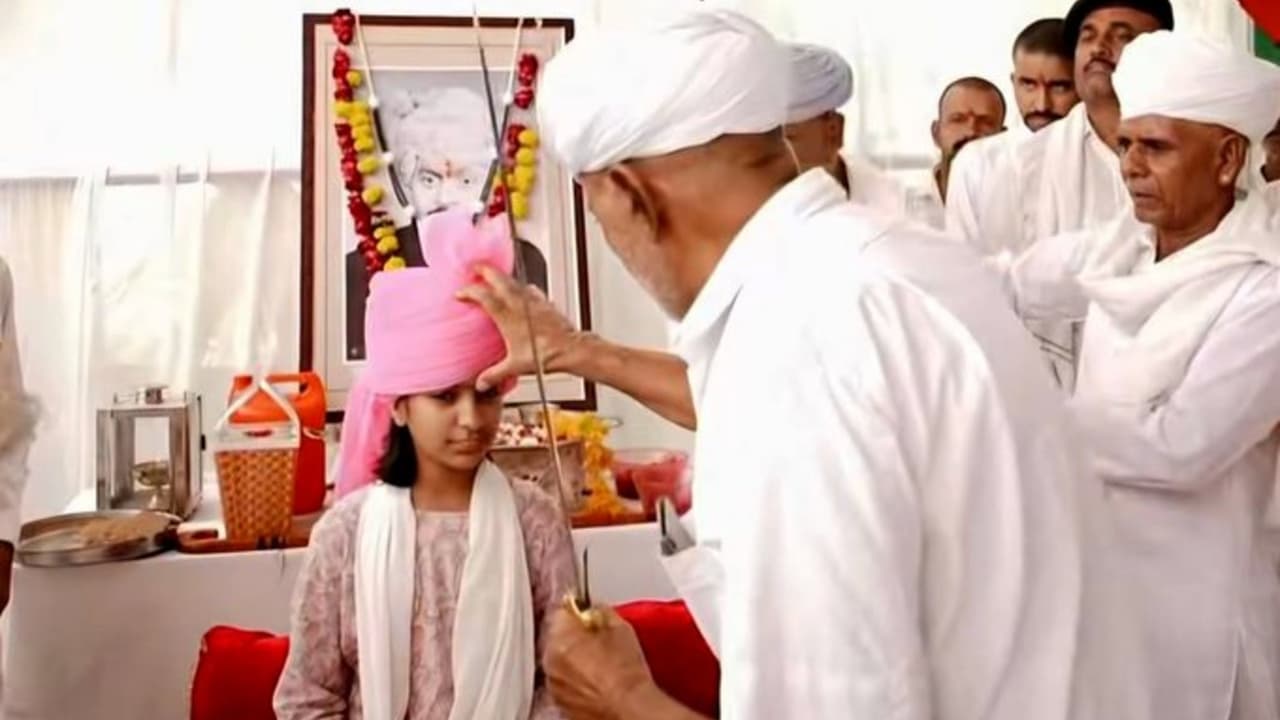
13 year old Tejaswi Kumari Jodha became the first female heir in Kherwagarh, Pali, Rajasthan. The ‘Paag Ka Dastoor’ ritual, which took place after 65 years, brought a major change in the Rajput tradition and presented a new example of gender equality.
Tejasvi Kumari Jodha: A historic decision was taken in Kherwa village of Pali district of Rajasthan, which gave a new direction to the years-long tradition of Rajput succession. A 13-year-old teenager has been declared the family’s official heir for the first time in a royal succession ritual that has been restricted to men for centuries. This decision was not limited to just one family, but emerged as an important message towards social change and gender equality. The stunning Kumari Jodha was accepted as the new heiress of the Kherwagarh dynasty in the traditional “Paag ka Dastoor” ceremony held on Thursday. After the death of his father Harish Chandra Jodha, this responsibility was handed over to him. For those present at the ceremony, this moment was emotional as well as historic.
The story of new beginning echoed in the 17th century fort
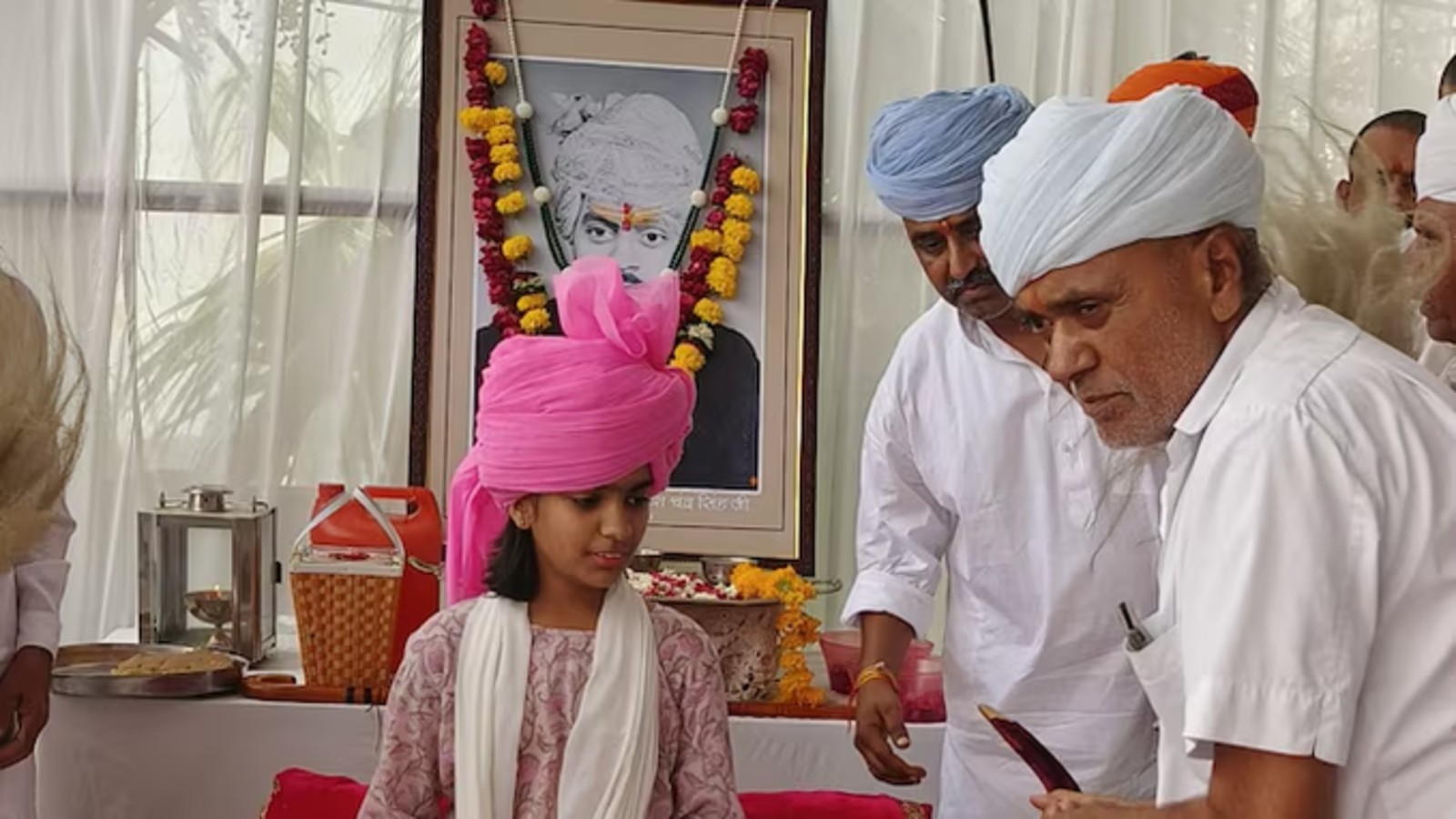
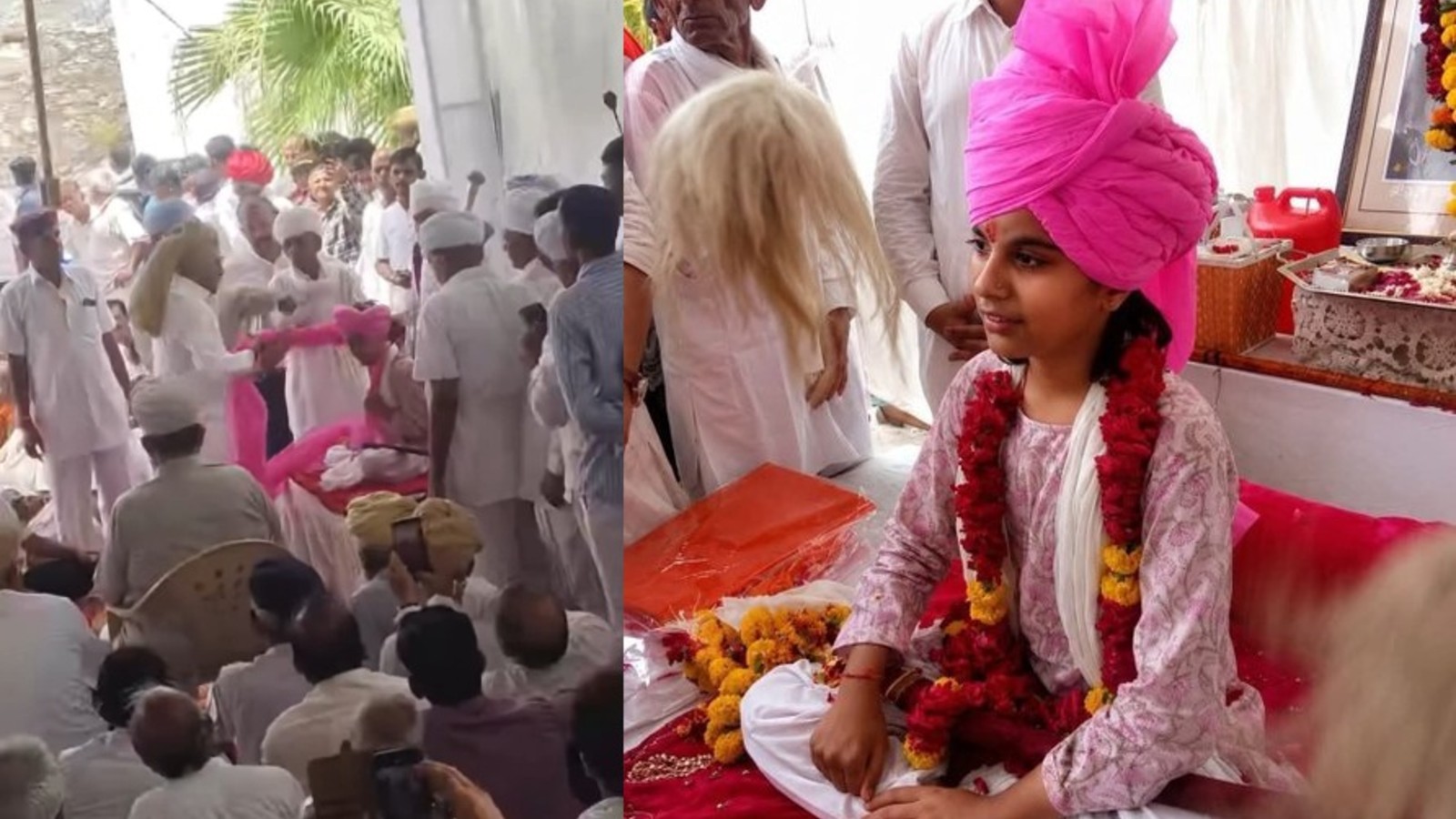
The entire event took place at the historic Kherwa Fort, which is said to be from the 17th century. Hundreds of villagers, community elders and family members witnessed this special occasion. A pink turban was tied on Tejashwi’s head amid Vedic chanting, which is considered a symbol of leadership and accepting responsibility in the tradition. The ceremony concluded with traditional tilak and other religious rituals. It was told that this special turban was sent by the former royal family of Jodhpur-Marwar as per tradition. This ritual, organized after years, attracted the attention of the entire area.
Tradition broken after 65 years, why was this big decision taken?
According to senior people of the community the “Paag ka Dastoor” was not conducted for about 65 years due to the absence of a male heir in the family. This time the elders of the family and society collectively decided that instead of ending the tradition, it should be changed with the times. Under this thinking, Tejashwi Kumari was declared the successor. This decision is being considered as an indication that the society is now moving towards balancing them with the changing times instead of abandoning the traditions completely.
Studies continue, resolve to fulfill responsibilities
Tejashwi, who studies in seventh class, said after the ceremony that her first priority will be education, but at the same time she will also fulfill her responsibilities towards family and village with full dedication. He also expressed his desire to carry forward his father’s dreams and work for the development of the village. His statement became a topic of discussion among the villagers. People say that this responsibility given at a young age will make Tejashwi’s personality stronger in the future.
‘Paag Ka Dastoor’: What is the ritual that changed history?
“Paag ka Dastoor” is considered a very sacred and important ritual in Rajput society. Whenever the head of the family passes away, his turban (Paag) is handed over to his successor, symbolizing the transfer of leadership and responsibility. In these areas which were under the Jodhpur-Marwar Empire, this practice was always limited to male heirs only. But this time destiny had decided something else. After the untimely demise of Harish Chandra Jodha, the head of the Kherwagarh clan, the entire family was in deep mourning. He had no son, due to which this ceremony could not be organized in this grand fort for the last 65 years. But this time a bold decision was taken to break the deadlock.
Vedic chanting and that pink turban: a moment full of suspense
As soon as the recitation of Vedic mantras began, a supernatural silence spread throughout the fort. 13 year old Tejaswi Kumari Jodha was sitting in front of the priests with full dignity. Then came the moment for which everyone was waiting. As per tradition, a ceremonial pink turban specially sent by the former royal family of Jodhpur-Marwar was placed on Tejashwi’s head. This pink color was not just a cloth, but it symbolized the end of mourning and assuming a huge princely responsibility. When Rajshahi Tilak was applied on Tejashwi’s forehead, the eyes of the elders present there were filled with tears. This was a rare and progressive step towards gender equality, which was impossible to imagine until recently.
The unfulfilled dream of a 7th class student and a father: What will happen next?
Tejasvi Kumari Jodha is currently only a seventh class student, but now the responsibility of the development of an entire clan and village rests on her shoulders. When Tejashwi was talked to after this historic moment, there was an amazing suspense and confidence in his words. She very maturely said that she will never give up her studies and will pay full attention to her education as well as handle these new and huge responsibilities assigned to her. Tejashwi pledged that she would work towards fulfilling the unfulfilled vision and dreams of her late father for the development of this village. The villagers are considering this step as a great example of changing India and modern social thinking, where traditions have been weighed on the scales of equality without destroying them.
Is the social thinking of Rajasthan changing?
Local people described this decision as not just a family decision, but a symbol of changing social attitudes. She believes that it is the need of the hour to give equal rights to women while respecting the traditions. Experts also believe that such decisions give a positive message to the society and make the coming generations believe that leadership ability is not only related to gender, but to the ability to shoulder responsibility.
A historical moment that wrote a new chapter
This incident of Kherwagarh was not just a succession ritual of a royal family, but it also wrote a new story of social change. The declaration of a daughter as heir for the first time in a tradition that has been going on for centuries is an indication that change, albeit slowly, is making its place in the thinking of the society. Now people’s eyes will be on how Tejashwi Kumari takes her father’s legacy forward and whether this historic step sets a new example for other traditional families in the future.