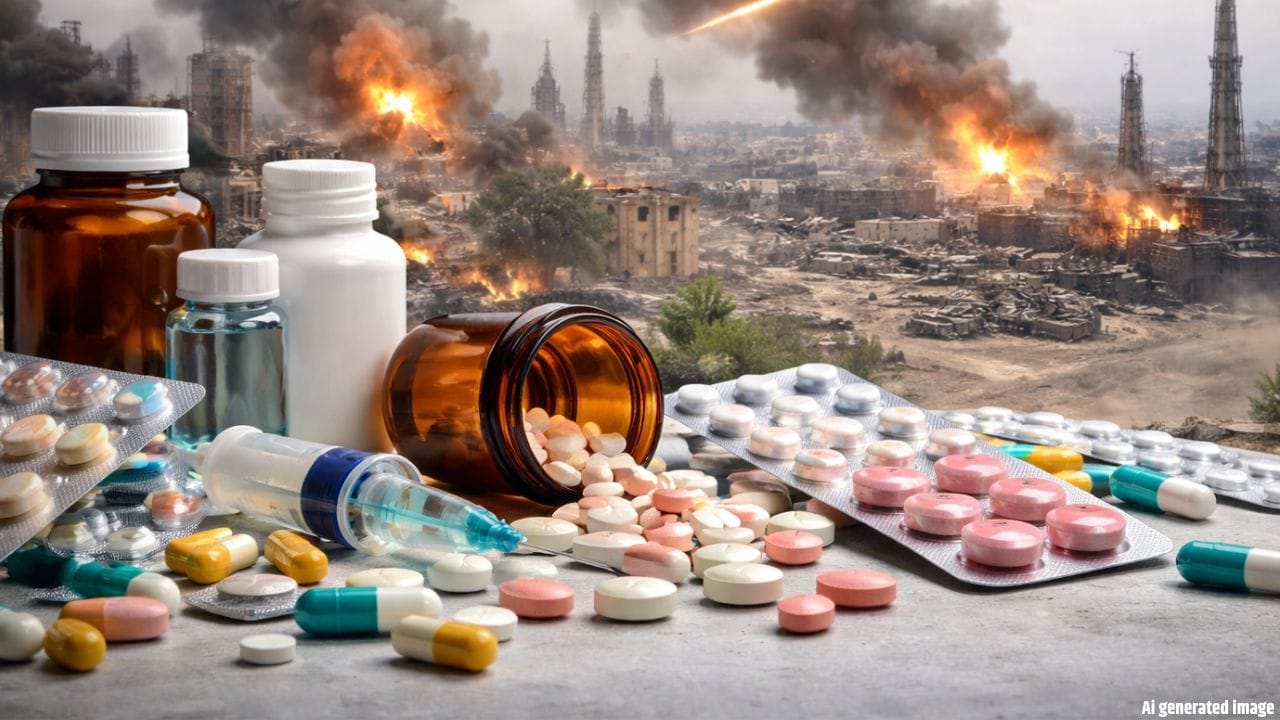
Essential Medicines Price Hike
The government is considering increasing by 10 to 20 percent the prices of life-saving medicines used in the treatment of cancer, antibiotics and injections of everyday use. Due to the ongoing tension in Western Asia, the cost of making medicines has suddenly increased, due to which the government may have to take this drastic step to maintain the supply.
Impact of crisis in Gulf countries on medical bills
Actually, in the process of making medicines, special types of chemicals called ‘solvents’ are used. These solvents, used to dissolve and purify medicines, are linked to the supply chain of crude oil and gas, which mainly come from the Gulf regions. Due to the ongoing turmoil there, there is a huge shortage of these chemicals.
Although these chemicals are not present in the final medicine, the entire manufacturing process cannot be completed without them. Due to security reasons, pharmaceutical companies cannot keep a large stock of these. In such a situation, if this crisis continues for two-three months, there may be a shortage of many essential medicines in the market.
Will drug prices increase forever?
It is a matter of relief that the government is not increasing the prices of medicines forever. According to sources, this will be only a short-term or temporary arrangement. The government is working on the proposal that this 10-20 percent increase in prices should be for a period of at least three months. As soon as the global supply chain becomes normal and the movement of chemicals improves, the prices of medicines will return to their previous levels. Officials are clear that they definitely want to help the pharma industry, but consumers will not be kept under the burden of inflation for long.
Compulsion or profit of pharma companies?
Major industry organizations like Indian Pharmaceutical Alliance (IPA) and Organization of Pharmaceutical Producers of India (OPPI) have put forward their concerns before the government. Drug manufacturing companies argue that they themselves can no longer bear this huge increase in costs because their profits have already reduced significantly. Their argument is that if there is no relief in prices, the production of some essential medicines will become an economically loss-making deal and they will be forced to stop production. A section of the industry had demanded an increase in prices by 50 percent, but the government has made it clear that any increase beyond the calibrated (balanced) range of 10 to 20 percent will not be approved under any circumstances.
Trouble regarding old and new stock
There is also a technical problem involved in this entire process. If expensive medicines are produced during this crisis, then at what rate will the expensive stock left with the companies be sold after the situation becomes normal? The government is currently considering this aspect seriously. To increase the prices of these essential medicines which come under price control, the government can use those special provisions, which are applicable in exceptional circumstances in public interest.
This ongoing brainstorming within the government is expected to be completed soon, after which an official notification can be issued. The government’s effort is to protect the interests of the general public and ensure that there is no shortage of essential medicines in the market.