The Strait of Hormuz again became a battlefield. US intensified blockade and attacks on Iran, Iran retaliated. Is this conflict now the beginning of a global war and oil crisis?
US Iran Conflict: The hopes of peace in the Strait of Hormuz, which is called the lifeline of the world, have once again been shattered like a pack of cards. The interim ceasefire agreement between America and Iran has been completely broken. Along with this, the fear of the return of a destructive and full-scale war in the Gulf region has deepened, which can shake the economy of the entire world. On Tuesday, the US Army took a major step and again imposed a naval blockade on Iranian ports. This action has been taken in response to recent attacks by Iran on commercial ships. With this blockade, tension in the Middle East has reached its peak.
Why was the path of peace broken?
The US first imposed the blockade in April, which was lifted after an interim agreement in June. The purpose of that agreement was to continue talks for 60 days on issues related to Iran’s nuclear program and regional security. But the talks appear to be derailed following rising military tensions and attacks on ships in Hormuz.
Scroll to load tweet…
Suddenly reversed decision: Trump’s ‘toll tax’ diplomacy
This entire incident took a new turn on Monday when US President Donald Trump proposed a controversial proposal to impose a 20% passing levy on every commercial cargo ship passing through the Strait of Hormuz. Trump’s intention was to punish those forces who create obstructions in sea lanes.
Relief amidst stress: However, just hours before the blockade began, Trump abandoned the plan to charge this fee. Trump told reporters in the Oval Office that the kings and rich leaders of the Gulf countries called him and suggested another option to invest billions of dollars in America in exchange for fees, which he accepted.
Missiles rained from the sky: Iran shaken by US airstrike
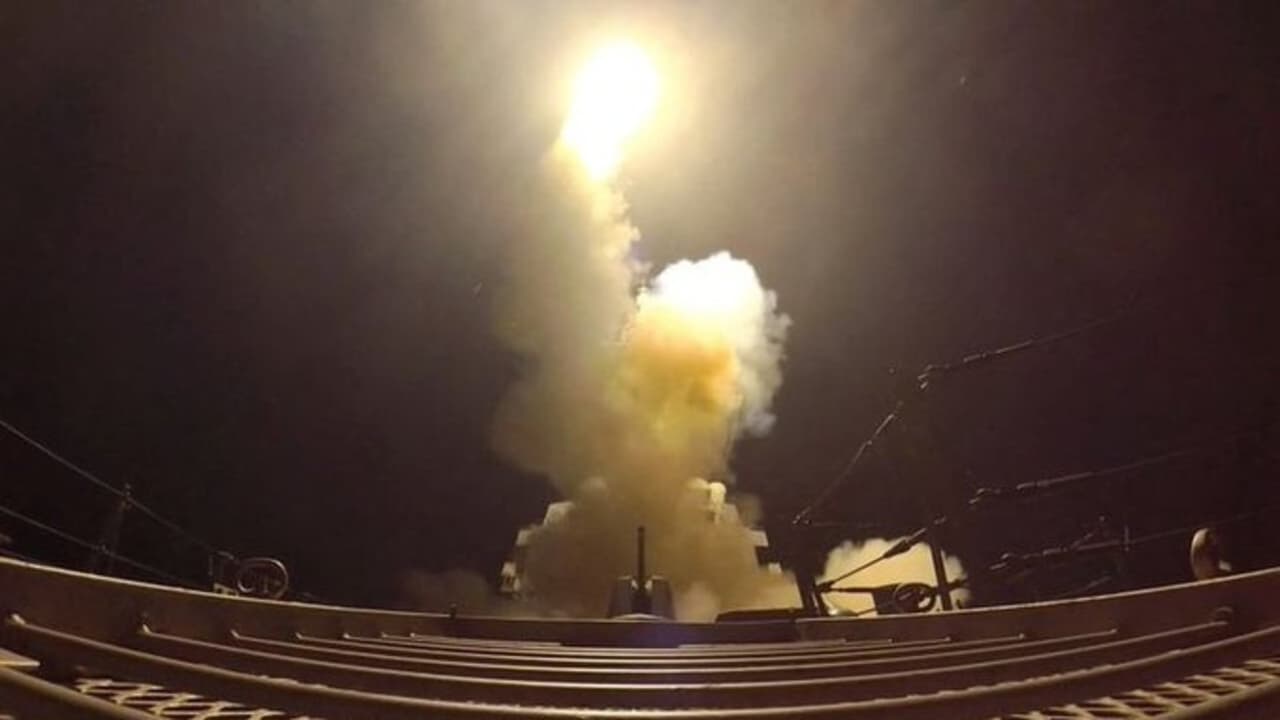
With the announcement of the blockade, the Central Command of the US Military started fierce attacks on Iran’s coastal targets. Citing a sensitive military operation, US officials confirmed that the overnight strike campaign targeted Iran’s coastal defense systems, missile sites, drone sites and naval capabilities. According to Iran’s government media agency IRNA, there were explosions at at least four locations in Bushehr city situated on the Persian Gulf. In addition, Ahvaz and the southern port city of Bandar Abbas were also shaken by the thunder of American missiles. The US military claims that these attacks will significantly weaken Iran’s ability to attack ships.
Scroll to load tweet…
Tit for tat: Iran’s bloody counterattack
Shocked by the American attacks, Iran also immediately retaliated. Iran’s paramilitary Revolutionary Guards targeted the interests of Bahrain, Kuwait and Jordan, disrupting the safe sea route monitored by the US. Apart from this, missiles were also fired at three oil tankers belonging to the United Arab Emirates (UAE). According to the International Maritime Organization, two innocent sailors were killed and 14 others were seriously injured in this attack on two tankers named ‘Mombasa’ and ‘Al Bahiyah’. Iran argues that these ships ignored its repeated warnings. Qatar has strongly condemned Iran’s move, calling it a serious violation of international rules.
Will the global economy survive?
The Strait of Hormuz is not a common waterway; Before the war, one-fifth of the world’s crude oil and natural gas passed through this narrow route. When America and Israel attacked Iran for the first time on February 28, Iran blocked this route, due to which the prices of oil and fertilizers started skyrocketing all over the world. On Tuesday morning, the price of Brent crude oil once again crossed $87 per barrel. However, it fell to $78 after Trump decided not to levy the tax. But if the blockade continues, the global energy supply chain could come to a complete halt. Currently, a mediation team led by Pakistan is working round the clock to bring the US and Iran back to the negotiating table. Now it remains to be seen whether diplomacy can stop this gunpowder from exploding or the world will witness a great war.
Scroll to load tweet…
Is there any scope left for peace?
At present, ‘tit for tat’ attacks have started in the entire area. A mediation team led by Pakistan is working round the clock to revive the ceasefire so that both the countries can be brought back to the negotiating table. On the other hand, delegations from Lebanon and Israel are also meeting in Rome because their framework agreement with Hezbollah could also be in jeopardy if the Iran-US war breaks out. The world’s eyes are now on the mediators to see whether they can avert this gunpowder crisis or whether the global economy will head towards a major blackout.
3 latest questions and their answers related to Iran-America war
Question 1: Did US President Trump stick to his controversial decision to collect 20% passing levy (toll tax) from ships?
answer: No. Although President Donald Trump had announced on Monday to impose a 20% tax on ships passing through the Strait of Hormuz, just hours before the beginning of the blockade, he abandoned this plan at the request of Gulf allies. The “kings and rich” of the Gulf suggested him another major option of investing trillions of dollars in the United States instead of collecting tolls, which Trump accepted.
Question 2: What bloody counterattack did Iran carry out in response to the US air strikes?
answer: Shocked by the attacks, Iran immediately targeted the interests of Bahrain, Kuwait and Jordan. Apart from this, missiles were fired at three large oil tankers belonging to the United Arab Emirates (UAE). According to the International Maritime Organization, two innocent sailors were killed and 14 others were seriously injured in this attack on two tankers named ‘Mombasa’ and ‘Al Bahiyah’. Iran’s Revolutionary Guard said that the ships had ignored their warnings.
Question 3: What impact did this new crisis have on global crude oil prices?
answer: One-fifth of the world’s crude oil and natural gas passes through the Strait of Hormuz. As news of the blockade and strikes broke early Tuesday, the price of international benchmark Brent crude oil suddenly surged past $87 a barrel. However, later when Trump announced no toll tax and investment deal, the prices softened slightly and fell to $78. But if the war prolongs, it may again cross $120.