Is the last 1% of India-US trade deal stuck on some major condition? What big signal did Trump give to Modi by calling him a “good friend”? Despite 99% of the deal being completed, on which issues is the brainstorming going on? Could the USTR’s new list and the tariff dispute bring a new turn in the path of agreement?
New Delhi / Washington: Are the world’s two biggest superpowers moving towards a secret deal that will completely change the course of the global economy? From the White House to the corridors of Delhi, there is only one discussion at present – the historic Bilateral Trade Treaty (BTA) between India and America. US President Donald Trump himself has come in front of the media and said something which has surprised everyone. Trump simply admitted, “We’re making a lot of money…”. But what is the real suspense behind this billion dollar deal?
‘He is my good friend…’: Trump’s sudden change in stance and Modi connection!
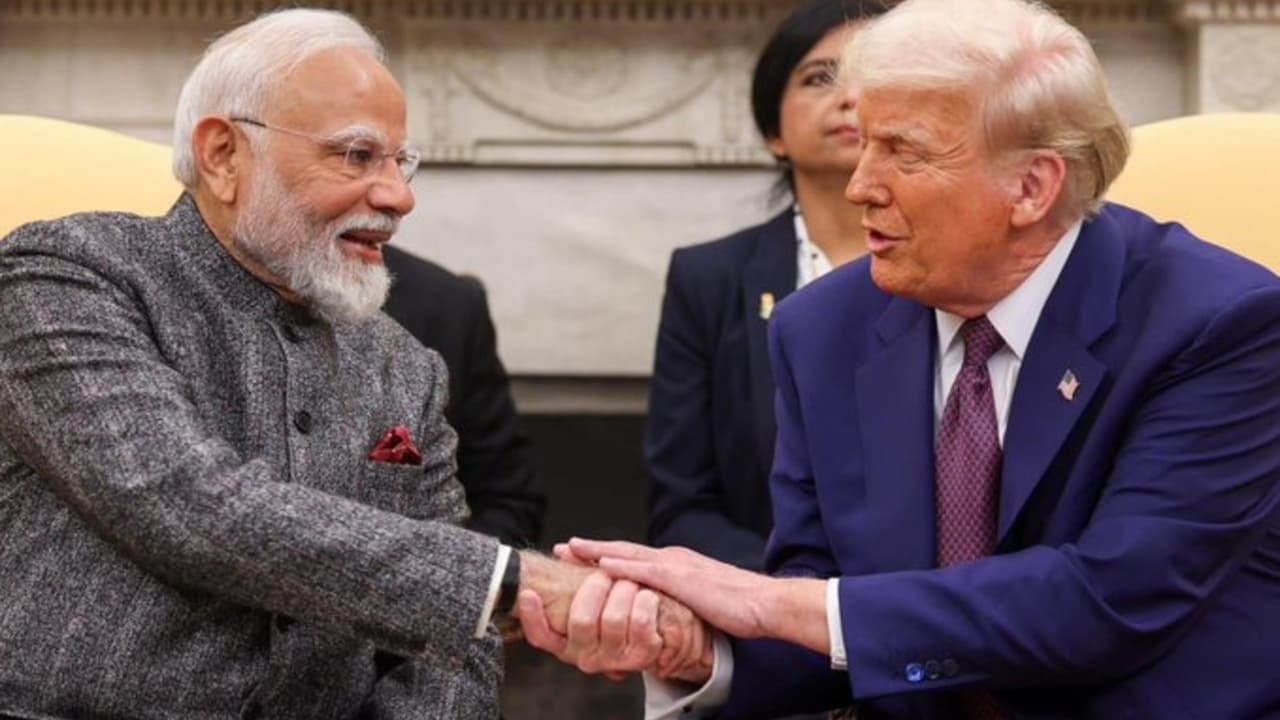
When journalists raised questions on India-US relations in the press room of the White House, Trump’s style was worth seeing. Trump, who has been criticizing India’s tariff policies for years, this time praised Prime Minister Narendra Modi by calling him his ‘good friend’.
Trump said, turning the pages of the past, “For years India took advantage of America… They imposed huge tariffs on us and did not pay anything.” But right after this statement there was a big twist in the story. Trump said smilingly, “Now the situation is completely opposite and we are making a lot of money with India. But we will definitely reach an agreement because I like your Prime Minister (Narendra Modi) very much, he is a good friend of mine, and we get along very well.” This statement of the President has made it clear that a big game is going on behind the scenes between the two countries.
Suspense of only 1%: Where is the problem?
How close this deal is can be gauged from the fact that both US Ambassador to India Sergio Gore and India’s Union Commerce Minister Piyush Goyal have mentioned the same mysterious figure – 99 percent! During the ‘CITI 2026 India Conference’ held in Mumbai, Ambassador Gore told the media that the negotiations of this mega-deal have been 99% completed. Now all the suspense hinges on that last ‘one percent’. The question in the minds of defense and trade experts is that what is going on in the closed room of that last 1 percent?
Scroll to load tweet…
Union Minister Piyush Goyal also lifted the curtain on this suspense and said, “A consensus has been reached on all the main issues. I am confident that we will complete the first phase of the bilateral trade agreement with America as soon as possible.” According to sources, this last hurdle is not a big dispute, but is related to some minor legal nuances and the new US tariff structure that will be implemented after the expiry of the existing 10% duty. At all costs, India wants to ensure that its exporters get more benefits than competing countries.
What is Washington’s ‘game plan’ and that mystery list of 54 countries?
Amidst these entire trade talks, America has also taken a step which has created a stir in diplomatic circles around the world. The Office of the United States Trade Representative (USTR) has suddenly released a list of 54 countries including India, China, Australia, Israel, Japan, UK and Russia.
America claims that these countries have completely failed to ban the import of goods made with forced labour. On one hand, while Trump is calling PM Modi his best friend and setting a deadline (coming few weeks or months) to sign the trade agreement as soon as possible, on the other hand, this list of USTR has created a new suspense regarding future strategies. Is this a policy of America to create pressure, or through this trade agreement, both the countries are creating a new maze to overtake China in the field of Artificial Intelligence (AI), semiconductor manufacturing and critical technology? The answer will soon be revealed to the world.
In which areas new opportunities can open up?
The proposed agreement is not limited to import-export only. Both countries are also emphasizing on increasing cooperation in artificial intelligence (AI), semiconductor manufacturing, advanced technology, innovation and strategic industries. Experts believe that if this agreement is successfully implemented, Indian companies may get more opportunities in the US market, while India may become a more attractive destination for American investors.
Can a historic announcement be made soon?
Recent statements from officials of both countries indicate that the first phase of the agreement may be completed in the coming weeks or months. If this happens, it will prove to be an important achievement in India-US economic relations. Now all eyes are on that “last 1 percent” that will decide when the much-awaited India-US trade agreement formally becomes a reality and how economic relations between the two countries reach new heights.