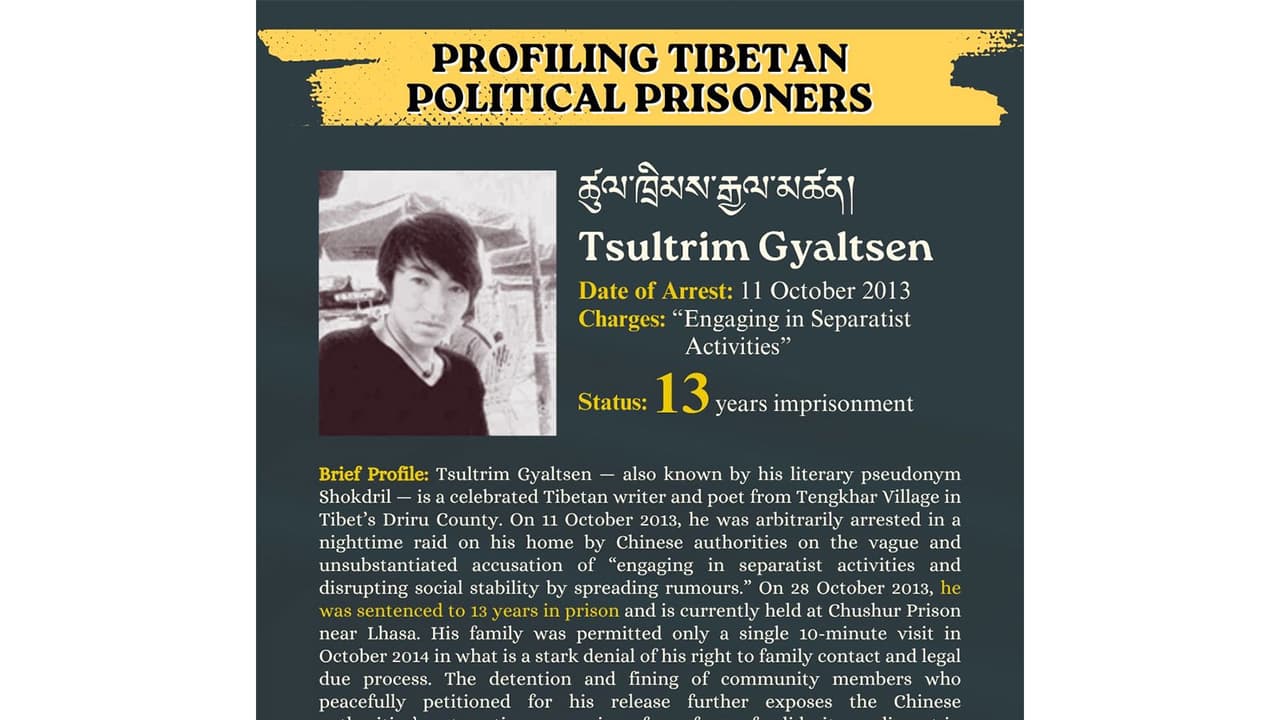
The Central Tibetan Administration highlighted the case of Tibetan writer and political prisoner Tsultrim Gyaltsen, arrested in 2013 and sentenced to 13 years, calling it emblematic of China’s human rights abuses and suppression of dissent in Tibet.
The Central Tibetan Administration (CTA) has spotlighted the case of Tibetan writer and political prisoner Tsultrim Gyaltsen, renewing attention on alleged human rights violations in Tibet. In a recent post on X, the CTA’s Tibet Advocacy Section profiled Gyaltsen, who was arrested on October 11, 2013, by Chinese authorities on charges of “engaging in separatist activities.”
The Case of Tsultrim ‘Shokdril’ Gyaltsen
He was subsequently sentenced to 13 years in prison later that month. According to the CTA, Gyaltsen, also known by his literary pseudonym “Shokdril” is a respected poet and essayist from Driru County. His works, including Chimes of Melancholic Snow and The Fate of Snow Mountain, have earned recognition for their reflective and critical tone on Tibetan identity and society.
The CTA alleged that his arrest was arbitrary, carried out during a nighttime raid, and based on vague accusations of spreading rumours and disrupting social stability. He is currently believed to be held at Chushur Prison near Lhasa.
The administration further claimed that Gyaltsen’s family has faced severe restrictions, with only a single brief visit reportedly allowed in October 2014. It also highlighted punitive measures taken against community members who had peacefully called for his release, describing it as part of a broader pattern of suppressing dissent.
Emblematic of Broader Suppression
The case has been presented by the CTA as emblematic of wider concerns regarding freedom of expression and due process under Chinese governance in Tibetan regions.
China’s Position
China has consistently denied allegations of rights abuses in Tibet, maintaining that its policies aim to ensure stability and development.
Renewed Calls for International Advocacy
Gyaltsen is expected to complete his sentence and be released in October 2026. The CTA continues to call for international attention to such cases, urging global institutions and governments to advocate for the rights of Tibetan prisoners and greater transparency in legal proceedings. (ANI)
(Except for the headline, this story has not been edited by Asianet Newsable English staff and is published from a syndicated feed.)