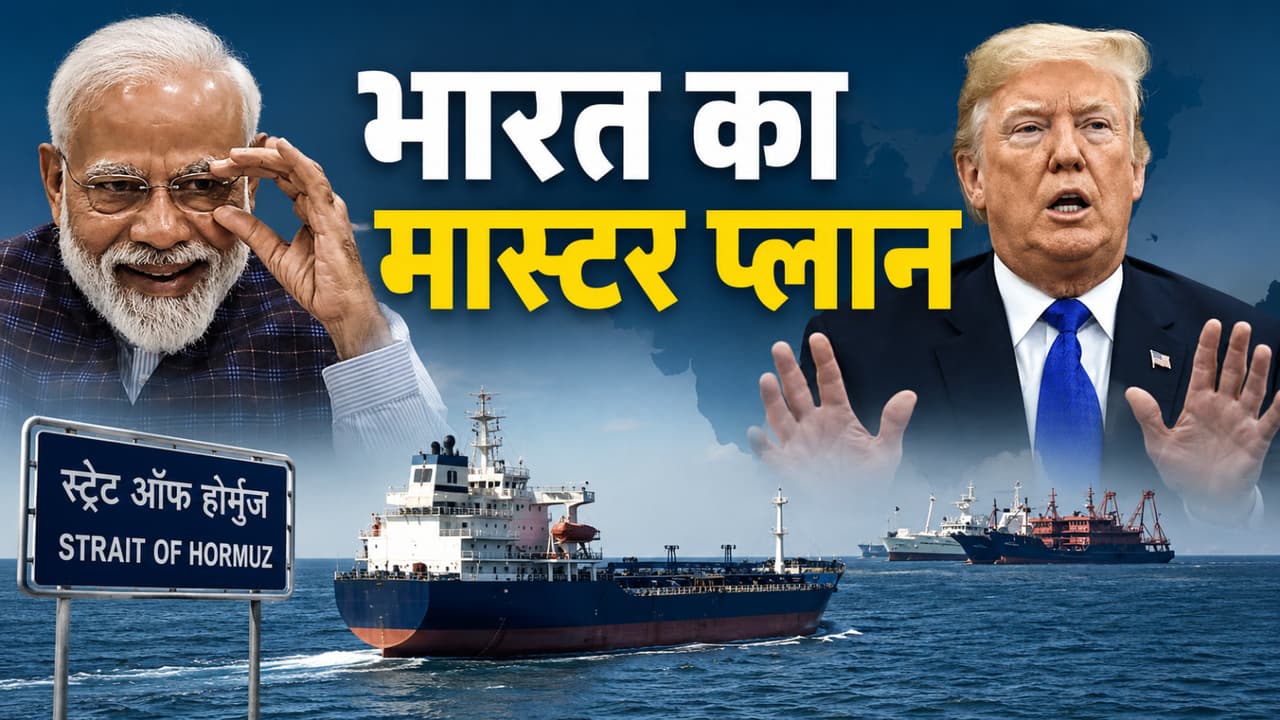
Strait Of Hormuz Crisis: Why is the Strait of Hormuz considered such an important sea route for the world? Why is the Strait of Hormuz considered such an important sea route for the world? What impact can the increasing crisis on the Strait of Hormuz have on oil and petrol-diesel prices in India?
Currently, tension is at its peak on the Strait of Hormuz, which is counted among the most important sea lines in the world. The increasing military conflict between Iran and America has shaken the global energy supply. The situation is such that the movement of ships through this sea route has almost come to a standstill. This is the route through which about 20 percent of the world’s oil and a large amount of energy supply passes. Amidst this crisis, the news of relief for India is that many ships belonging to Indian interests have been successful in crossing the Strait of Hormuz safely. However, the situation still remains very sensitive.
Why is the Strait of Hormuz so important?
The Strait of Hormuz is one of the busiest and strategic sea routes in the world. This route connecting the Persian Gulf to the Arabian Sea is considered the backbone of global oil trade. Crude oil originating from big oil producing countries like Saudi Arabia, Iraq, UAE, Kuwait and Iran reaches different parts of the world through this route. In such a situation, any kind of military tension here directly affects the world economy and oil prices.
Also read: All is not well with Mumbai Indians? Inside story about Hardik came to light
How did India remove its ships?
Shipping Ministry Director Opesh Kumar Sharma informed that the Marshall Islands-flagged giant crude oil tanker “Nisos Keros” was successful in safely crossing the Strait of Hormuz on the night of 25-26 May. This ship is coming to India with about 2.70 lakh metric tons of crude oil and it is expected to reach Visakhapatnam by June 3, 2026. Although all the crew members of the ship are said to be foreigners, the Indian government is constantly keeping an eye on this entire operation.
Ongoing coordination between MEA and ministries
The government has not given much information openly regarding the safe movement of ships. Citing security reasons, the Shipping Ministry said that detailed information about how coordination is being made with Iran cannot be shared. However, the ministry made it clear that the entire coordination is being done through the Ministry of External Affairs (MEA). The decision as to which ship will leave first and which will be given priority is being taken in collaboration with the Petroleum Ministry and the Fertilizer Ministry.
Indian sailors safe
The Shipping Ministry also said that all the Indian sailors present in this sensitive area are currently safe. No untoward incident has been reported with Indian seafarers on any Indian or foreign flagged merchant ship. Regarding tracking of ships, the ministry said that public ship tracking data is currently helping in monitoring, although its misuse is also possible.
14 ships returned safely: Foreign Ministry
Foreign Ministry spokesperson Randhir Jaiswal said that so far 14 ships have successfully crossed the Strait of Hormuz and returned to India. He said that at present 11 Indian ships are still present in the Persian Gulf area. The government is constantly monitoring their activities and security.
Iran also gave information
Iran’s Islamic Revolutionary Guard Corps (IRGC) has claimed that in the last 24 hours, 24 ships succeeded in crossing the Strait of Hormuz in coordination with Iranian authorities. Even a day before this, IRGC had informed about the safe passage of 26 merchant ships. This indicates that despite the extremely tense situation, the movement of ships is continuing on a limited scale.
How much impact can it have on India?
India fulfills a major part of its needs through import of crude oil. In such a situation, if the crisis on the Strait of Hormuz continues for a long time, then it may also affect the prices of petrol and diesel, gas supply and inflation in India. Experts believe that at present India seems to be successful in handling the situation, but if tensions increase in West Asia, a major crisis may arise in the global energy market.
The world’s eyes are now on Hormuz
America-Iran tension is no longer an issue of just two countries. Its impact is clearly visible on global trade, energy security and maritime transport. At present, the major economies of the world are constantly keeping an eye on the situation in the Strait of Hormuz, because even a small movement here can affect the economy of the entire world.
Also read: PM Modi himself active on NEET paper leak! Government’s big statement in Supreme Court