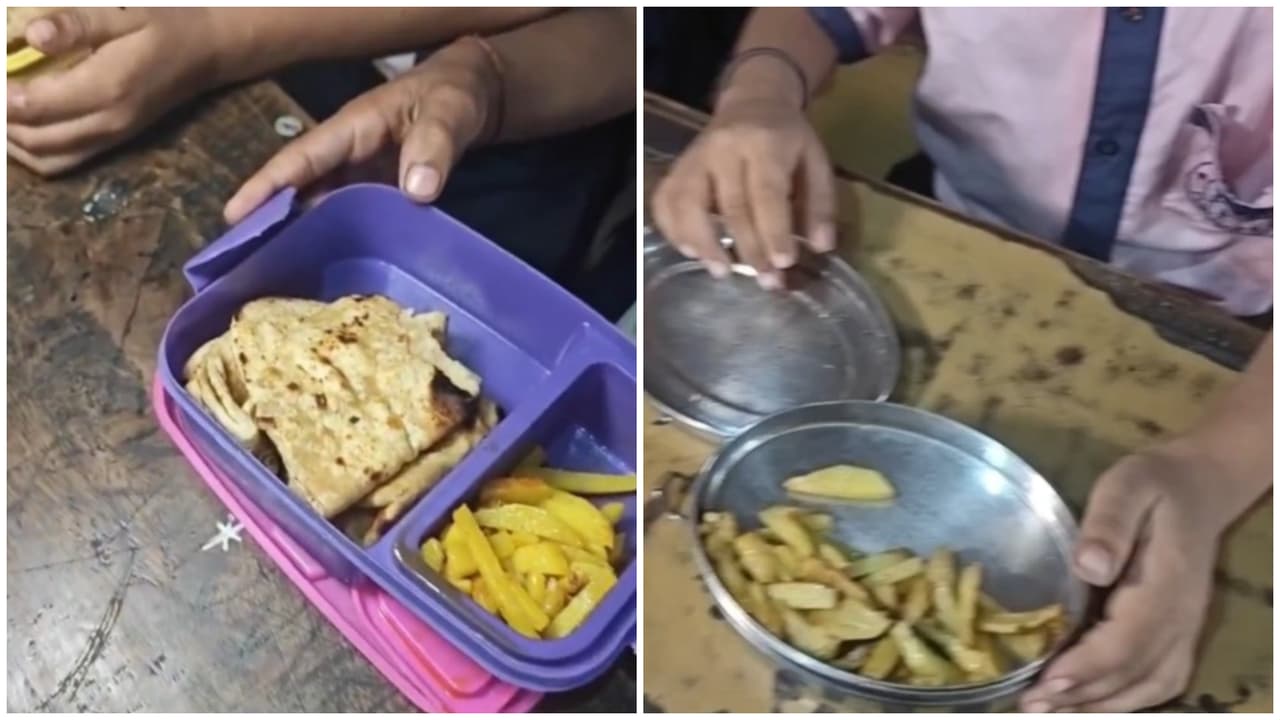
A routine lunch box inspection at a school has gone viral after a teacher discovered that nearly every student had packed a potato-based meal, triggering an online debate over children’s nutrition, rising food costs and what families can realistically afford to put in school tiffins.
A routine lunch box inspection at a school has gone viral after a teacher discovered that nearly every student had packed a potato-based meal, triggering an online debate over children’s nutrition, rising food costs and what families can realistically afford to put in school tiffins. The viral video, shared by the X, captures the teacher moving from desk to desk as excited children hand over their lunch boxes. She even helps some of the younger students open their tiffins before checking what they had brought for lunch.
As she looked through the meals, a pattern emerged. One child had aloo sabzi, another had aloo paratha, while several others had potatoes cooked with different vegetables. Almost every lunch box had potatoes in one form or another.
Visibly surprised, the teacher repeatedly asked the students why nearly everyone had brought aloo for lunch that day. The children quietly continued showing their meals as she reacted to the striking similarity across the classroom.
The clip was shared with the caption, “This video could be traumatic for protein paglus.”
Scroll to load tweet…
The post questioned the absence of protein-rich foods in children’s lunches, calling it “a matter of serious concern.” However, the video quickly divided social media users, many of whom argued that the issue goes far beyond simply choosing potatoes over protein.
Several users pointed out that affordability is a major factor, noting that protein-rich foods such as paneer, soya, beans and pulses are significantly more expensive than potatoes, making them difficult for many families to include regularly in school meals.
Others defended the lunches, arguing that homemade potato dishes are still far healthier than processed alternatives like instant noodles, biscuits or packaged chips, which many children also bring to school.