Railway Minister Ashwini Vaishnav announced 8 new reforms under ‘Reform Express’. Now a total of 17 reforms have been implemented. Their aim is to bring major changes in freight transportation, logistics and construction. The ministry aims to carry out 52 reforms in 52 weeks.
New Delhi [भारत]July 15 (ANI): Continuing the ‘reform express’, Railway Minister Ashwini Vaishnaw on Tuesday announced eight more structural reforms to modernize the Indian Railways. With this the total number of reforms implemented under this initiative has reached 17. The new reforms will bring significant changes in freight movement, logistics, manufacturing practices, project implementation, wagon design, skills and ease of doing business.
Addressing the media at Rail Bhawan in New Delhi, Vaishnav said Indian Railways is introducing a series of reforms to create a future-ready railway system. These reforms are part of the ministry’s aim to implement 52 reforms in 52 weeks to enhance efficiency, promote innovation and strengthen the railway ecosystem. Vaishnav said the reforms announced earlier under the Reform Express initiative have started yielding encouraging results.
Big change in fly ash transportation
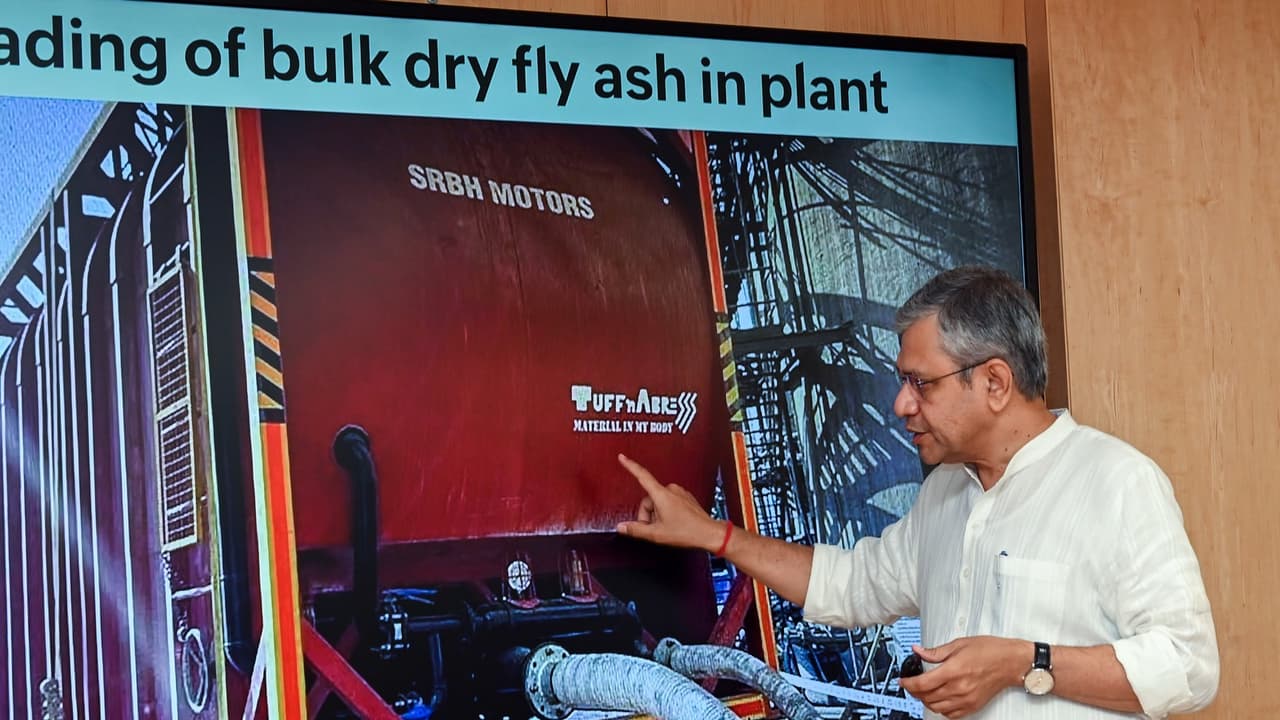
Vaishnav said India produces about 340 million tonnes of fly ash annually, of which about 96 million tonnes is used by the cement industry. Indian Railways transported about 13 million tonnes of fly ash during FY 2025-26, which is about four percent of the country’s total fly ash production. He said fly ash is traditionally transported through open wagons, causing dust pollution during loading, transportation and unloading. It also presents a significant environmental challenge when fly ash is stored in large ash ponds at thermal power plants.
To address these issues, Indian Railways has introduced a new containerized transportation system for fly ash. Under the new policy, specially designed ISO-standard containers will be used for transportation. These containers can be loaded directly from the power plant through a top-loading arrangement and unloaded without dust pollution using side-discharge or pneumatic systems.
Vaishnav said the closed-container system will enable pollution-free transportation, facilitate safe storage of materials at cement plants until they are required, and significantly improve logistics efficiency. Containers can be handled through reach stackers, making end-to-end movement from the power plant to the cement plant seamless. This improvement is expected to increase rail movement of fly ash, reduce dependence on road transport and transform an environmental challenge into an economically productive resource.
Reforms in Container Train Operator Licensing
The minister said diversification of railway freight beyond bulk commodities requires more containerisation. To boost container traffic, Indian Railways has undertaken a major structural reform in the container train operator licensing framework.
He said that under the existing system, container train operator (CTO) licenses were issued under four categories (Category I-IV), with a registration fee of Rs 50 crore for Category I and Rs 10 crore for each other category, along with route-specific restrictions and different registration requirements. This has now been replaced by a single unified pan-India container train operator licence.
Under the new framework, operators will be able to run container trains across the entire Indian Railways network without any category-based restrictions. The registration system has also been simplified through a uniform non-refundable registration fee of Rs 25 crore applicable on all routes. Vaishnav further said that the permits will be valid for twenty years and can be extended thereafter without payment of any renewal or extension fee subject to successful operation. This simplified licensing framework is expected to improve ease of doing business, encourage more private participation, increase containerization, attract more non-bulk cargo to the railways, reduce logistics costs and strengthen the freight ecosystem of the country.
New policy for fertilizer transportation
Highlighting the importance of fertilizer movement for the agriculture sector, Vaishnav said Indian Railways currently handles about 85 per cent of fertilizer transportation in the country. He said the existing freight charging system consisted of about fifty separate slabs, making operations complex.
Under the new reform, freight charges have been simplified to a per tonne per kilometer basis, with a rationalized tariff structure having three variations. This improvement also allows transportation of fertilizers through containers. Unlike the previous system, where the entire rake remained stalled at a single destination until completely unloaded, now individual containers can be unloaded and stored at rake points as per demand. This will enable phased distribution based on the requirements and lifting capacity of the distributors. The minister said containerized movement will improve wagon turnaround, reduce rake blockage, facilitate flexible distribution, protect fertilizers from rain and weather-related losses and improve overall logistics efficiency.
Skilling Policy for Railway Projects
Vaishnav said railway infrastructure projects involve safety-sensitive operations that require specialized skills, precision engineering and adherence to stringent quality standards. To ensure deployment of capable manpower, Indian Railways has launched a comprehensive policy for skilling of artisans engaged in railway projects and works.
This policy establishes a structured framework for identification, assessment and certification of workers engaged in critical trades such as welding, fitting, masonry and other specialized construction activities. Under the new framework, project-specific skill requirements will be defined, and workers will be assessed practical and viva through designated testing authorities. Successful candidates will receive QR code-enabled skill certificates which will be linked to a live verification database.
The minister said the implementation of the policy will start with major and complex railway projects, including bridges and tunnels, and will be expanded to all zonal railways and production units in the next twenty-four months. He said that this initiative will ensure that only certified artisans and supervisors are deployed in specialized railway works, standardize skill assessment across Indian Railways, facilitate real-time verification of credentials, improve workmanship, strengthen quality assurance and promote skill upgradation in the country’s infrastructure sector.
Improvement in construction ecosystem and projects
Ashwini Vaishnav said that after the success of contractor qualification reforms launched earlier this year, Indian Railways has now launched another major set of reforms to strengthen the construction ecosystem and improve project execution. The minister said the reforms are aimed at encouraging serious and capable contractors, improving the quality of construction, reducing disputes and ensuring timely completion of railway infrastructure projects.
As part of the reforms, 10 per cent performance security will now be obtained at the beginning of the contract, rather than being recovered through deduction from the running bills. This will ensure that only serious contractors participate in railway projects and strengthen accountability during execution. To discourage litigation-driven contracting practices, strict eligibility criteria have also been introduced. Contractors who have pending litigation amounting to more than 50 per cent of their net worth will not be eligible to participate in Railway tenders.
The reforms also include Contractors All Risk Insurance and Professional Indemnity Insurance to strengthen risk management during project execution and provide protection against construction-related risks. Vaishnav said Indian Railways has also put in place a clearly defined and sequential land transfer mechanism to reduce disputes and facilitate timely commencement of projects.
‘Rail Bhoomi’ portal for land management
The Minister also mentioned ‘Rail Bhoomi’, a web-based platform developed by CRIS for end-to-end management of land acquisition. The platform integrates various railway applications including IRPSM, IPAS and HRMS, enabling seamless exchange of information, online processing of major land acquisition stages, efficient workflow management and real-time monitoring through dashboards and management information systems. This portal is expected to expedite land acquisition, improve project planning and facilitate timely execution of railway infrastructure works.
New policy for wagon design
Highlighting another major structural reform, Vaishnav announced a new policy for wagon design approval, aimed at promoting innovation and enabling industry participation in designing special goods wagons.
The minister said that under the existing system, wagon designs were largely developed by the Research Design and Standards Organization (RDSO), with many critical components such as bogies, couplers and braking systems restricted to prescribed standards. This limited design flexibility and hindered innovation.
Under the new policy, designers, manufacturers and industries will be able to develop and propose wagon designs suited to specific commodities and operational requirements. RDSO will evaluate the proposed design and upon in-principle approval, allow development of a prototype. After detailed design, prototype manufacturing and rigorous static and dynamic testing, a complete rake will undergo field trials, followed by safety certification, inspection by the Chief Commissioner of Railway Safety and approval by the Railway Board for induction into service. Vaishnav said the new framework will facilitate the development of specialized wagons for sectors like steel, petroleum, chemicals, milk, plastics and other industries that require customized transportation solutions. This reform is expected to create a new ecosystem for wagon design and manufacturing, encourage technological innovation and increase freight efficiency across all sectors.
Ease of petroleum transportation
Ashwini Vaishnav said that transportation of petroleum, oil and lubricants (POL) products requires special tank wagons. He said the existing system, under which Indian Railways owned all tank wagons, had restricted the flexibility for oil companies to introduce specialized wagons to suit their operational needs.
To address this, Indian Railways has removed the structural constraints governing the design and induction of petroleum tank wagons. Oil companies will now be able to purchase special wagons directly or lease them through leasing agencies and induct them on the Indian Railways network for special requirements. The minister said the reform will introduce special tank wagons, improve logistics planning, reduce transportation costs, encourage greater movement of petroleum products through rail and reduce risks associated with road transportation, including product loss and adulteration.
Transportation of grains will also be easier
Vaishnav said Indian Railways has made a major reform by simplifying freight charges for transportation of food grains, flour and pulses and promoting containerized movement.
Under the new policy, the earlier complex slab-based freight structure has been replaced by a simplified per tonne per kilometer rate structure. This improvement allows transportation of food grains, flour and pulses through containers, allowing easy handling, flexible storage and phased distribution based on operational requirements. The minister said the containers can be stored at the premises of sellers or buyers and distributed as per demand, without stopping the entire rake. Since the containers remain sealed, the possibility of contamination is significantly reduced, improving the safety and quality of food grain transportation and increasing logistics efficiency.
These 9 reforms have already been implemented
Under the Reform Express initiative, Indian Railways had earlier implemented nine major structural reforms, including continuous on-board cleaning of trains, expansion of Gati Shakti cargo terminals, RailTech policy and portal, digitization of Railway Claims Tribunal, special containers for salt and automobile transportation, seven manufacturing-quality reforms, simplified ticket cancellation and refund rules, and digital transformation of boarding points.
Emphasis on increasing the share of railways in freight transportation
Vaishnav said the new reforms will help shift a larger share of freight movement from road to rail, thereby reducing logistics costs and providing substantial environmental benefits. He said rail transport produces about 90 per cent less carbon emissions than road transport.
The minister said gradual containerization of additional commodities will diversify Indian Railways’ freight basket beyond traditional bulk cargo and further strengthen its freight business. (ANI)
(Except for the headline, this story has not been edited by Asianetnews Editorial staff and is published from a syndicated feed.)