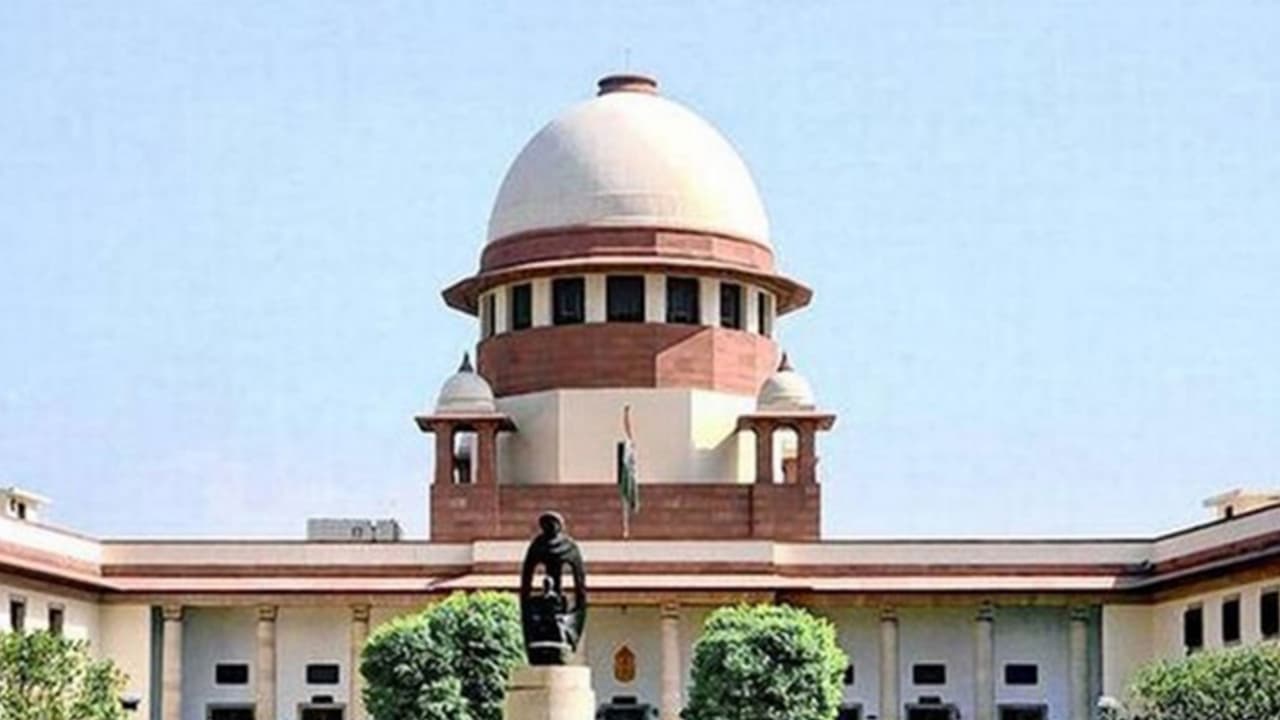
The Supreme Court has taken a tough stance on illegal and unsafe buildings in Delhi, Gurugram, Lucknow, Patna and Tamil Nadu. The court has directed the officials to submit the action taken report and appear in person on the next hearing.
New Delhi [भारत]July 9 (ANI): In a case related to illegal and unsafe buildings and structures across the country, the Supreme Court has passed strict directions. The court has directed senior officials of municipal corporations and development authorities in Delhi, Gurugram, Lucknow, Patna and Tamil Nadu to submit status reports on action taken on buildings that pose serious safety risks.
Taking cognizance of the recent tragic building collapse in Saket, Delhi and fire incidents in Malviya Nagar, Delhi and Aliganj, Lucknow, Justice Ahsanuddin Amanullah and R. Mahadevan’s bench directed the officials to submit details of the action taken in compliance with the court’s directions of May 20. The concerned officers have also been directed to be physically present before the court on the next date of hearing on August 4.
Special team of IIT will conduct survey
The court also directed to constitute a special team of two senior professors and two draftsmen of IIT Delhi, which will conduct ground survey of Saket, Malviya Nagar and Lajpat Nagar in a time bound manner. Delhi Municipal Corporation (MCD) officials will also be accompanying this team.
A similar exercise will also be carried out in Sarojini Nagar, which comes under New Delhi Municipal Council (NDMC). The court said there should be no “laxity” in the exercise and the committee should submit an honest report.
The court said, “We make it clear that there should be no laxity in giving an honest report by the committee. If any doubt arises, we may send a special team from this court to ensure the honesty of the report.”
Instructions to fix accountability of officers
The Court also agreed with the amicus curiae (court-appointed lawyer) that the authorities were adopting a “face-saving approach” by only arresting builders after incidents of building collapse and fire, while not taking any action against their officers who failed to take action against illegal structures.
“The authorities are merely adopting a face-saving approach as only the builders are being arrested and no action is being taken against any officials of the authorities or the corporations,” the court said. It directed officials to disclose the names of senior officials responsible for such failures in their reports.
Special attention on Gurugram and warning of contempt
The Court also took cognizance of a recent news report published in the Delhi edition of the Hindustan Times newspaper, which reported that 93 per cent of establishments in Gurugram were failing to comply with fire-safety requirements. In this regard, the Court directed the Chief Executive Head of the Gurugram Development Authority to appear in person and file a report detailing the actual steps taken in compliance with the May 20 directions.
The Court warned that if the Commissioners, CEOs and other responsible officers of Municipal Corporations and Development Authorities fail to place the Action Taken Report on record by the next date or comply with its directions, it may initiate suo motu contempt proceedings against them.
“We may initiate suo motu contempt proceedings against the directly responsible officers – the Commissioners/CEOs of such municipalities or the development authorities concerned,” the court said. The Court further warned that if on the next date it is found that no action has been taken despite earlier instructions and demolition orders, the responsibility will be directly fixed on the Chief Executive Heads of the authorities concerned. “We indicate that if on the next date we find that no action has been taken, the responsibility will squarely rest on the CEO of the said authority,” the court said.
Instructions to implement May’s order
In its May 20 order, the court had directed authorities to take “immediate and effective measures”, including sealing and demolition, against illegal and unauthorized constructions identified during surveys.
It had also directed them to disclose the actual action taken by the heads of the authorities concerned through personally verified affidavits. The court had said, “The affidavits must reflect effective action taken on the ground and not a mere mere formality. We clarify that by ‘follow-up action’ we mean immediate and effective measures, including sealing, demolition, or any other necessary action under law.” (ANI)
(Except for the headline, this story has not been edited by Asianetnews Editorial staff and is published from a syndicated feed.)