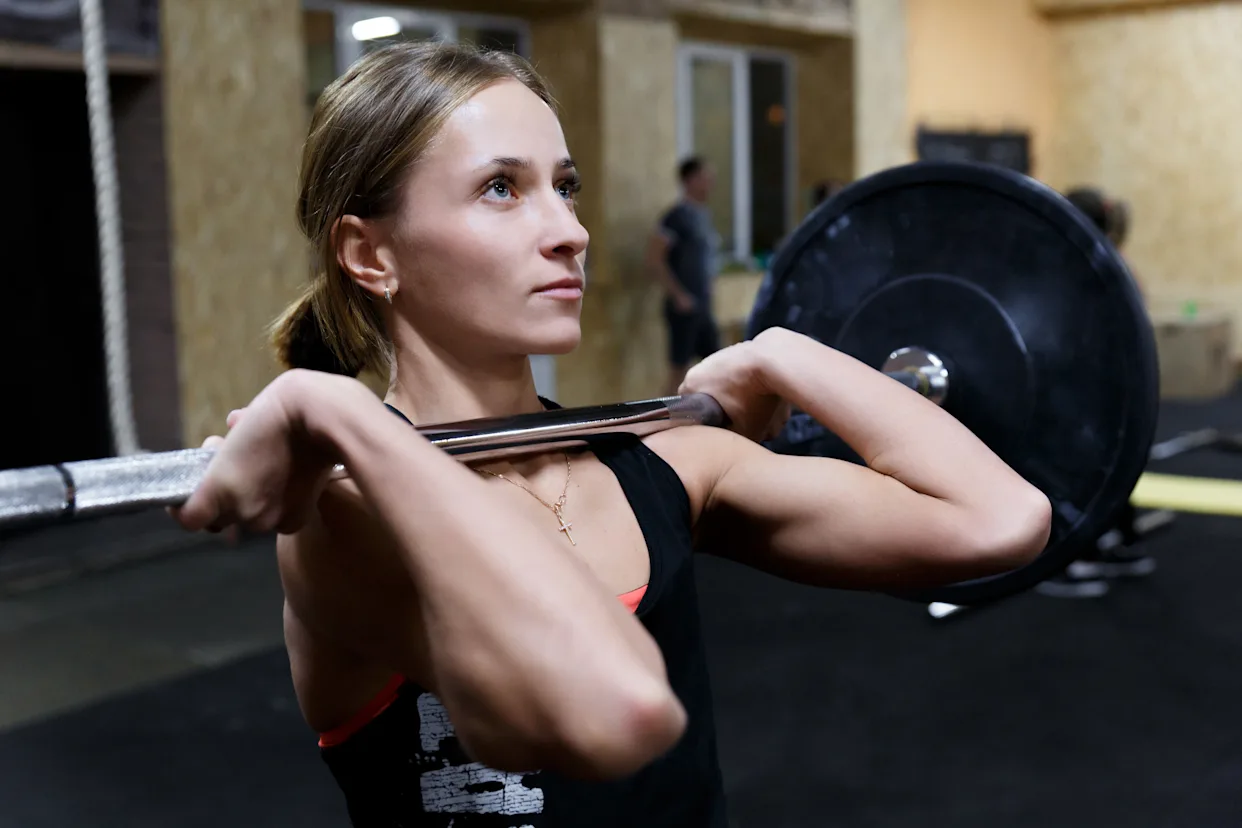
I didn’t come to strength training because I wanted visible abs or defined arms, although both are on my fitness wish list. I came to it out of necessity.
Last year, when my roommate/best friend Monica’s dog, Indigo, became partially paralyzed after an injury, daily life changed overnight. I was lifting a 70-pound pit bull into the car for trips to the vet, onto beds, and out to use the bathroom multiple times a day.
It didn’t take long to realize how physically demanding that kind of caregiving is — and how unprepared I was for it. That moment shifted how I thought about fitness. Strength wasn’t about aesthetics anymore. It was about capability.
It turns out that many Americans are having similar realizations.
A new conducted by Life Time, one of the nation’s top healthy lifestyle brands, found that strength training has overtaken traditional weight-loss goals, with 42.3% of respondents naming getting physically stronger as their top health priority for the year ahead.
Even more striking, 82% of respondents plan to focus more on overall health and wellbeing in the year ahead – a 7% increase from the previous year’s survey. It’s a sign that fitness priorities may be shifting away from aesthetics and toward longevity and quality of life.
“Strength training is the new weight loss. People are training more intentionally, to feel and perform better for longer – and pairing that with smarter recovery and objective health metrics,” said Danny King, Director of Recovery and Performance at Life Time.
Strength training is no longer optional — it’s foundational

(Shutterstock.com)
For years, fitness culture focused on cardio and weight loss. Now, especially with the prevalence of GLP-1s to keep the pounds off, the narrative has changed.
“Strength training is important to build and maintain lean muscle, improve bone health, and keep us mobile as we age,” says Lindsay Ogden, a Nutrition Coach, Personal Trainer, and Strength Coach. “It also improves joint function, reduces the risk of falls and injuries, and builds confidence.”
That shift makes sense in light of what scientists are uncovering about aging and movement: muscle mass isn’t just about how you look — it’s one of the strongest predictors of how well you age. Regular physical activity can significantly reduce the risk of mortality and chronic disease, with even modest activity leading to notable health benefits.
And strength training isn’t just a trend among gym regulars. International fitness organizations like the highlight that strength and functional movement — including balance, resistance training, and mobility — are core to long-term health and sustained independence.
Longevity is shaping how Americans think about fitness
The survey also found that longevity — the idea of sustained health over a lifetime rather than short bursts of results — ranked highly among respondents, with many saying it will define their health priorities for 2026.
Experts are now backing this trend, framing strength not as an aesthetic tool but as a way to extend functional years. Researchers have shown that brisk walking for more than 2 hours per day can increase life expectancy by more than 5 years, and even shorter amounts of movement can lead to substantial longevity gains.
That aligns with what trainers emphasize in everyday practice: strength supports daily life. From getting out of chairs to carrying groceries, pushing strollers, or — in my case — lifting a large dog, strength training builds the physical capacity we use every day.