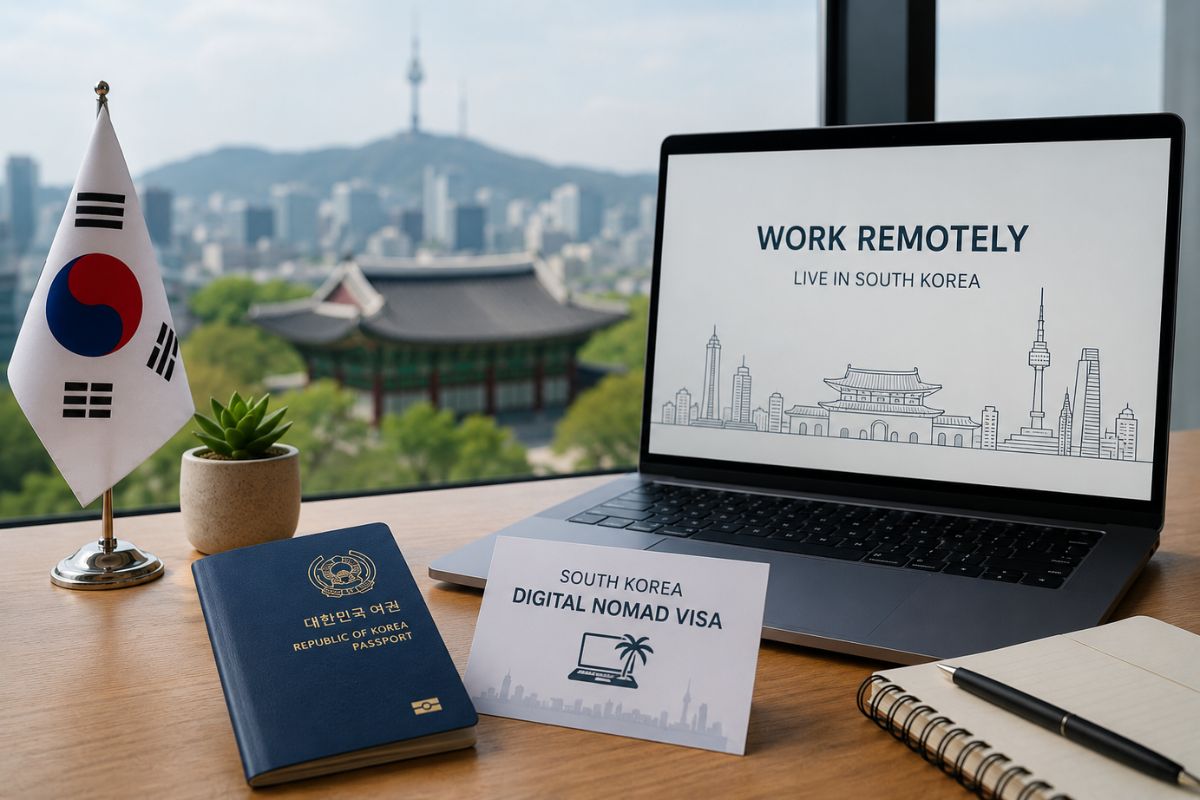
South Korea has quietly made one of Asia’s more attractive digital nomad visas even better. The country’s Workcation Visa is now a permanent program, offering eligible remote workers a stay of up to three years while also relaxing income requirements for some applicants.
For foreign professionals working remotely for overseas employers, the changes make South Korea a more realistic long-term base, especially for those looking beyond the usual digital nomad destinations in Southeast Asia.
Key Changes to South Korea’s Workcation Visa
The Workcation Visa officially became a permanent immigration program on June 30, 2026, replacing the trial scheme introduced in January 2024. The biggest changes include:
- Maximum stay increased from two years to three years.
- Initial visa is issued for one year and can be renewed, allowing a total stay of up to three years.
- Lower income requirements for eligible younger applicants and those planning to live outside Seoul and other metropolitan areas or in regions facing population decline.
This reflects a wider trend across Asia. Countries are no longer just competing for tourists. They are actively trying to attract skilled remote workers who spend locally without entering the domestic job market.
Who Can Apply?
Applicants must meet the following requirements:
- Be at least 18 years old.
- Have at least one year of work experience in their profession.
- Meet the required annual income threshold under South Korean regulations.
- Submit proof of employment and income.
- Provide a police clearance certificate.
- Hold private health insurance with coverage of at least KRW 100 million.
- Submit marriage or birth certificates if applying with eligible family members.
Family Members Can Join
The visa allows legal spouses and unmarried children under 19 years of age to accompany the main applicant, making it suitable for families planning an extended stay in South Korea.
Where to Apply
Indian passport holders must apply through the South Korean Embassy or Consulate serving their place of residence before travelling.
After arriving in South Korea, successful applicants must obtain a residence card.
Although immigration authorities may allow certain visitors already in South Korea to switch from visa-free or tourist status, officials continue to recommend applying through a South Korean consular mission instead.
Can You Work for a Korean Company?
No. The Workcation Visa is designed exclusively for remote employees and freelancers earning income from outside South Korea. Visa holders cannot accept employment with South Korean companies or earn income from local commercial activities.
What It Means for Indian Remote Workers
The visa opens another long-stay option for Indian professionals employed by overseas companies or running location-independent businesses. With direct flights connecting India and Seoul from cities such as Delhi and Bengaluru, relocating for an extended work stay is more practical than before.
Applicants should also remember that immigration approval does not automatically resolve tax or employment obligations. Anyone planning a long stay should understand both Indian and South Korean compliance rules before relocating.
Travelobiz Take
We see South Korea moving beyond tourism by actively welcoming remote professionals. For Indian digital nomads with stable overseas income, this is now one of Asia’s strongest long-stay visa options worth considering.
Follow and connect with us on Facebook, Twitter, LinkedIn, Instagram and Google News for the latest travel news and updates!