Romania is preparing for one of its biggest immigration reforms in recent years. The country is replacing its old work permit and long-stay visa process with a new centralised system that aims to make hiring foreign workers simpler in the long run.
But here’s the catch. While the new rules promise faster digital processing and greater transparency, the transition period could initially make things more confusing for employers and foreign workers.
The changes introduce new visa categories, stricter employer requirements, and a fully digital application platform that is expected to go live in August 2026.
Romania Introduces Two New Work Visa Types
Under the new system, Romania will replace its current work permit structure with two main visa categories.
1. Romania D/AM1 Visa
Romanis designed the D/AM1 for highly skilled workers and special categories of foreign nationals. This category will not be linked to annual quotas or shortage occupation lists. It will also cover:
- Moldovan citizens
- Ukrainian citizens
- Serbian citizens
- Sports professionals
- Academic staff
The government says this route is meant to help employers hire skilled international talent more easily.
2. Romania D/AM2 Visa
Romania’s D/AM2 visa will apply to general labour roles. Unlike D/AM1, this category will depend on:
- An annual quota
- A shortage occupation list
Romania is expected to publish the official shortage occupation list by June 14, 2026.
Hiring Lower-Skilled Workers Could Become Harder
While the new visa structure simplifies categories on paper, it may create additional hurdles for employers hiring non-specialised workers.
Companies looking to recruit lower-skilled foreign workers will have to wait for Romania’s official shortage occupation list before they can proceed. Meanwhile, employers hiring highly qualified professionals are likely to face fewer restrictions.
Romania Creates New Employer Categories
Another major change is the introduction of two employer classifications.
Registered Employers
These employers will mainly be allowed to sponsor workers under the D/AM1 route.
Authorized Employers
This category comes with stricter rules but allows companies to access the D/AM2 visa pathway directly.
To qualify as an authorised employer for D/AM2 hiring, companies must:
- Have operated for at least 24 months
- Maintained an average of 50 employees during the previous year
Previously, all employers followed the same immigration process regardless of company size or compliance history.
Now, access to immigration procedures will depend heavily on the employer’s status.
New WorkinRomania Platform Launching in August 2026
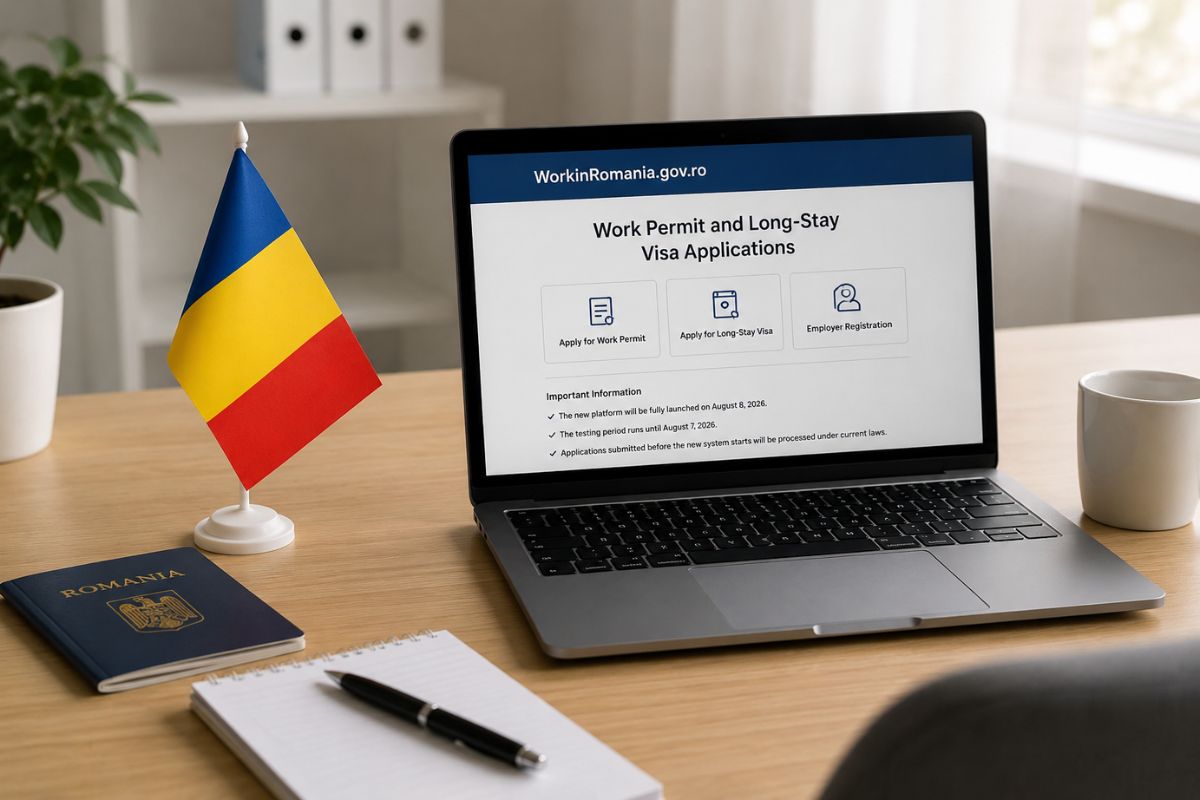
Romania is also launching a centralised online platform called “WorkinRomania.gov.ro” to handle:
- Work permit applications
- Long-stay visa applications
- Employer registrations
The system is expected to be tested until August 7, 2026, before officially launching on August 8, 2026.
Applications submitted before the new system starts will still be processed under the current immigration rules. However, family reunification residence permits will continue to require in-person applications.
Transition Period May Cause Delays and Confusion
Although Romania’s digital overhaul is expected to simplify processes eventually, the early rollout may create temporary problems.
Authorities still need time to finalise workflows, standardise document requirements, and stabilise coordination between institutions. During this phase, applicants may face:
- Additional paperwork requests
- Changing document requirements
- Delays in processing
- Unclear procedures
Immigration experts expect some uncertainty until the system becomes fully operational.
Romania Tightens Rules for Seconded Employees
Romania is also narrowing the definition of “seconded employees.” Under the new rules, only non-EU nationals sent to Romania by employers based in the EU, EEA countries, or Switzerland will qualify under the secondment rules.
This means foreign workers posted from non-EU countries will no longer be able to enter Romania through traditional posting arrangements. Instead, companies may need to use:
- Intra-company transfer (ICT) routes
- Direct local employment contracts
- D/AM1 or D/AM2 visa pathways
Businesses relying on overseas postings from non-EU countries may now need to restructure their hiring models.
Other Key Changes Employers Should Know
Romania’s reform package also introduces several new compliance requirements for employers and recruitment agencies. These include:
- Mandatory bilingual employment contracts
- Minimum language training requirements
- Stricter reporting obligations for employers
- Limits on worker mobility for up to two years
- Mandatory licensing rules for placement agencies
- Financial guarantee requirements for recruitment firms
Placement agencies will also need Romanian or EU/EEA ownership or control to operate legally.
Why Romania Is Making These Changes
According to the government, the reform aims to:
- Improve digital processing
- Increase transparency
- Strengthen worker protections
- Improve employer accountability
Still, the reforms also bring stricter eligibility rules, higher compliance costs, and more operational pressure for businesses, especially during the transition period.
For foreign workers planning to move to Romania, the coming months could bring both new opportunities and new challenges as the country shifts toward a fully digital immigration system.
Follow and connect with us on Facebook, Twitter, LinkedIn, Instagram and Google News for the latest travel news and updates!