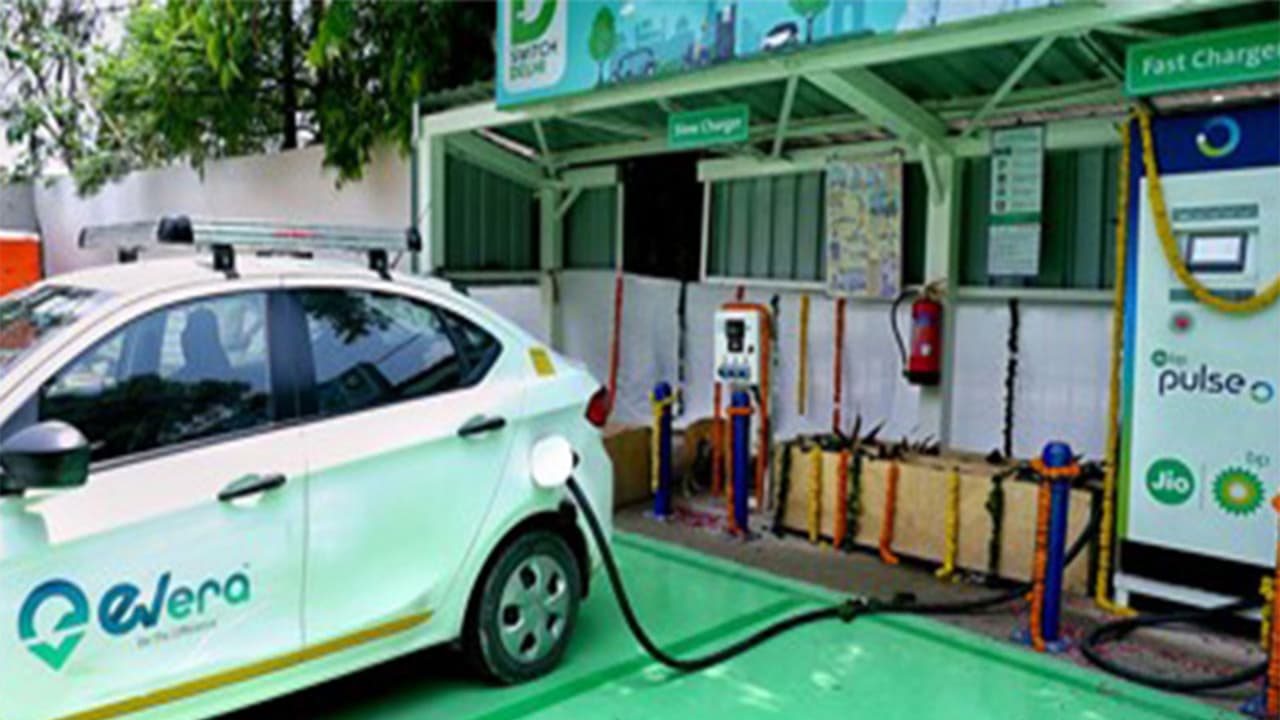
India’s EV transition critically depends on building a robust charging ecosystem, with infrastructure readiness being the key trigger for mass adoption away from ICE vehicles, according to a Nomura report citing China’s success as a roadmap.
India’s transition to electric vehicles (EVs) will depend critically on how quickly it can build out a robust charging ecosystem, with infrastructure readiness emerging as the key trigger for mass adoption, according to a Nomura report.
The report highlighted that charging availability remains the biggest enabler in shifting consumers away from internal combustion engine (ICE) vehicles. “Charging infra as a key enabler – infra-readiness can unlock mass adoption,” the report said.
China’s Success as a Roadmap
Nomura highlighted China’s rapid evolution as a primary example of this trajectory. “China has scaled to ~20mn public charging points by 2025, with strong coverage across tier 1/2 cities and highways, though gaps remain in lower-tier regions….For India, rapid scaling up of charging ecosystem will be critical for mass adoption,” the report said.
This large-scale infrastructure push has been instrumental in accelerating EV penetration in China, which rose sharply from 5.7 per cent in 2020 to 53.3 per cent in 2025. The report observed that the shift reflects a structural transformation in the auto market. “ICE vehicles are in a structural decline and steadily losing market share as EVs have achieved cost parity, technological superiority and mainstream consumer acceptance,” it stated.
Policy Lessons and Regulatory Levers
According to Nomura, China’s success was driven by a combination of sustained policy support, rapid technological advancements, and coordinated investments across the value chain by state-owned enterprises, private companies, and energy players.
On the policy front, the report emphasised the importance of evolving incentives. While China phased out direct subsidies in 2022, it continued to support EV adoption through indirect measures. “While direct subsidies were phased out in 2022, the government continued to support EV adoption through purchase tax exemptions and scrappage/trade-in incentives,” the report noted.
Additionally, regulatory tools such as the New Energy Vehicle (NEV) credit system created a structural push towards electrification by compelling traditional automakers to participate in the EV transition.
For India, the report suggested a gradual shift from upfront subsidies like FAME and PM E-Drive towards a broader ecosystem-driven approach, including tax benefits, scrappage policies, and credit mechanisms.
The report also underlined that a clear policy preference for battery electric vehicles (BEVs) over hybrids in China helped provide direction to manufacturers and accelerated electrification.
Industry Lessons for Indian Manufacturers
Highlighting industry-level lessons, Nomura said success in China was underpinned by strong execution capabilities. “The key success factors for EV OEMs in China have been: (1) significant and sustained investments in R&D… (2) developing and controlling the value chain… and (3) rapidly building scale to bring down costs,” it said.
It added that Indian manufacturers will need to focus on building core competencies in battery technology, software, and supply chain localisation. “Those who build cost advantages with scale will be better positioned to gain market share,” the report stated.
Overall, the report suggests that India’s EV journey will require a coordinated push across infrastructure, policy, and industry, with lessons from China offering a clear roadmap for accelerating adoption. (ANI)
(Except for the headline, this story has not been edited by Asianet Newsable English staff and is published from a syndicated feed.)