‘Critical Minerals’
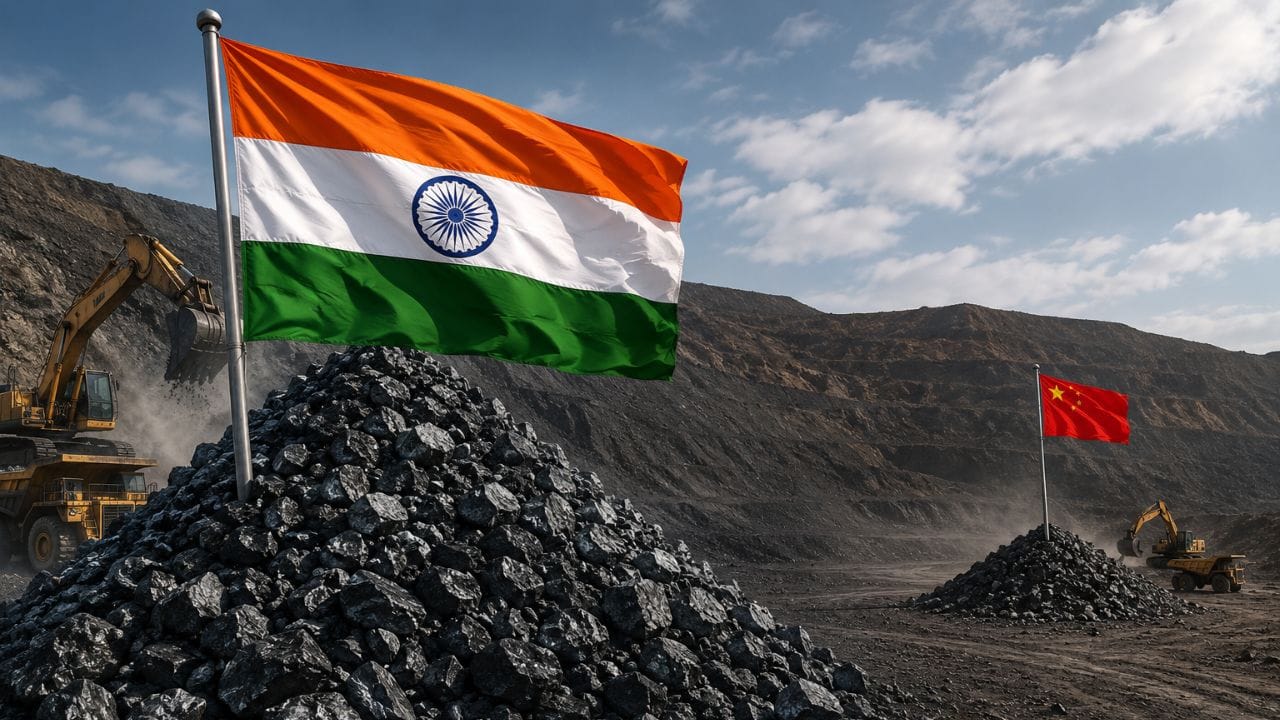
From electric vehicles (EVs) to your smartphones, wind turbines and military missiles, every modern technology today rests on ‘critical minerals’. Till now, China has had a monopoly on this important market. But now India has made major preparations to end this dependence forever. Recently in New Delhi, the Quad countries (India, America, Australia, Japan) have approved the ‘Quad Critical Minerals Initiative Framework’ worth $20 billion. The direct objective of this huge investment is to create a strong infrastructure of mining, processing and recycling, which can secure the supply chain around the world and establish India as a new global hub.
Foolproof plan to break China’s ‘occupation’
China alone controls 80 percent of the refining capacity of whatever rare minerals are extracted around the world. China’s share in the production of ‘permanent magnets’ used in electric vehicles and defense is 94 percent. Taking advantage of this monopoly, in the year 2023, China had imposed restrictions on the export of these minerals. US Secretary of State Marco Rubio has made it clear that this important technology cannot be left at the mercy of any one country. Sensing this danger, Indian Foreign Minister S. Jaishankar has also emphasized on strengthening mutual cooperation in the entire supply chain from mining to processing.
India laid chessboard across the world
To answer China in its own language, New Delhi has intensified its search for mines in the country as well as abroad. For secure supply of raw materials, in January 2024, government company ‘KABIL’ signed its first foreign agreement for lithium block in Argentina. Apart from this, during the Prime Minister’s visit to Japan in August 2025, an important MoU regarding critical minerals was signed and talks have also progressed with Australia on lithium and cobalt projects. Recently, on June 1, India’s important talks with Myanmar regarding rare minerals have also been confirmed.
The processing challenge that needs to be overcome
Finding raw materials is like winning half the battle, the real challenge is its processing. According to official figures, India still imports 80 to 90 percent of its permanent magnets requirement from China. The country’s refining capacity is currently not even 25 percent of the domestic demand. These rare minerals are found in abundance in ‘Monazite Sands’ found on the sea coasts of India (Kerala, Odisha, Andhra Pradesh, Tamil Nadu). But due to the presence of thorium and uranium in it, it has been kept under the Atomic Energy Act. This means that private companies cannot process it, this work is only with government companies. Experts believe that along with opening mines, India will have to immediately increase its metal-to-alloy conversion capacity.
Mission 34 thousand crores will change the picture
To deal with these domestic challenges, the government has approved a huge ‘National Critical Mineral Mission’ worth Rs 34,300 crore in January 2025. Apart from this, in the budget of financial year 2027, it has also been announced to build ‘Rare Earth Corridor’ in four states. Geological Survey of India (GSI) is now moving beyond traditional mines and exploring these minerals with modern technology in new areas of Rajasthan, Gujarat and Assam.
Experts say that no country can be 100 percent self-sufficient in critical minerals. But if India continuously invests in the right direction for the next ten years with the technical cooperation of the Quad countries, then it can definitely become a big alternative to China. If this happens, not only will India’s strategic security be strengthened, but electric vehicles and electronics goods will also become cheaper in the country.