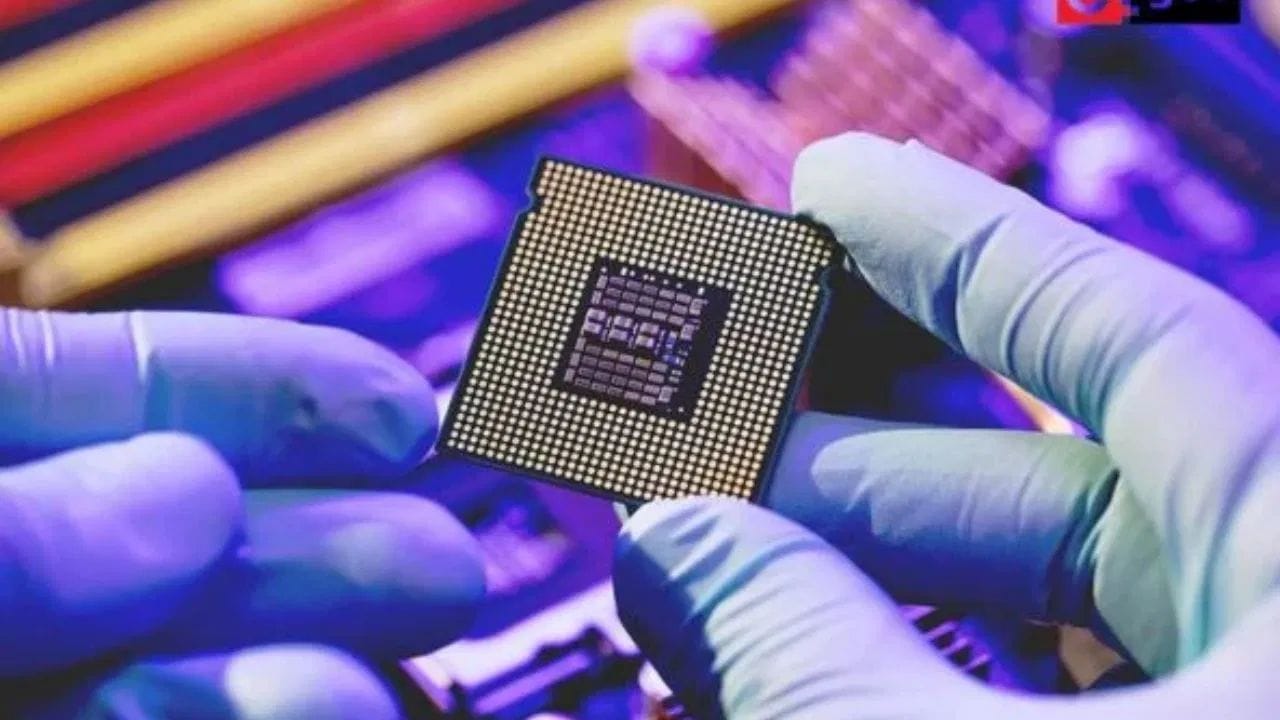
Prime Minister Narendra Modi has reached Netherlands. This is part of a high-profile European trip with a focus on clean technology, renewable energy and advanced manufacturing. While this diplomatic agenda includes many issues of bilateral interest, the most important focus of this visit is India’s semiconductor project. Only one company based in the quiet town of Veldhoven in the Netherlands holds the key to India’s chip making dreams.
ASML, the world’s largest maker of semiconductor lithography components, sells machines that are used to make most of the chips around the world. Since Prime Minister Modi is expected to talk to top officials of ASML while passing through this country, these meetings will reveal an important truth for India.
India’s billion-dollar dream of becoming a global chip manufacturing superpower is actually dependent on the goodwill and supply chain of this one Dutch company. Without ASML, the big factories (mega-fabs) being built on Indian soil will not be able to make most of the semiconductors.
Dutch resort to India’s silicon dreams
India has embarked on a vigorous, government-backed campaign to build a domestic semiconductor ecosystem from the ground up. For this, it has invested huge financial resources and diplomatic capital, so that its dependence on microchip imports can be reduced. The highlight of this industrial campaign is a massive $14 billion chip manufacturing factory being set up by Tata Electronics in Dholera, Gujarat.
It is being built in collaboration with Taiwan’s Powerchip Semiconductor Manufacturing Corporation. For the success of this mega-fab, access to world-class manufacturing components is critical. Union Electronics and IT Minister Ashwini Vaishnav clearly stated the importance of this dependency during her official visit to ASML’s headquarters in Veldhoven recently. He told that the fabrication plant to be built in Dholera will fully use the advanced lithography components of ASML for its chip production.
Lithography is the most complex, precise and capital-intensive phase of the semiconductor manufacturing process. It actually works like a very special printing press that engraves very small circuit designs on silicon wafers. ASML helps make almost every new chip made anywhere in the world, so the Government of India considers this company to be a very important foundation of the ‘India Semiconductor Mission’.
There has been a steady pace in this direction since the end of last year, when ASML CEO Christophe Fouke participated in the ‘Semicon India Summit’ held in New Delhi. At this event, Fuke showed his full dedication to help India achieve its technological ambitions through technical collaboration, talent development and knowledge exchange. He also said that ASML’s advanced lithography solutions will help India’s chip manufacturing factories (fabs) to increase their production as well as achieve better performance.
This company rules the digital world
To understand why a single corporate company can wield so much influence during a state visit by a Prime Minister, we need to analyze the sheer scale of ASML’s global expansion. Founded in 1984, the company has grown so large that it now has a complete and unassailable monopoly on the production of extreme ultraviolet lithography systems, and also has the largest market share in deep ultraviolet lithography systems.
According to industry market reports, the total semiconductor lithography components market is valued at $30.44 billion. In this important sector, ASML controls more than 80% of the global market share of all lithography equipment. For extreme ultraviolet (EUV) lithography—a specialized process required to make chips at 7-nanometer (nm) nodes and below—ASML has a 100 percent monopoly on the market.
No other company in the world makes these machines. Thus, ASML stands as the biggest gatekeeper of advanced computing. It provides the critical hardware that helps chip-making giants like Taiwan Semiconductor Manufacturing Company, Samsung Electronics and Intel make faster, smaller and more efficient microchips.
The financial and technical barriers to entry in the business that ASML does are so high that no competitor can actually copy its machines. A high-end lithography machine from ASML can cost millions of dollars, consisting of millions of individual, highly customized parts sourced from thousands of specialized global suppliers.
It is the only company in the world that can print transistors down to single-digit nanometer scale using short wavelengths of light. This unmatched technological capability means that every modern electronic device—from artificial intelligence data servers to smartphones and advanced military guidance systems—is fundamentally a product of ASML technology.
Company stuck between China and America
Because of this unmatched technological dominance, ASML finds itself right at the center of a fierce, multi-year technological cold war between the US and China. Recognizing that blocking China’s access to ASML components was the most effective way to stifle its domestic semiconductor development, the United States has exerted intense diplomatic pressure on the Dutch government for years. This pressure led to the imposition of strict export controls, preventing ASML from delivering its most advanced ‘extreme ultraviolet’ machines to Chinese customers, and gradually tightening restrictions on less advanced ‘deep ultraviolet’ systems.
These geopolitical upheavals have made the functioning of this Veldhoven-based company extremely complex. Last year’s figures show the delicate balance the company needs to maintain. China was ASML’s second largest market worldwide. It was behind Taiwan, but ahead of South Korea, Japan and America. The increasingly stringent US-led sanctions have deliberately weakened ASML’s China earnings, forcing it to reduce its long-term growth projections due to declining demand in its restricted markets.
It is precisely because of this geopolitical pressure that Prime Minister Modi’s visit seems to be so timely and proving beneficial for both the parties. As ASML deals with the fallout of the US-China technological conflict and seeks reliable, long-term democratic markets to compensate for its limited presence in China, India appears to be an ideal and eager partner, with rich resources, stable policies, and a strong desire to achieve self-reliance in the silicon sector.
Expanding our presence in India
The relationship between the Dutch tech giant and India is rapidly evolving from a mere buyer-seller transaction to a fully fledged operational partnership. To support the upcoming fabrication facilities and ensure uninterrupted maintenance of machines, ASML has initiated plans to open a Customer Support Office at GIFT City, Gujarat. This strategic location will serve as a launchpad for the company to further expand its operational presence, eventually growing into a larger and dedicated facility located within the Dholera Semiconductor Hub.
It is important for Indian fabs to have a local support base as lithography machines require frequent calibration, special engineering maintenance and regular supplies of spare parts to avoid costly production disruptions.
This corporate change coincides with a larger geopolitical trend, in which Dutch semiconductor companies are actively seeking new geographic markets and supply chain diversification. Due to tighter export controls and increasing trade restrictions associated with the ongoing technological rivalry between the US and China, European component makers are increasingly looking for stable and neutral regions.
During the visit of the Indian business delegation to the Dutch tech hub Eindhoven, Michel Smit of the Netherlands Enterprise Agency pointed out that there are clear opportunities for Dutch companies to export high-tech equipment to India. They can first export to India, and later, taking advantage of India’s huge engineering workforce, use the South Asian country as a base for manufacturing.