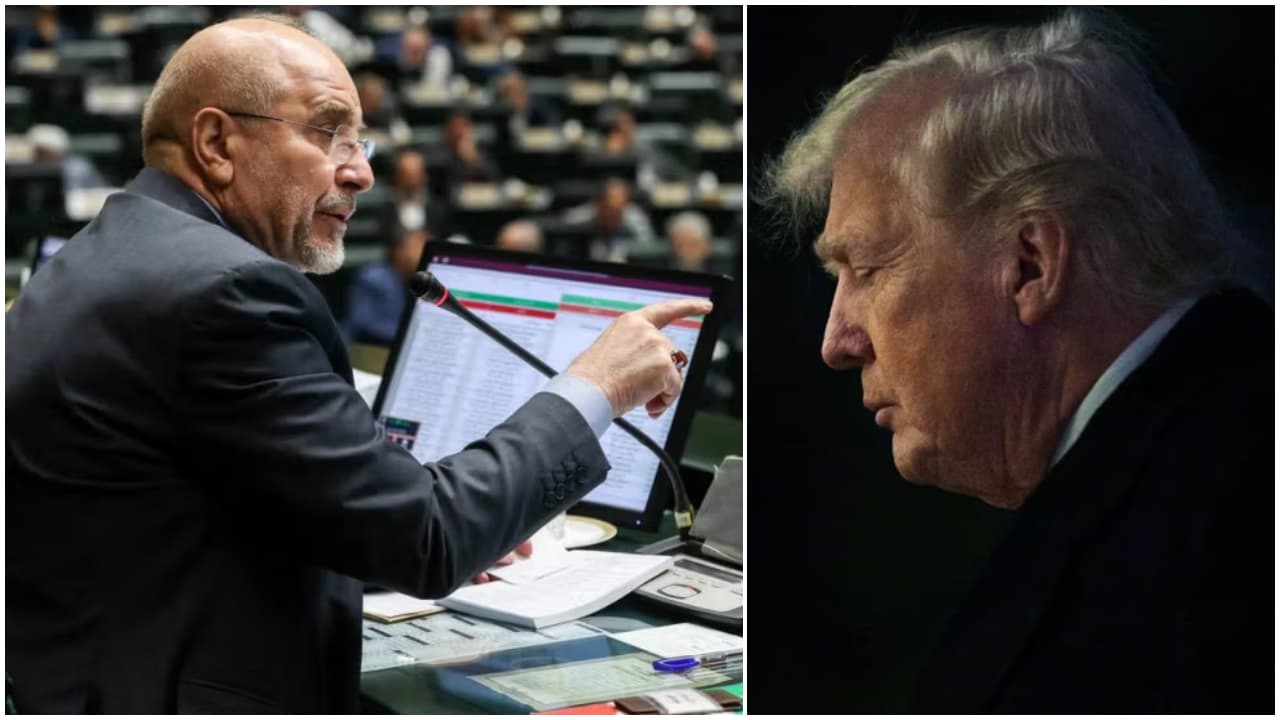
Iran has escalated its rhetoric, refusing to negotiate with the US under military threats as a ceasefire deadline nears. Iranian officials accuse Washington of seeking surrender and warn of new actions if hostilities resume. The US maintains a naval blockade, demanding a broader deal covering Iran’s nuclear program and regional activity.
Iran has sharply escalated its rhetoric against the United States, declaring it will not return to negotiations while facing military threats from President Donald Trump, as a fragile ceasefire approaches a critical deadline.
Iranian Parliament Speaker and senior negotiator Mohammad Bagher Ghalibaf said Tehran would not accept what he described as a forced settlement designed by Washington. In a message posted on social media, Ghalibaf accused the Trump administration of trying to transform diplomacy into a “table of surrender.”
“No talks under the shadow of threats,” Ghalibaf said, warning that Iran had prepared “new cards on the battlefield” if hostilities resume.
Scroll to load tweet…
His remarks came after Trump signaled that time was running out for Tehran to agree to fresh terms in indirect talks expected in Islamabad. The US president has continued to insist that American pressure is working and has refused to ease the naval blockade around Iranian shipping routes in the Strait of Hormuz.
Trump has maintained that the blockade will stay in place until Iran agrees to a broader deal covering its nuclear programme and regional military activity. Iran, however, sees the blockade as a direct violation of the ceasefire framework and evidence that Washington is negotiating in bad faith.
Also Read: Trump Says US Is ‘Winning By A Lot’ as Iran Deal Deadline Nears
Iranian officials have also questioned whether upcoming talks can proceed at all. Foreign Minister Abbas Araghchi reportedly told Pakistani officials that repeated US actions against Iranian commercial vessels and contradictory public statements from Washington have deepened mistrust between the two sides.
President Masoud Pezeshkian reinforced that message by warning that diplomacy cannot succeed without respect for prior commitments. He said recent US messaging suggested Washington was seeking submission rather than compromise, a position Tehran firmly rejects.
“Honouring commitments is the foundation of any meaningful dialogue,” Pezeshkian said, while stressing that Iran would not yield to coercion.
Scroll to load tweet…
The diplomatic standoff is unfolding against growing regional anxiety over the Strait of Hormuz, a vital global energy corridor. Any renewed fighting could disrupt oil supplies and send energy prices sharply higher worldwide.
Also Read: Strait of Hormuz is Iran’s ‘superweapon’: US diplomat Donald Heflin
Behind the scenes, Pakistan is still attempting to preserve a channel for diplomacy, but uncertainty remains over whether Iranian officials will attend the planned discussions. Washington has indicated its delegation is prepared to travel even if Tehran delays its final decision.
Analysts say Iran’s warning about “new battlefield cards” may signal military, cyber, or maritime responses if the ceasefire collapses.
With the deadline now just hours away, both nations appear locked in a tense standoff. Trump continues to project confidence, while Iran is making clear that pressure alone will not force it back to the negotiating table, raising fears that the next phase of the crisis could become even more dangerous.