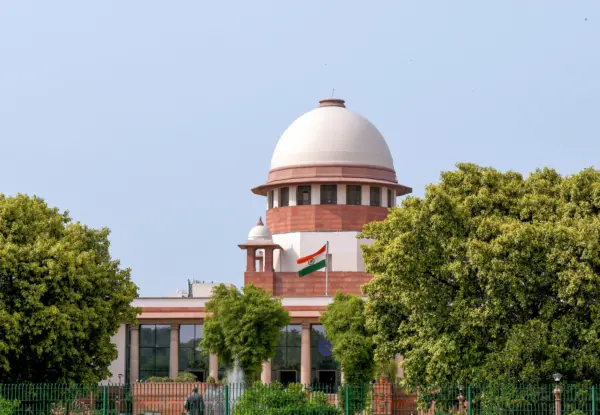
The Supreme Court of India has stressed that courts should not compel individuals to remain stuck in “stale and frozen” marriages, urging the judiciary to end prolonged matrimonial disputes through effective relief when a relationship has irretrievably broken down.
The top court made the observation while hearing a case of a married couple who had been living separately for more than 15 years.
A bench comprising Justices Sanjay Karol and Augustine George Masih said that keeping dead marriages alive through years of litigation serves little purpose and only deepens emotional distress. In a judgment delivered on June 2, the court observed that ending such relationships is often in the best interests of both the individuals involved and society as a whole.
“It is in the best interest of parties and the society if ties are severed between parties in cases where litigation has been pending for a considerably long period of time,” the bench noted.
The court warned that prolonging a marriage that has ceased to exist would not only lead to “escalation of frustration in a dead relationship” but also create “sociological, psychological and mental hollowness in life,” depriving individuals of the opportunity to rebuild their lives in a healthy and independent environment. It added that matrimonial litigation pending for years “needs to be put to end by granting effective release to the parties from a stale and frozen relationship.”
The Supreme Court exercised its extraordinary powers under Article 142 of the Constitution and dissolved the marriage of two government doctors who had been living separately for over 15 years. While the husband had sought a divorce, the wife had filed an appeal. The court noted that repeated reconciliation efforts had failed and found no evidence that either party genuinely intended to resume married life. It also noted that both were financially independent and had no children.
The court observed, “The parties have lived separately for far too long a period of time and there is no sanctity left in the marriage.”
The bench held that bringing the long-standing dispute to a close was necessary to ensure complete justice. Invoking its powers under Article 142 of the Constitution, the Supreme Court dissolved the marriage and rejected the wife’s appeal.