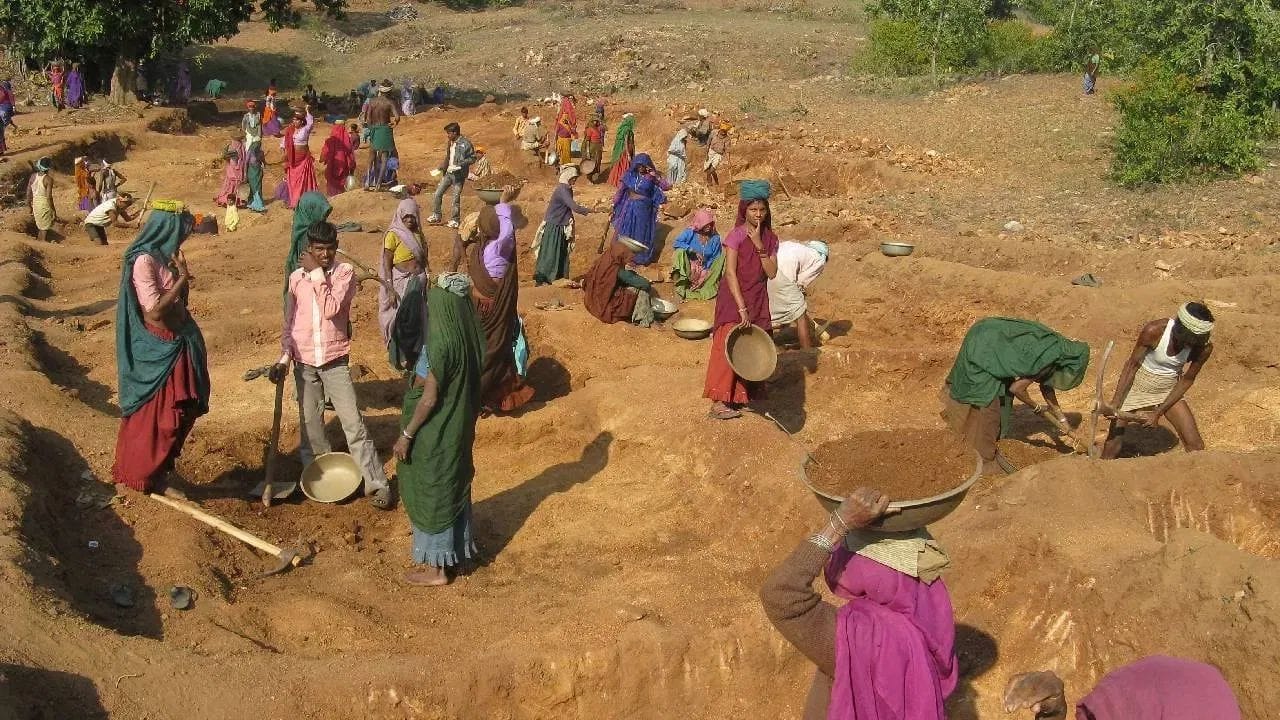
Making a major change in the rural employment system, the Central Government has issued a notification to implement the Developed India Employment and Livelihood Guarantee Mission (Rural) i.e. VB-G RAM G Act. This new law will be applicable across the country from July 1, 2026 and will replace the existing Mahatma Gandhi National Rural Employment Guarantee Act (MGNREGA).
According to the Union Rural Development Ministry, this new framework will not limit rural employment to just wages, but will also focus on the creation of infrastructure and livelihood-based assets in villages. Union Agriculture and Rural Development Minister Shivraj Singh Chauhan said that this scheme will prove to be a new dawn for rural India. While talking to the media in Bhopal, he told that under the new law, rural families will be guaranteed 125 days of employment every year, whereas in MGNREGA this limit was 100 days.
The government has made it clear that during the transition period, all the work going on under MGNREGA will continue and the incomplete projects will be completed by July 1. Also, states have been given six months time to implement the new system. However, after July, funding related to rural employment will be released only under the VB-G RAM G framework.
What is the budget of the scheme?
The Central Government has made a provision of more than Rs 95 thousand crore in the budget for this scheme. Adding the states’ share, the total annual expenditure is estimated to be more than Rs 1.51 trillion. Under the new scheme, water conservation projects, rural roads, bridges, culverts, school buildings, Anganwadi centers and agriculture related infrastructure will be constructed. Apart from this, assets like workplaces and sheds will also be created for Self Help Groups (SHGs) and Farmer Producer Organizations (FPOs). Retaining walls and other disaster-resistant structures in flood-affected areas have also been included in the plan.
You will get compensation if payment is late
The government has also made a big claim regarding the payment of workers. Wages will be sent directly to bank or post office accounts through DBT. The government aims to make payments within three days, while the maximum limit has been fixed at 15 days. In case of delay in payment, workers will get compensation and if they do not get employment despite demand, unemployment allowance will also be given.
For better operation of the scheme, the limit of administrative expenditure has been increased from 6 percent to 9 percent. The government says that with this the field staff will be able to get timely salaries and better resources. The Center believes that this mission will strengthen Prime Minister Narendra Modi’s vision of developed villages for a developed India.
Also read- Which news gave sleepless nights to Indigo, Rs 9500 crores were lost in 195 minutes