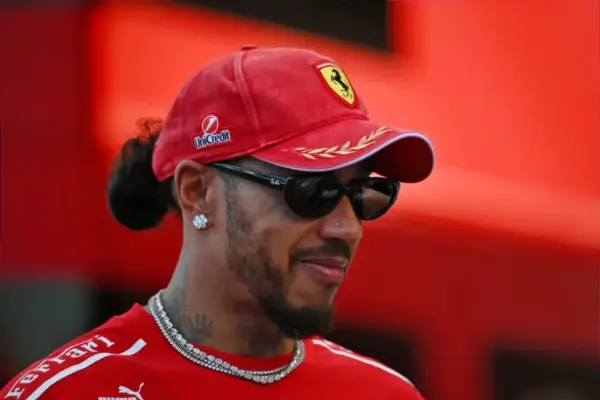
Lewis Hamilton Praises “Phenomenal” Precision of Teams Amid Record-Breaking Qualifying Tightness
has highlighted the extraordinary reality of teams operating at razor-thin margins despite their vastly different technical philosophies.
Speaking after the Italian Grand Prix qualifying, where the top 10 drivers were split by a mere 0.500 seconds, Hamilton hailed the sport’s incredible competitiveness and engineering ingenuity.
This half-second gap from Pierre Gasly’s pole position to Arvid Lindblad’s 10th place finish shattered the previous benchmark set at the 2025 Hungarian GP, where Charles Leclerc’s pole time was 0.543 seconds faster than the 10th-placed Isack Hadjar. The narrow spread illustrates how tightly matched the grid has become, with intra-team and midfield battles frequently producing minute differences in lap times despite diverse car designs.
Hamilton emphasized the “phenomenal” nature of this phenomenon, especially in the context of the current technical regulations’ first year. “All these teams have the same rules,” the seven-time world champion explained, “yet they do everything differently to get to the same sort of… and then the cars on track are within a tenth. It’s quite phenomenal, and that’s really what makes our sport so great.”
The Mercedes driver also reflected on the challenges faced by drivers and engineers navigating these complexities. “When someone comes in, even if new engineers come in from different places, straight away they say, ‘Oh, we did this differently,’ and not necessarily that’s a better way, but it’s just sometimes different approaches,” Hamilton noted. He stressed the difficulty of “seeing the wood for the trees” amid the technical intricacies and varied team strategies.
Turning to his current role within Ferrari, Hamilton dismissed any notion that transforming the Scuderia into a championship contender is a solo effort. “There’s no ‘I’ in team. I think it’s like a huge ship and it’s the driver’s job to work alongside the head figures to try and steer it in the right direction,” he said. His comments underline the collective endeavour required to compete at the highest level in Formula 1.
Hamilton’s insights arrive amid an era of unprecedented competitiveness, where split-second differences define qualifying outcomes and race strategies. The close margins between drivers and teams underscore the sophisticated engineering battles waged behind the scenes, reflecting why Formula 1 continues to captivate fans worldwide.