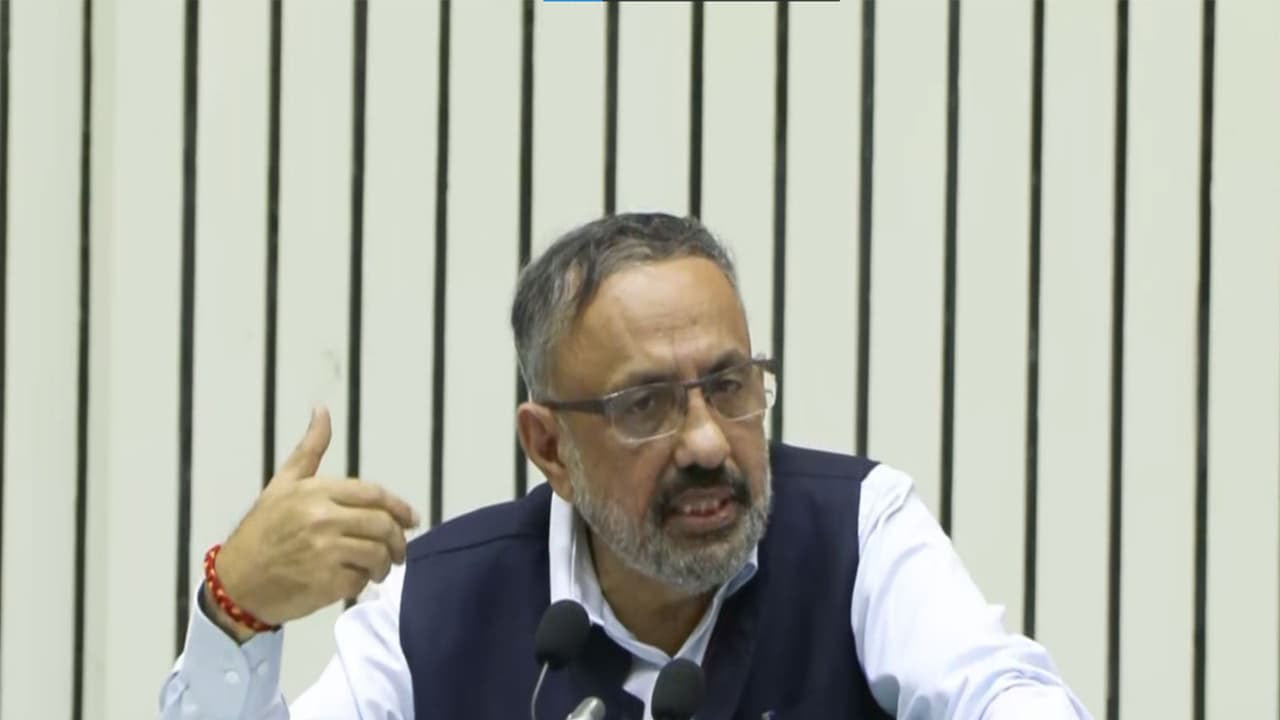
NITI Aayog Member Rajiv Gauba emphasized that land supply and urban planning reforms are crucial for affordable housing. He called for states to unlock land, ease norms, and strengthen the rental market to address the growing housing shortage in cities.
Land supply and urban planning reforms will be critical to expanding affordable housing in Indian cities, with states and municipal authorities needing to unlock land and ease development norms to reduce costs, NITI Aayog Member Rajiv Gauba said. Addressing the National Conference on “Reimagining Affordable Housing – From Scheme to Sustainable Ecosystem” in Delhi, Gauba said the shortage of affordable housing would increase as population growth and rapid urbanisation add millions of people to cities and towns.
“Land availability lies at the heart of the problem,” Gauba said, adding that land accounts for a high share of total housing project costs in some cases, making affordable housing projects less viable. He said the report on affordable housing prepared by NITI Aayog and the Ministry of Housing and Urban Affairs proposes a set of measures to address the constraints, with most of the implementation lying with state and municipal authorities.
Key Recommendations for States
The recommendations include expanding planned urban areas and reserving at least 10 per cent of residential land as affordable housing zones in master plans. The report also proposes raising the permissible Floor Area Ratio (FAR) for such projects to the range of 5 or 6, promoting transit-oriented development, land pooling and transferable development rights, easing parking and density norms and creating land banks.
Gauba also suggested considering waiving land-use change fees for land dedicated to affordable housing and exempting affordable housing units from stamp duty to improve project viability and affordability. He said government entities, including state public sector undertakings, also hold excess and unutilised land that could be unlocked and recycled into affordable housing projects.
“Land, as I said earlier, is the most binding constraint in the housing sector and therefore it has to be at the centre of the reform agenda,” Gauba said.
Beyond Ownership: Rental and Financial Solutions
Strengthening the Rental Ecosystem
He also highlighted the need to strengthen the rental housing ecosystem, noting that ownership is not the only housing solution for migrant workers, industrial labour, students and young professionals.
Addressing Financial Constraints
Gauba said access to capital was another major constraint and called for alternative underwriting approaches for households whose incomes are not adequately captured formally, along with new financial products for the affordable housing ecosystem.
He also pointed to nearly 1 crore vacant houses in urban India, saying weak tenancy frameworks, low rental yields and litigation risks were among the reasons these units remain outside the market.
A Call for Implementation
Gauba urged the Ministry of Housing and Urban Affairs to use its funding leverage under various missions to push states to implement the reform agenda and said the conference should result in an agreed and time-bound plan of action. (ANI)
(Except for the headline, this story has not been edited by Asianet Newsable English staff and is published from a syndicated feed.)