After Prime Minister Narendra Modi’s visit to Netherlands, hopes of Gujarat’s ambitious Kalpsar project getting new momentum have increased. The water management cooperation agreement between India and the Netherlands will benefit from modern technology and expertise in the project.
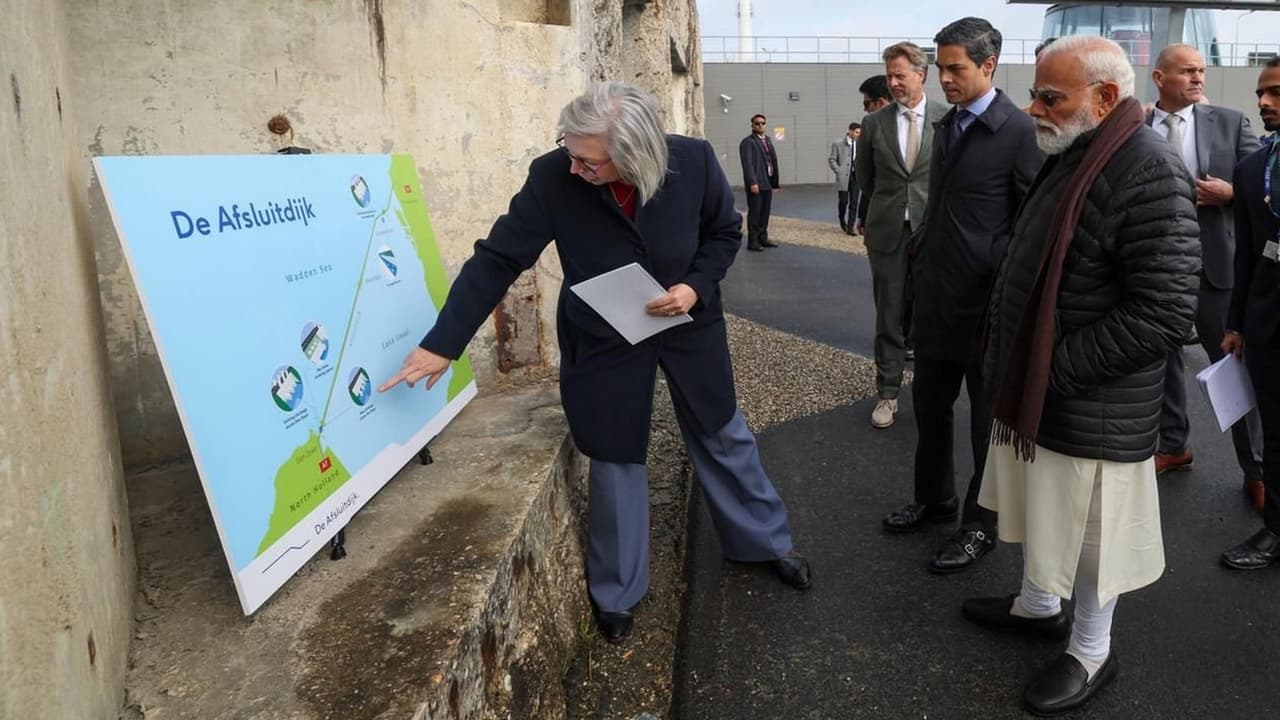
Due to the efforts of Prime Minister Narendra Modi, the possibility of Gujarat’s ambitious Kalpsar project getting new momentum has increased. During his visit to Netherlands, the Prime Minister along with Netherlands Prime Minister Rob Jetten visited the world famous water management structure ‘Afsluitdijk’. During this, he described the modern technologies used there as useful for India. The special thing is that there are many technical similarities between this project of Netherlands and the Kalpsar scheme of Gujarat.
In the presence of the Prime Minister, a Memorandum of Intent (MoU) was also signed between the Ministry of Jal Shakti of India and the Ministry of Infrastructure and Water Management of the Netherlands. Due to this, the hope of getting technical support to the Kalpsar project as well as speeding up its work has increased.
Kalpsar project will become a long term solution to Gujarat’s water crisis
Gujarat has been struggling with problems like irregular rains and drought for a long time. The situation improved significantly after the construction of Sardar Sarovar Dam, but depending on only one project is considered risky for the future. With this thinking in mind, the then Chief Minister and current Prime Minister Narendra Modi had envisioned the Kalpasar Project in the Gulf of Khambhat.
However, this scheme is considered technically very complex. It has been challenging to complete due to many aspects like huge dam construction in the sea, water conservation and energy production. Despite this, the state and central governments are continuously making efforts towards making it a reality.
What is Kalpsar Project of Gujarat?
Under the Kalpsar project, a huge dam will be built on the Gulf of Khambhat, which will conserve the water of seven rivers flowing into the sea. The objective of this scheme is to create a huge freshwater reservoir by retaining the salt water of the sea.
The project involves integrated development of irrigation, tidal energy generation and transportation infrastructure along with water conservation. In the year 2004, the then Chief Minister Narendra Modi had launched the marine survey in Bhavnagar, after which work on the outline of the project started.
In recent years, international cooperation regarding the project has also increased. On March 30, 2026, in Gandhinagar, Chief Minister Bhupendra Patel met Netherlands Ambassador Marisa Gerrards to discuss the Indo-Dutch Expert Group and G2G partnership.
Gujarat will get big benefits from Kalpsar project
After the completion of Kalpsar project, about 10 lakh hectare area in 42 tehsils of 9 districts of Saurashtra region will get irrigation facility. This is likely to bring a big change in agricultural production. A major advantage of the project is the reduction in distance between South Gujarat and Saurashtra. The present journey of about 240 kilometers will be reduced to about 60 kilometers.
Apart from this, there is a possibility of producing about 1500 MW wind energy and 1000 MW solar energy from this scheme. Tourism, fisheries and transport sectors are also expected to get big benefits from this.
Netherlands’ technical role is important in Kalpsar project
Many international institutions have contributed to the DPR and technical studies of the Kalpasar project. The world famous Dutch organization ‘Royal Haskoning’ has provided important technical assistance, especially on ‘Closure Methodology’. The Netherlands has world-class expertise in the field of marine dams and water management. In such a situation, this cooperation between India and Netherlands can prove to be decisive in taking forward this ambitious project of Gujarat.
What is the Afsluitdijk Project?
‘Afsluitdijk’ is counted among the most famous engineering projects of the Netherlands. This approximately 32 kilometer long barrier dam separates the North Sea from the freshwater lake. The main objective of this dam, built about 80 years ago, is flood control and water conservation. It works to protect the low-lying areas of the Netherlands from sea floods.
The biggest feature of this project is that it creates a huge freshwater reservoir inside by blocking the salt water of the sea. Along with this, shipping, road connectivity and renewable energy production are also linked to it. This is why it is considered the ideal model of water management in the world.
Kalpsar project gets new hope from PM Modi’s vision
Prime Minister Narendra Modi has long been giving priority to big and long-term development projects. While being the Chief Minister of Gujarat, he gave impetus to the Sardar Sarovar Project and now efforts are being made to take the Kalpsar Project forward in the same manner.
The project has been delayed due to technical challenges and environmental complications, but the Prime Minister has remained optimistic about it. The inspection of Afsluitdijk during the visit to Netherlands and the technical cooperation agreement signed between the two countries have indicated that the central government is serious about this project.
According to India’s Ministry of External Affairs, this cooperation reflects the shared commitment of both the countries in the fields of water management, climate adaptation and sustainable infrastructure development.
Gujarat is now going to get the benefit of Netherlands’ decades of experience and modern technical expertise. It is believed that this will be of great help in getting the Kalpsar project off the ground and a new chapter will start in the field of water management and development of Gujarat.