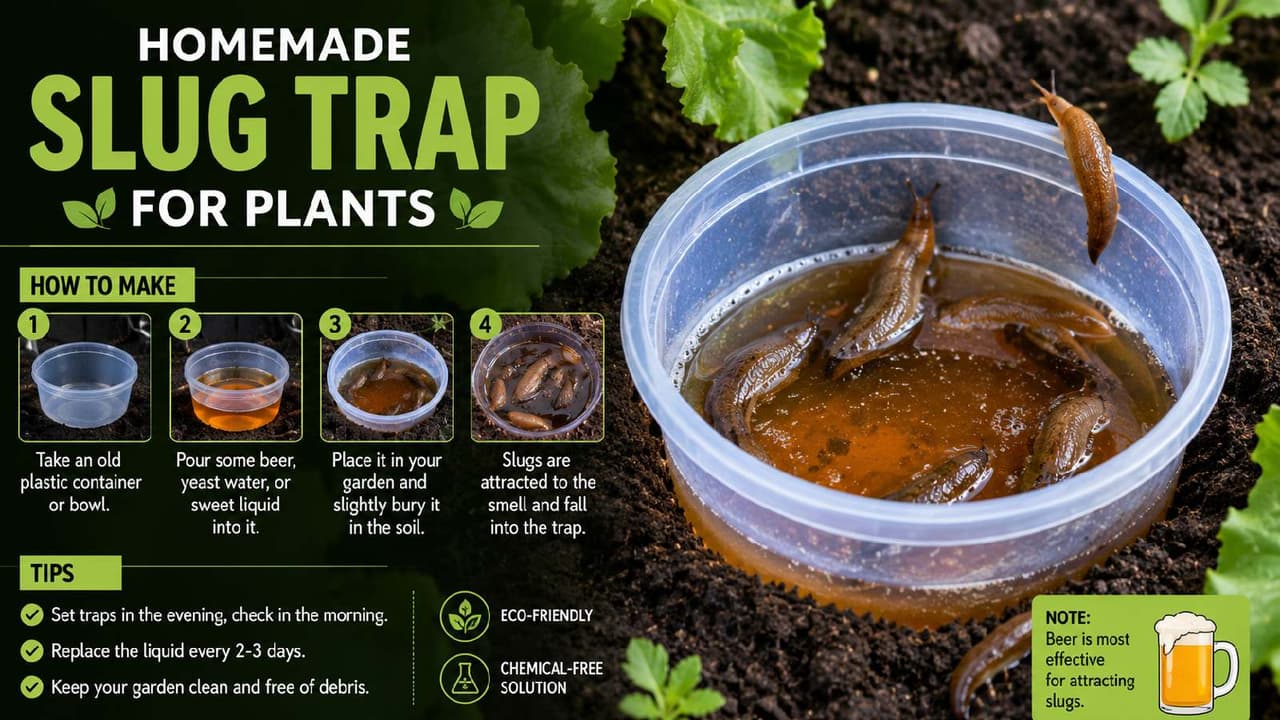
Slug Trap for Plants: Insects like slugs and snails damage the leaves of plants rapidly. In such a situation, a homemade slug trap made with the help of old plastic boxes can prove to be an easy, cheap and chemical-free way to control these insects.
Plastic Container Slug Trap: If the leaves of plants in the kitchen garden start getting cut or having holes overnight, the reason for this is often insects like slugs and snails. These small insects gradually damage the plants and stop new growth. In such a situation, instead of using expensive chemicals, you can prepare an easy slug trap with the help of old plastic boxes lying in the house. This method is considered cheap, eco-friendly and very effective.
Why are slugs and snails dangerous?
Slugs and snails grow rapidly in moist areas. They eat soft leaves of plants especially at night. If these are not controlled in time, small plants can get completely damaged.
Make a trap like this from a plastic box
Pour some beer, yeast water or sweet solution into an old plastic container or bowl. Now keep it pressed lightly in the soil near the plants. Its smell attracts slugs and they get trapped in it.
Also read- Self Watering Plants: Automatic system will work for 15 days! Make plant ‘water bank’ at home
right time to set trap
It is always considered more effective to set slug traps in the evening. Slugs are more active at night, so many insects get trapped in them by morning. This method works better in rainy or very humid weather.
Keep cleanliness around plants
Slugs often hide under wet leaves, dry grass, and garbage. Therefore it is important to maintain cleanliness around the plants. Do not allow too much water to accumulate in pots or beds, this reduces the number of slugs.
Also read- Garden Pond Ideas: Make a beautiful mini pond in the garden, 6 DIY ideas without digging
You will get benefits without chemicals
This homemade slug trap is considered a completely natural method. Due to this, harmful chemicals do not affect the plants and the vegetables also remain safe. This solution can prove to be very useful for those adopting organic methods in the kitchen garden.