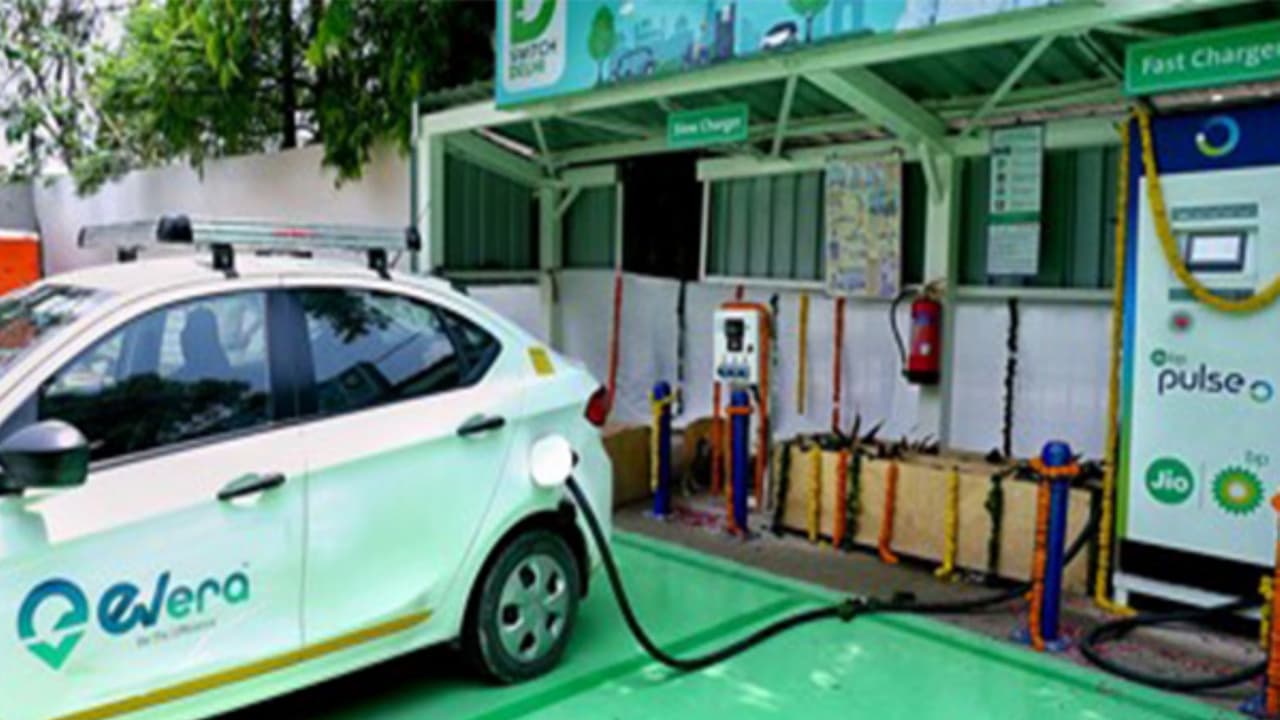
The Centre says its EV policy is comprehensive, combining demand-side schemes like FAME-II and PM E-DRIVE with supply-side reforms like PLI for Auto and ACC to strengthen domestic manufacturing and accelerate the transition to clean mobility.
The Centre on Tuesday said its electric vehicle (EV) policy extends well beyond purchase incentives by combining demand-side support with structural reforms aimed at strengthening domestic manufacturing, technology adoption and institutional capacity to accelerate the country’s transition to clean mobility.
In a written reply to a question in the Lok Sabha, Minister of State for Heavy Industries Bhupathiraju Srinivasa Varma said, “While demand-side schemes like FAME-II and PM E-DRIVE focus on reducing upfront costs, the institutional framework is strengthened through supply-side Production Linked Incentive (PLI) schemes for the Automobile and Advanced Chemistry Cell (ACC) sectors, which mandate high technology adoption and Domestic Value Addition (DVA).” The Minister added that “the Phased Manufacturing Programme (PMP) establishes a structural roadmap for indigenisation by requiring the domestic manufacturing of critical EV components over time.”
Financial Outlay for EV Transition
The government said the transition to electric mobility is being backed by significant public spending on both market creation and manufacturing capacity. According to the reply, the FAME-II scheme concluded with a total outlay of Rs 11,500 crore, while its successor, the PM E-DRIVE scheme, has been launched with an allocation of Rs 10,900 crore. On the manufacturing side, the PLI Scheme for Automobile and Auto Components has a budgetary outlay of Rs 25,938 crore, while the PLI Scheme for Advanced Chemistry Cell (ACC) Battery Storage carries an allocation of Rs 18,100 crore.
Policy Scope and Future Targets
Responding to whether the new policy framework is more comprehensive, the Minister said, “Yes, the new policies are comprehensive. They address demand as well as supply side of manufacturing of EVs.”
The government, however, clarified that it has not fixed any specific target for the number of electric vehicles on Indian roads by 2047.
Broader Ecosystem and State-Level Initiatives
The reply said EV adoption is being promoted through multiple central schemes, including FAME India Phase-II, PM E-DRIVE, the PLI schemes for automobiles and ACC batteries, the PM e-Bus Sewa-Payment Security Mechanism (PSM) with an outlay of Rs 3,435.33 crore, and the Scheme for Promotion of Manufacturing of Electric Passenger Cars in India (SPMEPCI).
The Centre further informed Parliament that several states, have notified dedicated EV policies to complement central initiatives. However, since the Ministry of Heavy Industries’ schemes are demand-driven, no state-wise allocation of funds is made, the reply added.
(Except for the headline, this story has not been edited by Asianetnews Editorial staff and is published from a syndicated feed.)