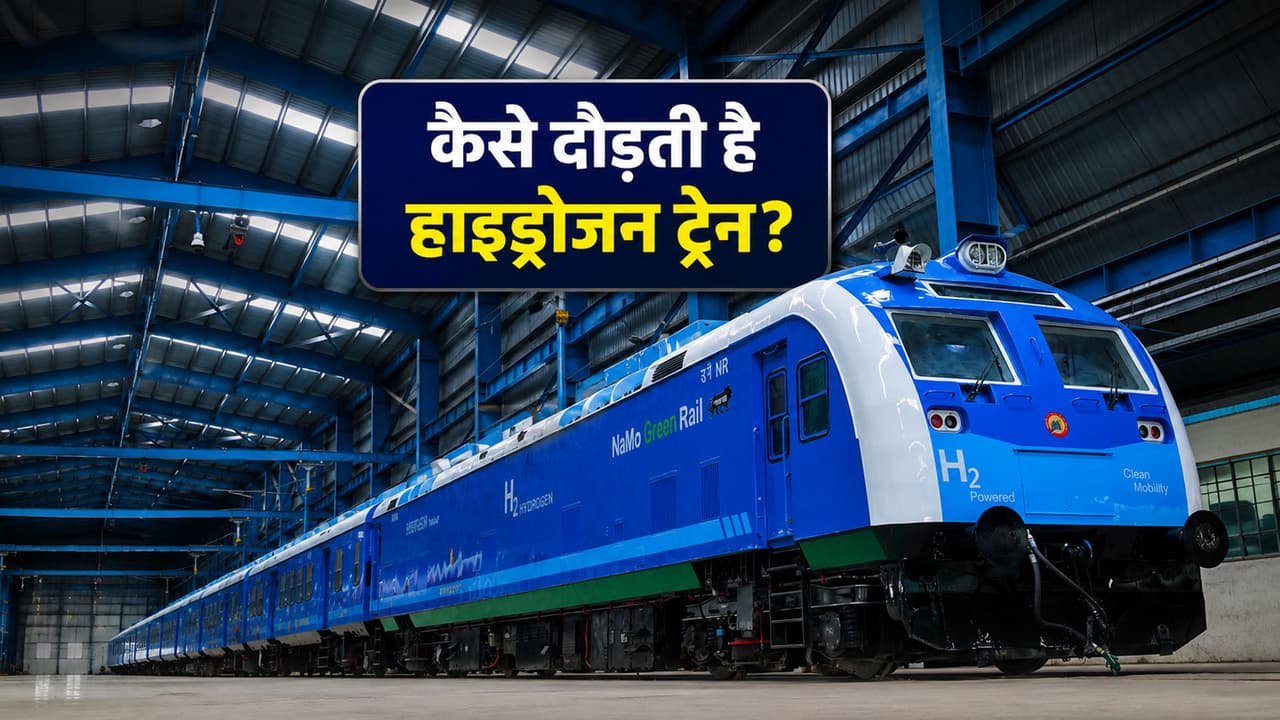
Hydrogen Train in India: India’s first hydrogen train will start from Jind today. Know electrolysis, fuel cell, green hydrogen, its technology, advantages and challenges…
India’s First Hydrogen Train: Today, 17th July, is a very special day in the history of Indian Railways. The country’s first hydrogen train is going to start from Jind station in Haryana. To run this train, neither diesel nor overhead electric wires are required. It generates its own electricity and releases only water vapor instead of smoke while running. If you remember electrolysis read in 10th class science book, then this is the same technology by which hydrogen train will run. Know what is Hydrogen Train, what is its connection with 10th Chemistry…
Where will the first hydrogen train run in India?
India’s first hydrogen train will run on a route of about 89 kilometers between Jind and Sonipat in Haryana. This train will make two round trips in a day. The total journey will be around 356 kilometers. The train will have a seating capacity of about 2600 passengers. The train will carry about 440 kg of hydrogen, out of which about 300 kg of fuel is expected to be used daily.
What is hydrogen train?
Hydrogen train is a train which runs by generating electricity from hydrogen gas. It has a fuel cell system instead of diesel engine. Hydrogen and oxygen of air mix together in fuel cell. This process generates electricity, which runs the train motor. Its biggest advantage is that it does not emit carbon smoke. In the end only water and some heat is left.
What is the connection with 10th Chemistry?
You must have read in school that water (H₂O) combines with two gases to form hydrogen and oxygen. If electric current is passed through water, it again breaks into these two gases. This process is called electrolysis. Today this technology is being used in the world to make green hydrogen. That is, the experiment which was once in school books, is now becoming the new strength of Railways.
How was hydrogen discovered?
The story of hydrogen is about 250 years old. In 1776, British scientist Henry Cavendish identified a new gas during an experiment. Later French scientist Antoine Lavoisier named it Hydrogen. Hydro means water and Gen means born. That is, gas formed from water.
How does a fuel cell generate electricity?
The tank is filled with hydrogen. Oxygen is taken from outside air. Both are found in the fuel cell. This creates electricity. This electricity runs the motor of the train. In this entire process, no smoke comes out, but only water vapor is produced. This is why it is called ZET (Zero Emission Technology).
If it’s so good, why doesn’t every train run on hydrogen?
The real challenge is not in running the train, but in making and storing hydrogen. According to experts, about 50 units of electricity can be spent in making 1 kg of hydrogen. It has to be stored under very high pressure. This requires a separate fueling station and special security arrangements. At present its cost is more than both battery and diesel. That means the technology is great, but not cheap yet.
Where in the world do hydrogen trains run?
Many countries of the world have worked on hydrogen trains. Germany launched the first commercial hydrogen passenger train in 2018. Japan started its testing in 2022. China and America are also working on this technology. However, some countries later started giving priority to battery trains considering them more economical.
Why is it important for India?
India is currently working rapidly on the Green Hydrogen Mission. On routes where laying power lines is difficult or diesel engines cause more pollution, hydrogen trains may become a better option in the future. If this experiment on Jind-Sonipat route is successful, then in the coming time, such trains can be seen on many other railway routes also.
Source: Indian Railways, Ministry of Railways, The Indian Express
Disclaimer: This article has been prepared on the basis of Indian Railways, Ministry of Railways, available official information and media reports such as The Indian Express and other public sources. These are subject to change from time to time as per actual operations, technological changes or government decisions. For any official announcement or update, please visit the official website and notices of Indian Railways and related government departments.