Indian Navy has trained 516 personnel from Mauritius’ National Coast Guard over 9 years, boosting the island nation’s ability to protect its vast ocean resources. With over 10% of Mauritius’ GDP linked to the blue economy, this support is vital. Training, joint exercises, and infrastructure projects together help improve maritime security.
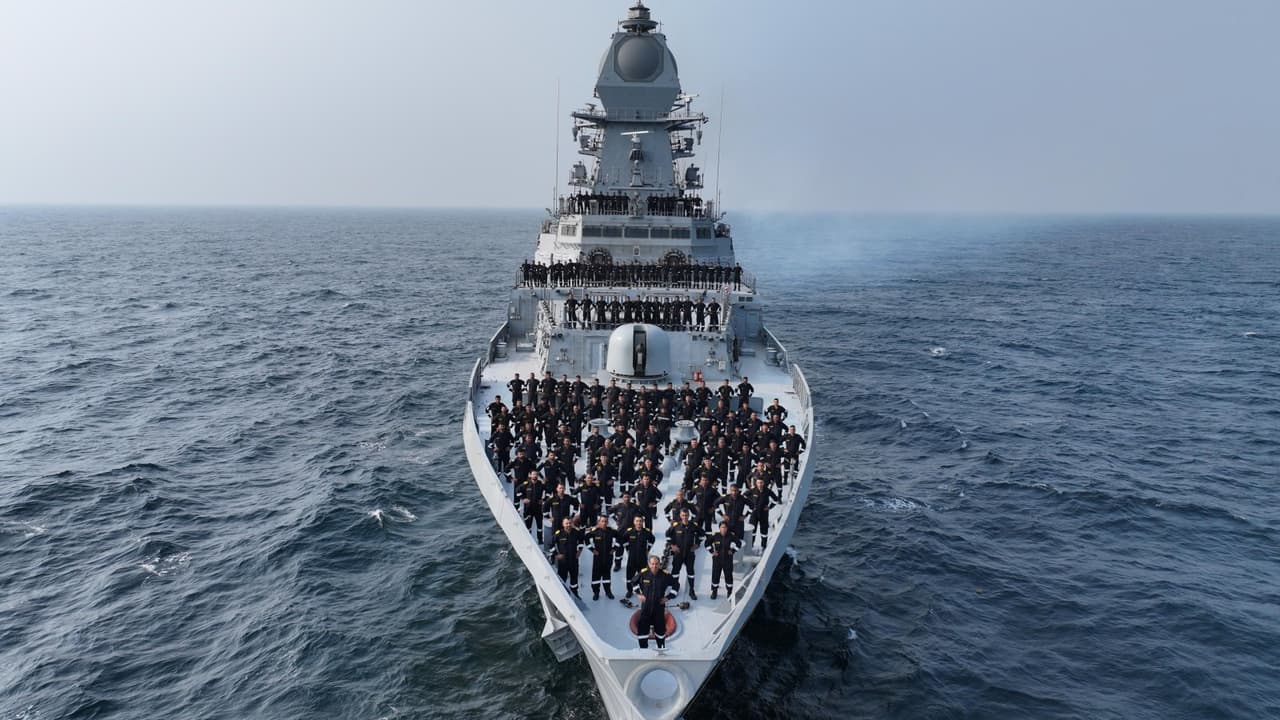
New Delhi: The Indian Navy has trained 516 personnel from the Mauritius National Coast Guard, reflecting its growing role in strengthening maritime capacity in the island nation. This support is closely linked to the security of Mauritius’ blue economy, which is vital for its growth and livelihoods. The recent visit of INS Trikand to Port Louis in the second week of March further highlighted this partnership, combining training efforts with operational engagement at sea.
The figure that Mauritius’ planners return to when making the case for maritime security investment is not strategic — it is economic.
Blue economy
More than ten percent of the country’s GDP flows from the blue economy. Around 10,000 jobs, outside the tourism sector alone, depend on the health and security of Mauritian waters. These are not abstract interests to be weighed against geopolitical considerations; they are the material basis of ordinary economic life on the island. Understanding this makes the visit of INS Trikand to Port Louis in the second week of March legible in a way that pure security framing does not quite capture.
The ship arrived as Mauritius celebrated its 58th Independence Day and 34th year as a republic — Indian naval personnel marched in the March 12 parade, the ship’s band played, and a helicopter flew overhead. These are the ceremonial elements that signal political commitment.
The more economically relevant work happened below deck, in the training sessions that Mauritius National Coast Guard personnel attended aboard the frigate. Watchkeeping skills, firefighting procedures, damage control drills — these build the human capacity that converts equipment into capability. India has invested substantially in the equipment side: the interceptor boat C-139, the Dornier aircraft, and the coastal surveillance radar systems. But hardware without trained operators produces coverage gaps that the operators of illegal fishing vessels and drug trafficking boats are adept at finding. The training deployment addresses this.
The scale of what Mauritius must monitor is the defining fact of its maritime security situation. An EEZ of 2.3 million square kilometres, patrolled by a coast guard whose resources are finite, requires both technological assistance and the kind of operational support that India provides through joint exercises like the one INS Trikand conducted with CGS Valiant after leaving Port Louis on March 13.
Passage Exercise and joint EEZ surveillance
The Passage Exercise and joint EEZ surveillance that followed the port call are not ceremonial. They are the means by which Mauritius stretches its monitoring capacity across an ocean that dwarfs its land area by a factor of roughly one thousand.
India’s training investment in the region is most visibly documented in the Mauritius figure — 516 National Coast Guard officers over nine years. But the same approach is applied, at different intensities, across the Indian Ocean littoral. The logic is consistent: train the officers of partner navies in Indian institutions and aboard Indian ships, and you build professional relationships that serve multiple purposes simultaneously. They create interoperability for joint operations. They shape the institutional cultures of partner services. They produce, over time, networks of senior officers who understand how India operates and are comfortable working alongside it.
The Agaléga Island airstrip and jetty, inaugurated in early 2024, added physical infrastructure to this partnership, enabling faster response times to incidents in Mauritius’ outer islands.
India’s assistance with hydrographic surveys has improved the mapping of Mauritian waters, with implications for navigation, port development, and the sustainable management of marine resources.
The Information Fusion Centre for the Indian Ocean Region provides the data-sharing backbone that turns bilateral exercises into multilateral maritime awareness. India’s support for Mauritius on the Chagos Archipelago issue and its rapid response to Cyclone Chido in December 2024 sit within the same framework — a relationship that India has invested in across all dimensions simultaneously, not treating security as separable from diplomacy or economic interest.
The MAHASAGAR vision is explicit about this: maritime security and growth are presented as linked conditions, not competing priorities.
When INS Trikand sailed out of Port Louis, the blue economy of Mauritius continued its daily operations: fishing vessels at sea, container ships on approach, and coast guard patrols scanning an ocean whose security is ultimately a shared responsibility. The training week had ended. Its results would take longer to measure, and they would show up not in press releases but in the quiet, unspectacular competence of officers who had learnt their trade alongside one of the Indian Ocean’s most experienced navies.