
Summer means mango season, but be careful when you’re buying them. Here are some simple tips to spot chemically ripened mangoes and keep your family safe.
How to Identify Fake Mangoes: Summer is here, and the markets are flooded with mangoes. We all love bringing home kilos of this delicious fruit, but hold on. The mangoes you’re buying might be artificially ripened using harmful chemicals like calcium carbide and ethylene oxide.
Eating these mangoes can be very dangerous, leading to serious health issues like food poisoning, stomach aches, and even cancer. To help you out, we’ve put together some essential tips to identify these chemically treated mangoes.
How to Spot a Chemically Ripened Mango
An Instagram page called professordrbrajpaltyagi shared a video with a great tip. It shows how you can easily identify a chemically ripened mango. The trick is to check the pores on the top part of the fruit. If you see a black liquid oozing out, it’s a big warning sign that it might be chemically ripened. If these black spots don’t wash off, it’s almost 100% certain that the mango was treated with chemicals. It’s best to avoid buying such mangoes.
Other Ways to Identify a Real Mango
Check the Colour
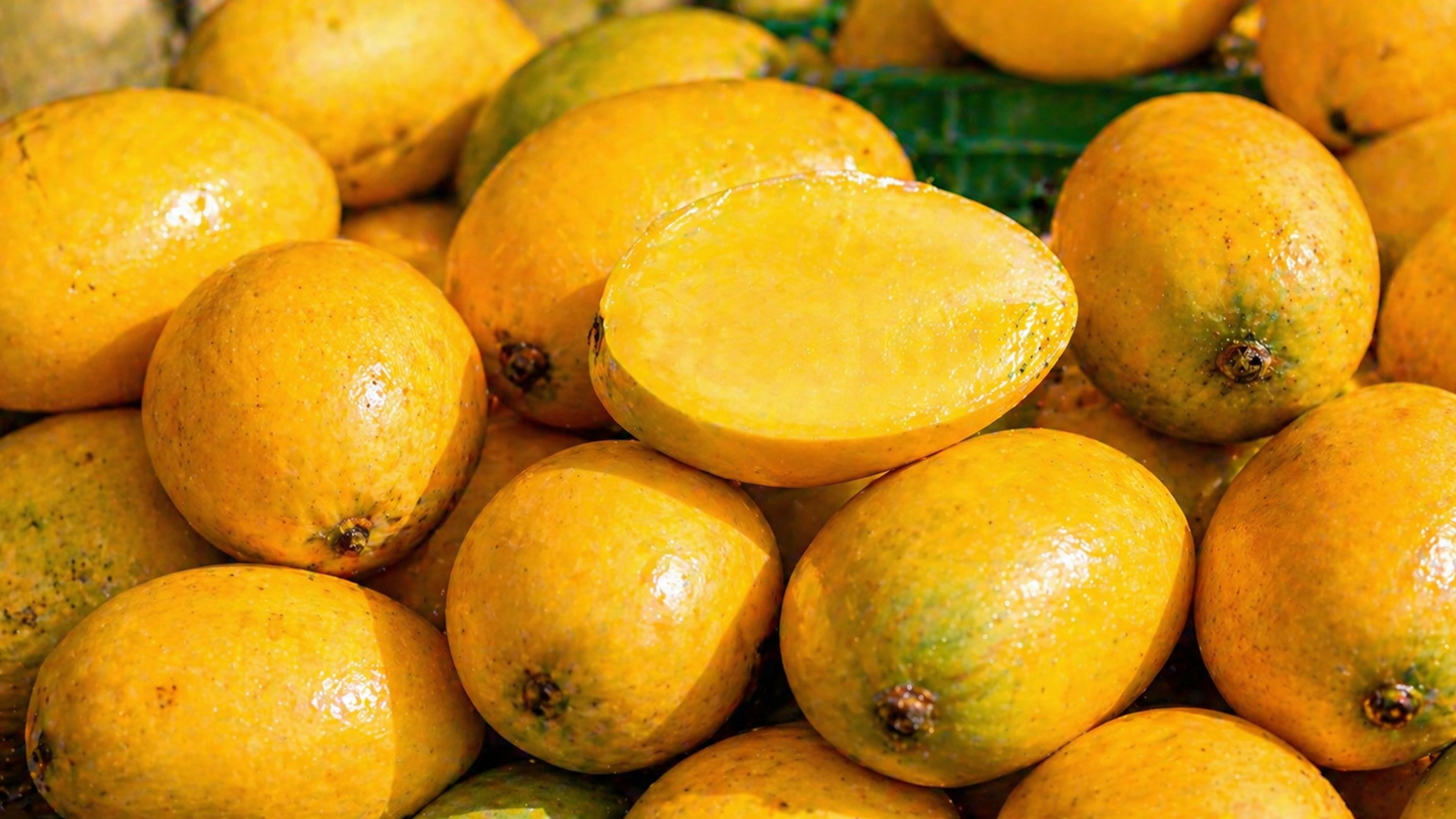
A chemically ripened mango often looks perfectly yellow on the outside but is pale or whitish inside. A naturally ripened mango will have a mix of light green and yellow shades, while the chemical one will look unnaturally bright and yellow.
Trust Your Nose
A naturally ripened mango has a sweet, fresh fragrance. A chemical-laced one will have very little smell, or even a strange, unpleasant odour. Always smell the mango before you buy it.
Pay Attention to the Texture
Gently press the mango. A chemically ripened one might feel soft on the surface but will be hard inside. A natural mango feels uniformly soft all over.
Try the Water Test
You can also use water to tell a real mango from a fake one. If a mango sinks in a bucket of water, it’s likely natural. But if it floats, there’s a high chance it has been ripened with chemicals.