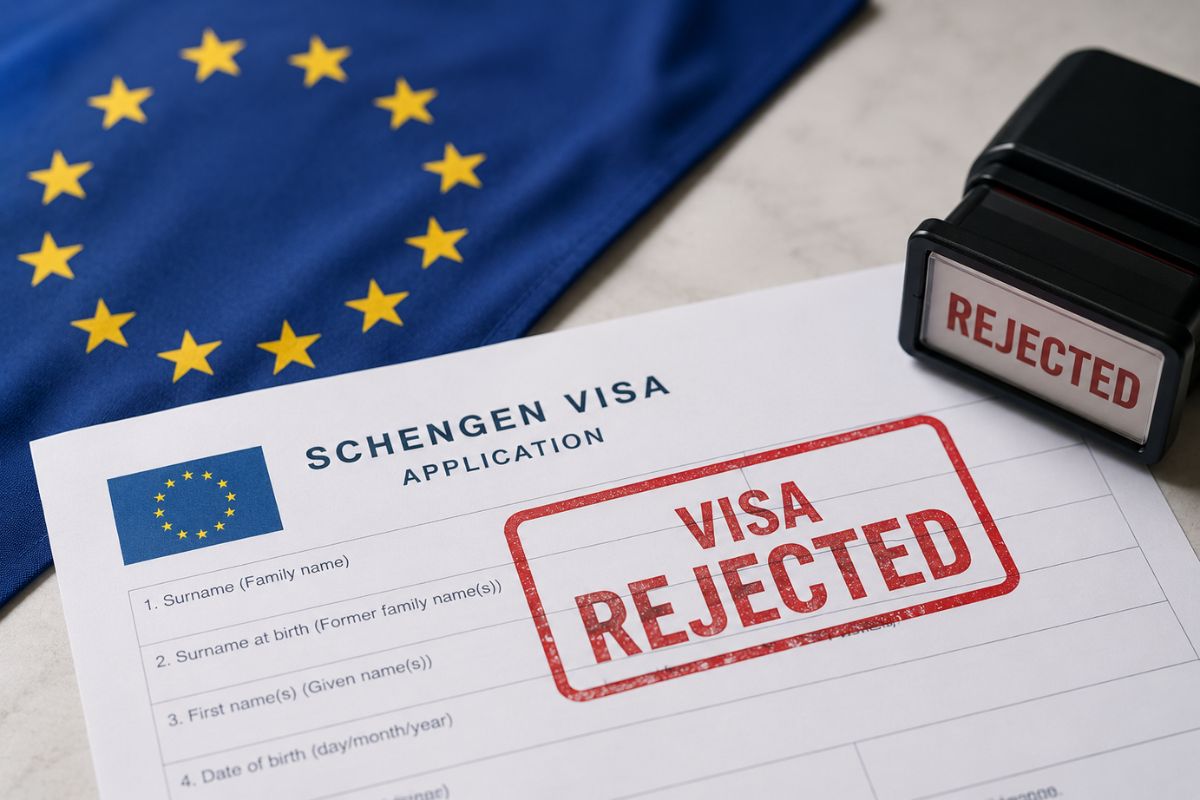
According to the latest European Commission data, Schengen states processed close to 12 million Schengen visa applications in 2025, a 1.8% rise from the previous year, yet refusal rates have barely budged at 14.8%.
For Indian passport holders, who remain among the top five applicant nationalities globally alongside China, Turkey, Russia, and Morocco, the gap between a strong application and a rejected one often comes down to paperwork quality and country choice.
These 10 Schengen Countries Have the Highest Visa Rejection Rates
When it comes to Schengen visa rejections, a clear pattern emerges. Smaller countries and destinations facing seasonal tourism surges often apply tougher checks, while larger visa-processing hubs tend to focus more on documentation and application accuracy.
Here are the 10 Schengen countries most likely to reject your visa application in 2026.
High risk (>22%)
Moderate (18–22%)
Lower (<18%)
1. Malta (38.4% Rejection Rate)
Malta tops the list with the highest Schengen visa rejection rate in 2025. While the country is a popular Mediterranean holiday destination, its consulates tend to be particularly cautious when processing applications during busy travel seasons.
- A weak travel itinerary or vague purpose of visit can raise red flags.
- Incomplete hotel reservations and flight bookings may affect approval chances.
- Strong financial documents are especially important when applying for Malta.
2. Belgium (26.1% Rejection Rate)
Belgium is known for closely reviewing every part of a visa application. A mismatch between documents, even a minor one, can lead to delays or refusal.
- Bank statements, employment records, and travel plans must align perfectly.
- Applicants should ensure dates and details are consistent across all documents.
- Clear proof of accommodation and sufficient funds is essential.
3. Estonia (24.6% Rejection Rate)
Estonia remains one of the more challenging Schengen countries for visa approval. The country places considerable emphasis on security checks, particularly for business and short-term professional visits.
- Clearly explain the purpose of your trip.
- Business travellers should provide invitation letters and supporting documents.
- Any gaps in documentation can lead to additional scrutiny.
4. Sweden (23.3% Rejection Rate)
Swedish authorities pay close attention to an applicant’s financial situation and ties to their home country. They want to see clear evidence that travellers can support themselves during their stay.
- Stable employment and regular income strengthen an application.
- Strong financial records can improve approval prospects.
- Proof of intent to return home is often carefully assessed.
5. Portugal (23.3% Rejection Rate)
Portugal attracts millions of visitors every year, especially during the summer season. This high demand often results in stricter checks and closer examination of applications.
- Submit a detailed travel itinerary covering your entire stay.
- Ensure hotel bookings and travel dates match your application.
- Missing or unclear documents can increase the risk of refusal.
6. Denmark (21.7% Rejection Rate)
Denmark has traditionally taken a careful approach to short-stay visa applications. First-time travellers often face more questions about their travel purpose and plans.
- Strong family, employment, or business ties to India can help.
- Consulates may look closely at return intentions.
- Financial stability remains a key approval factor.
7. Slovenia (21.4% Rejection Rate)
Although Slovenia receives fewer visa applications than larger Schengen countries, it maintains relatively strict screening standards. Accuracy and consistency matter a great deal.
- Double-check every document before submission.
- Ensure names, dates, and travel details match throughout the application.
- Even small inconsistencies can create unnecessary complications.
8. Croatia (18.5% Rejection Rate)
Since joining the Schengen Area, Croatia has become increasingly popular with international tourists. Growing demand has led to more detailed visa assessments, particularly during peak travel months.
- Submit complete financial and accommodation documents.
- A well-planned itinerary can strengthen your case.
- Apply early if travelling during the busy summer season.
9. Netherlands (17.7% Rejection Rate)
The Netherlands processes a large number of Schengen visa applications every year. Most refusals are linked to documentation issues rather than concerns about the applicant personally.
- Missing paperwork is a common reason for rejection.
- Travel plans should be clear, realistic, and fully documented.
- Sufficient financial proof is essential for approval.
10. Norway (15.7% Rejection Rate)
Norway has the lowest rejection rate among the countries on this list, but applicants should not assume approval is guaranteed. Authorities still expect a complete and convincing application.
- Clearly explain the purpose of your visit and planned activities.
- Provide evidence of sufficient funds for the entire trip.
- Travel insurance and accommodation proof are mandatory.
What This Means for Indian Travellers
With more than half of all Schengen visas now issued as multiple-entry visas, Europe remains accessible for Indian passport holders. However, refusal rates vary sharply across countries, making strong documentation more important than ever.
Choosing the right destination and preparing a complete application can often make the difference between approval and rejection.
Travelobiz Take
We see these rejection rates as a reminder that paperwork matters as much as travel intent. I believe well-prepared Indian applicants still have strong approval prospects across most Schengen destinations.
Follow and connect with us on Facebook, Twitter, LinkedIn, Instagram and Google News for the latest travel news and updates!