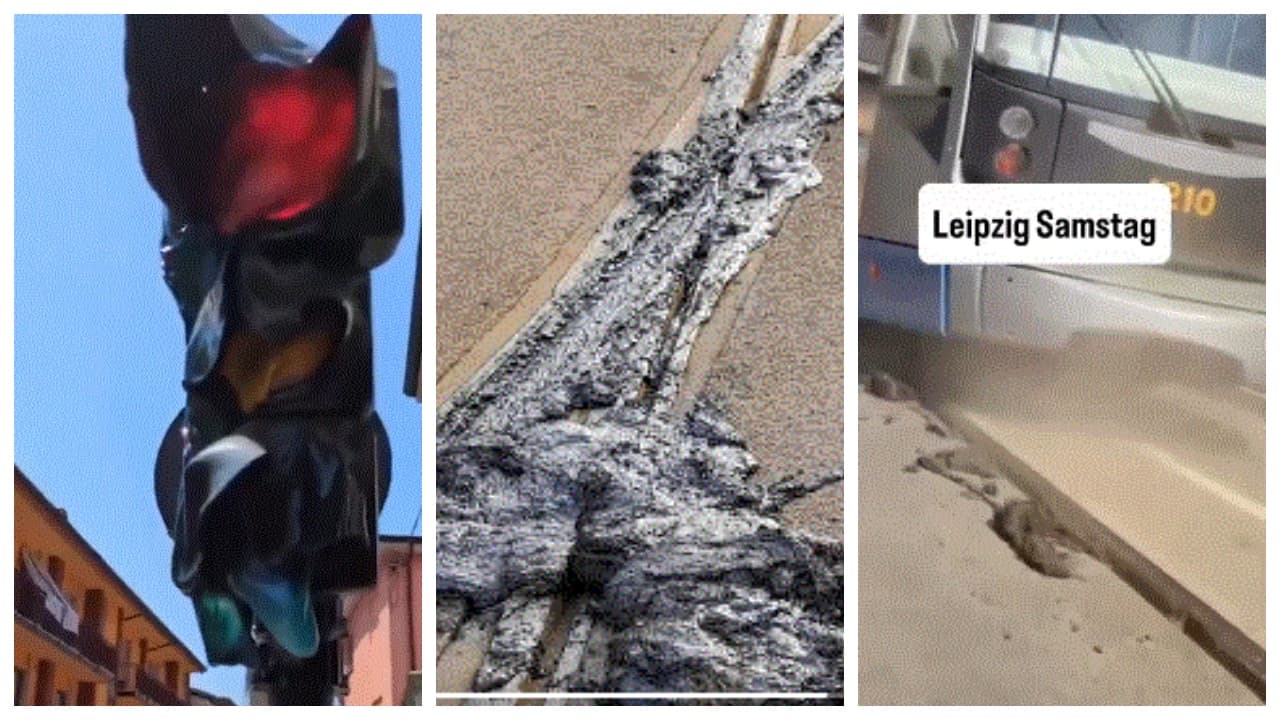
Europe is battling a severe heat wave, with temperatures crossing 40°C. This ‘silent killer’ has caused more than 1500 deaths. Due to ‘Heat Dome’, life and infrastructure has been badly affected in many countries including France and Germany.
London: Europe, which is known for its harsh cold, is today scorching in the worst heat wave in history. Normal life has come to a complete standstill as the temperature crosses 40 degrees Celsius. More than 1500 people have died across Europe due to this deadly heat that has been continuing for the last one week. More than 1,300 deaths have been recorded in France alone. It is a matter of concern that this number of deaths may increase further. The World Health Organization (WHO) has described this heat of Europe as a ‘silent killer’.
According to scientists, behind this deadly heat are atmospheric phenomena like ‘Heat Dome’ and ‘Omega Block’. In this situation, hot air gets trapped under a dome and is unable to come out. This prevents the air from rising and cooling, due to which clouds cannot form and the heat increases wildly. Apart from France, the situation is very bad due to heat in Germany, Britain, Poland, Czech Republic and Netherlands. At the same time, countries like Spain, Italy, Greece and Portugal are struggling with forest fires. Red alert has been issued in 18 cities of Italy including Rome, Venice and Milan.
The extreme heat has also shaken Europe’s healthcare system. The number of patients in the emergency wards of hospitals in Paris, Rome, Venice and Milan has increased by one-third. The biggest victims of this heat are the elderly above 65 years of age and people living in care homes. Europe’s major rivers, such as the Danube and the Po, are beginning to dry up. In the initial phase, many deaths occurred among people who went swimming in rivers and lakes to get relief from the heat. As the situation worsens, schools and tourist places in France have been temporarily closed.
This extreme heat has brought not only humans but also the modern infrastructure of Europe to its knees. The concrete roads of Germany’s famous ‘Autobahn’ highway cracked due to the heat, after which they had to be closed. Railway tracks were diverted and a large number of trains were cancelled. In France, about 36,000 homes lost power due to storms and lightning that followed the extreme heat. Production at Hungary’s Paks nuclear plant and some nuclear plants in France has been reduced because the temperature of the river water used to cool the reactors has risen.
Officials have advised people to drink plenty of water, avoid direct sunlight and go out of the house only if absolutely necessary in the afternoon. However, the Meteorological Department estimates that there may be rain and thunderstorms in Western European countries in the coming days, which will provide some relief from the heat. But now this heatwave is moving towards Central Europe, which has become a cause for new concern.