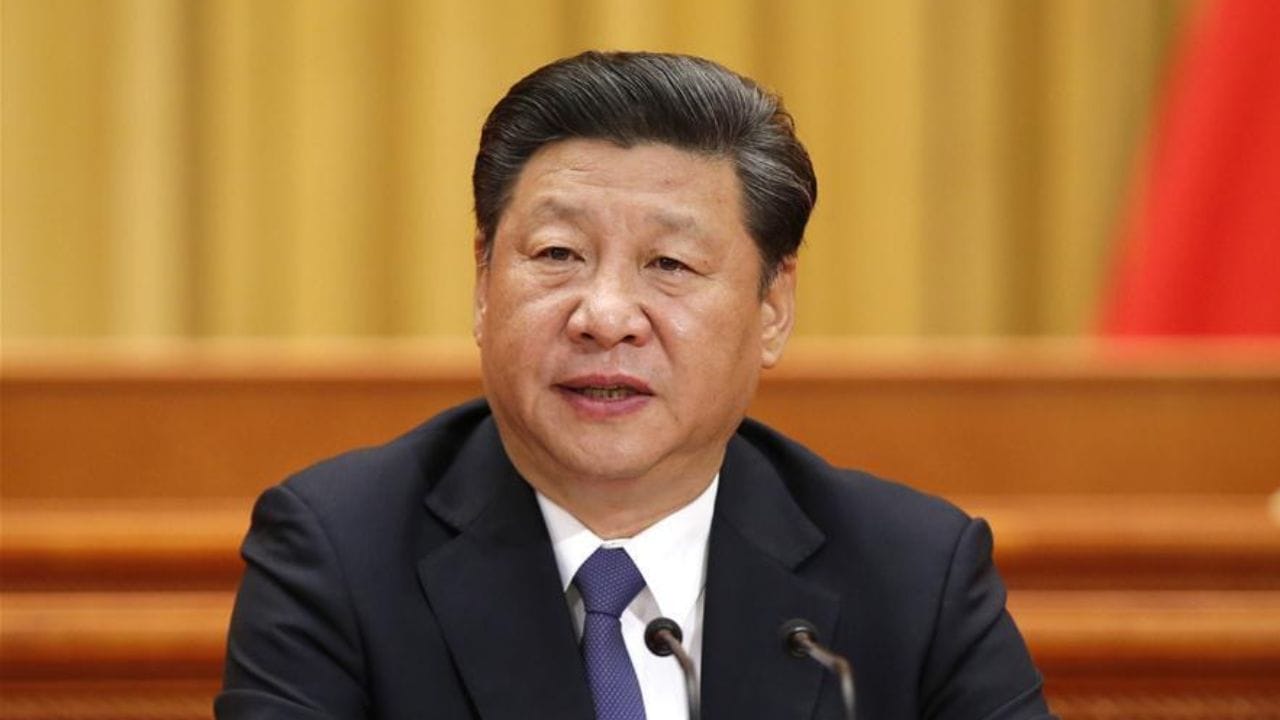
Xi Jinping (Photo- China Govt)
According to an official survey released on Sunday, there has been no significant increase in China’s factory growth in May. This raises the question that for how long will the country’s economy be able to save itself from the consequences of the ongoing Iran war and the pressure on demand. According to the National Bureau of Statistics, the official Manufacturing Purchasing Managers’ Index (PMI) declined to 50 from 50.3 in April. The PMI, measured on a scale of 0 to 100, has a reading above 50 indicating expansion (growth), while a reading below 50 indicates contraction (declining).
Decline in new orders
The sub-index of new orders fell to 49.9 from 50.6 in April, while the sub-index of production fell slightly to 51.2 from 51.5 in April. The sub-index of raw material stocks fell to 48.6 from 49.3 in April. The global energy crisis arising from the Iran War has had less impact on China than many other countries. Other countries are facing inflationary pressure, oil prices have increased due to the closure of the Strait of Hormuz. In times of peace, one-fifth of the world’s oil is transported through this route. Experts say that China has sufficient reserves of oil and diverse sources of energy, with the help of which the world’s second largest economy has been almost completely safe from the effects of this war.
Exports remain strong
HSBC Bank’s Chief Asia Economist Frederick Newman wrote in a research note last week that even though the energy crisis remains the biggest challenge for Asia, China is largely safe from it due to its strong energy security system. Meanwhile, HSBC said exports still play an important role for China’s broader economy. China’s exports to the US have declined year-on-year in most months of the past year, but its global exports remain strong, especially to Europe and South-East Asia.
Expectations of improvement in exports increased
After President Donald Trump’s meeting with Chinese leader Xi Jinping in Beijing in mid-May and the agreement between the two countries to create separate boards for trade and investment, expectations of improvement in exports to the US have increased. Exports related to automobiles, technology and artificial intelligence are helping to boost export growth. But some economists are also pointing to some concerns regarding the broader economy. Domestic demand has remained sluggish due to the years-long slowdown in the property sector, which has badly affected consumer confidence and investment.
GDP growth target
Robin Shing, Morgan Stanley’s chief China economist, wrote in a research note last week that domestic demand is lagging, but high-end manufacturing and exports are holding the position. Chinese leaders have set a target of 4.5 percent to 5 percent annual economic growth for this year. This is the lowest target since 1991, although it is slightly less than the target of about 5 percent set for 2025. Morgan Stanley said China is still likely to meet its 2026 target, but lower oil prices and uncertainties over global oil supply will be the main factors that will determine which direction the situation may take.