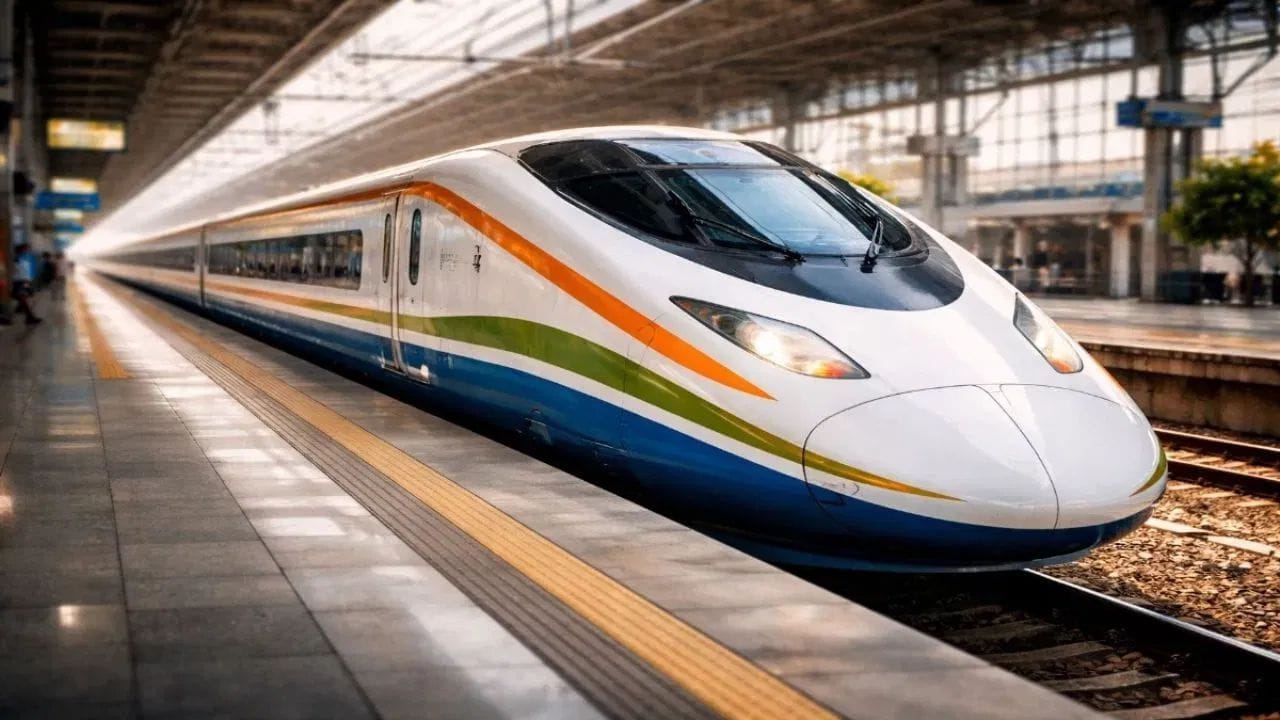
bullet train
India is now going to take a big step towards becoming self-reliant in bullet train technology. Indian Railways is developing its own indigenous high-speed rail signaling and control system for the country. Its name will be Bharat Train Control System (BTCS). This system will be designed according to Indian needs and conditions, which will reduce the dependence on foreign technology to a great extent for the nearly 7,000 km long bullet train network to be built in the future.
According to senior railway officials, BTCS will be developed on open-source technology. This will keep its cost low and it can be easily used as per the needs of different high-speed rail projects across the country. Officials say that in future this technology can be made available to other countries also.
Experience will be gained from Mumbai-Ahmedabad project
Indian Railways will use the experience gained from the Mumbai-Ahmedabad High-Speed Rail (MAHSR) project in developing this new system. Currently, European Train Control System (ETCS) Level-2 is being installed in this project. This signaling system is capable of safely operating trains at speeds up to 350 kilometers per hour.
In June last year, the National High Speed Rail Corporation Limited (NHSRCL) had awarded the signaling contract worth about Rs 4,100 crore for the Mumbai-Ahmedabad Bullet Train project to a consortium of India’s Dineshchandra R Aggarwal Infracon and Germany’s Siemens.
Plan for new corridor will be ready by 2027
According to officials, the design and route plan of the proposed new bullet train corridor in the country is expected to get final approval by mid-2027. After this, the process of expansion of high-speed rail network in the country may accelerate further.
Railways believes that by developing its own control system, Indian companies will also get a big opportunity to develop high-speed rail equipment and technology. This will boost domestic manufacturing and technical capacity in the railway sector.
There was discussion about Japanese technology
The Mumbai-Ahmedabad Bullet Train project is being built in collaboration with Japan. However, it adopts European ETCS Level-2 signaling instead of Japan’s Digital Automatic Train Control System. Recently, former Japanese Minister Hideki Makihara had raised questions on this issue.
Railway officials say that the trains of Japanese company Hitachi are fully compatible with the ETCS system. If Japanese companies make suitable proposals in the future, India will also be ready to consider the option of adopting the Japanese signaling protocol.
India’s aim is not only to run bullet trains but also to become self-reliant in important technologies related to it. BTCS is being considered an important initiative in this direction, which can become a strong foundation of the country’s high-speed rail network in the coming years.