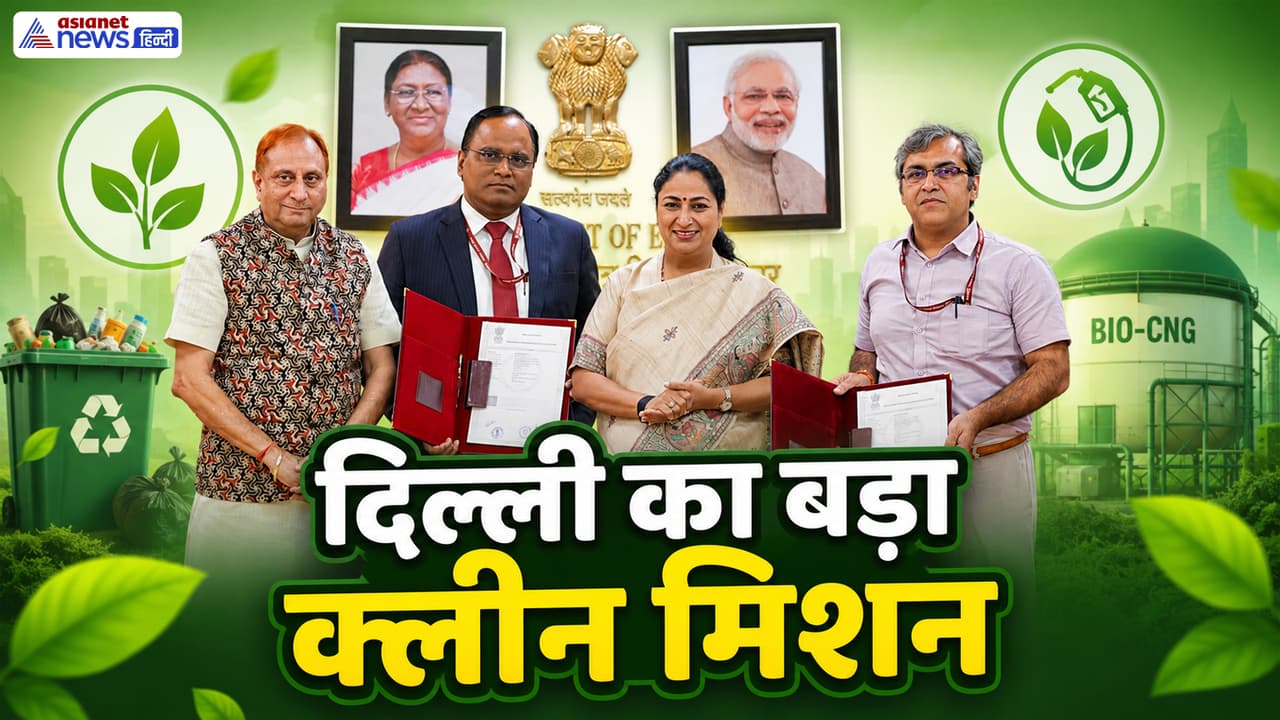
MoU signed between MCD and Oil India in Delhi. Bio-CNG plants of 800 TPD capacity will be set up in Tehkhand and Okhla, which will produce gas and fertilizer from waste.
A big step has been taken towards making Delhi garbage free and clean. An important Memorandum of Understanding (MoU) was signed between the Municipal Corporation of Delhi (MCD) and Oil India Limited in the presence of CM Rekha Gupta. Under this agreement, state-of-the-art Compressed Bio-Gas (CBG) plants will be established in Tehkhand and Okhla areas of the capital.
Delhi government says that this project will not be limited to just disposal of waste, but will also play an important role in converting it into a resource. The government is considering this as an important phase of the ‘Waste to Wealth’ campaign.
Scroll to load tweet…
800 TPD capacity plants will change the picture of waste management
According to the agreement, the total capacity of the bio-CNG plants to be established in Tehkhand and Okhla will be 800 tonnes per day (TPD). In these plants, bio-CNG and organic fertilizers will be prepared by processing the organic waste separated at the source level. The objective of this initiative is to scientifically dispose of the large amount of wet waste generated daily in Delhi. Along with this, clean energy production will be promoted and agriculture and green development will also benefit through organic fertilizers.
Campaign to reduce Garbage Mountains will get new strength
Delhi has been struggling with the problem of huge garbage mountains like Ghazipur, Bhalswa and Okhla for a long time. The government believes that processing organic waste instead of sending it directly to landfill will reduce the pressure on the mountains of waste. After the commissioning of the Bio-CNG plant, a large amount of organic waste can be converted into useful products even before it reaches the landfill sites. This will increase the lifespan of the landfill and also reduce environmental pollution.
Focus on clean energy production and environmental protection
A major goal of the project is to promote green energy production in Delhi. Bio-CNG prepared from organic waste can be used as a clean fuel, which will reduce dependence on traditional fossil fuels. Apart from this, the organic manure produced from the plant will prove useful in agriculture and horticulture activities. This will help in striking a strong balance between waste management and environment protection.
Scroll to load tweet…
Delhi’s big step towards ‘waste to wealth’
Linking this initiative to Delhi’s sustainable development goals, Chief Minister Rekha Gupta said that modern technology-based waste management is necessary to make the capital a clean, green and sustainable city. He said that the Delhi government is working on the ‘Waste to Wealth’ model, where waste will not be seen as a problem but as a resource.
The government believes that this project, being started in partnership with MCD and Oil India Limited, will simultaneously advance the three goals of cleanliness, energy security and environmental protection in the capital.
Why is this project important for Delhi?
According to experts, such projects that convert organic waste into energy and fertilizer are among the most effective systems of urban waste management. This not only reduces pressure on landfills but also reduces greenhouse gas emissions. The proposed bio-CNG plants in Tehkhand and Okhla can play an important role in giving Delhi a new identity in the field of clean energy production, scientific waste disposal and environmental sustainability.