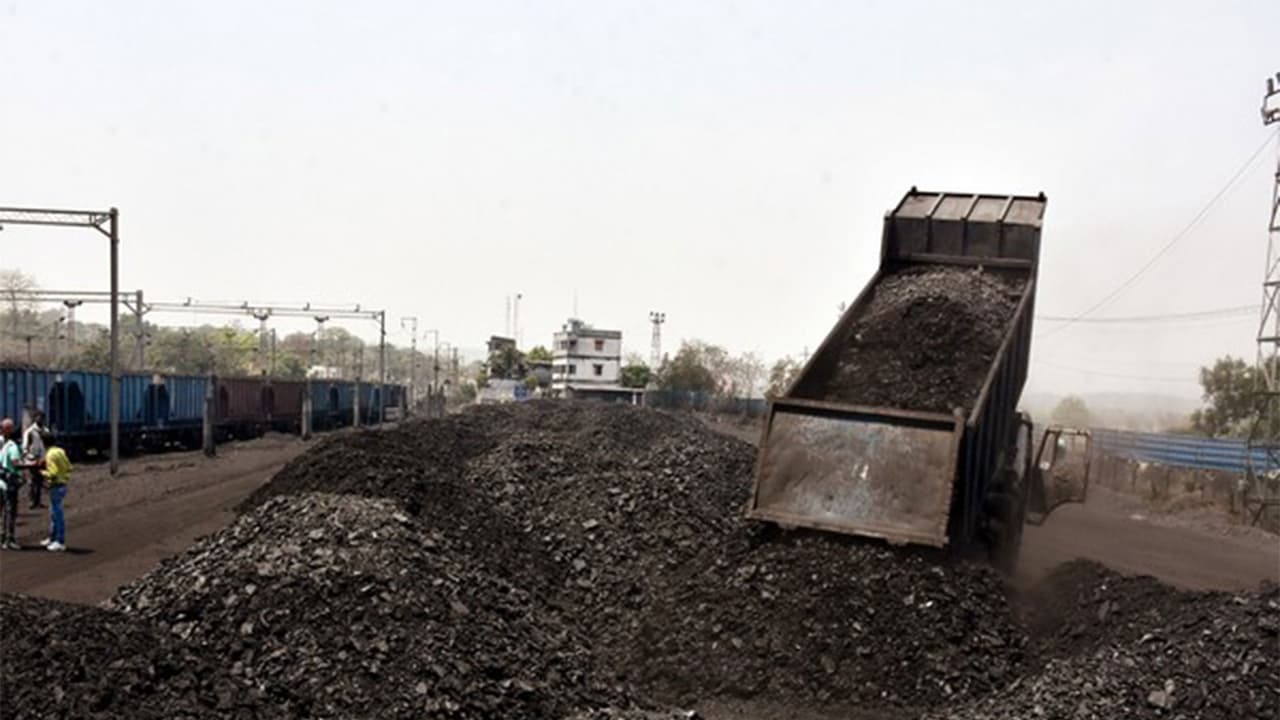
Of the 139 First Mile Connectivity (FMC) projects initiated by the government, 72 have become operational, with a capacity of 589 MTPA. The Coal Ministry aims to take the total capacity to 1,319 MTPA by 2029-30. Railway transportation is being promoted under the Integrated Coal Logistics Plan.
New Delhi [भारत]July 20 (ANI): Out of 139 First Mile Connectivity (FMC) projects initiated by the government, 72 projects have become operational with a total capacity of about 589 metric tonnes per annum (MTPA). Whereas, the remaining 67 projects are in various stages of implementation, tender and planning. According to the Coal Ministry, these initiatives aim to install a total capacity of 1,319 million tonnes per annum (MTPA) by FY 2029-30.
This information was given by Union Minister of State for Coal and Mines Satish Chandra Dubey in a written reply in the Rajya Sabha today. “The Coal Ministry has launched an Integrated Coal Logistics Plan in collaboration with the Ministry of Railways, Ministry of Power and Ministry of Road Transport and Ports,” the ministry said in a statement. “The scheme aims to develop a technology-enabled, cost-effective, and robust logistics ecosystem to improve multimodal transportation and reduce the overall cost of coal reaching end consumers,” the release further said.
Coal Logistics Plan and Railway Projects
Under the Coal Logistics Plan and Policy, 2030, progress is being made towards the targets for FY 2029-30. Of the eight railway projects earmarked for coal evacuation, five have been commissioned, and the remaining three are planned to be commissioned by FY2028. Additionally, the Ministry of Coal identified 33 important projects which have been taken up by the Ministry of Railways for future coal evacuation.
Major challenges faced in coal transportation
The official reply highlighted the major challenges faced during transportation of coal. “The major constraints identified in the movement of coal from mines to end-use sites include: (i) inadequate rail capacity and congestion on some high-density routes; (ii) delays in approvals, land acquisition, forest and environment clearance and execution of railway projects,” the release said.
The release further said, “(iii) operational constraints related to availability, placement and turnaround of railway rakes; (iv) road congestion and environmental concerns associated with coal transportation through trucks; and (v) constraints in developing alternative modes such as rail-sea-rail, inland waterways and coastal shipping, including availability of suitable terminals and last-mile connectivity.”
Steps taken to deal with the challenges
To overcome these constraints, the Ministry of Coal regularly reviews important railway and FMC projects with the Ministry of Railways, coal companies, State Governments and other concerned agencies. The strategic objectives under the integrated plan include increasing the share of coal transportation through railways to 75 per cent by FY 2030, as well as promoting coastal shipping and inland waterways to reduce dependence on road transport.
To facilitate rail-sea-rail (RSR) movement, Coal India Limited reduced the performance incentive for supply of coal in excess of the annual contract quantity from 40 per cent to 20 per cent. “These initiatives have contributed to increased coal evacuation capacity, improved loading efficiency and more reliable movement of coal from mines to consumers,” the release noted.
It further said, “The expansion of rail connectivity and close coordination between the Ministry of Coal, Ministry of Railways, coal companies and power sector stakeholders has facilitated continuous coal dispatch and timely supply to power plants and other consuming sectors.” (ANI)
(Except for the headline, this story has not been edited by Asianetnews Editorial staff and is published from a syndicated feed.)