Over the past decade, the Indian sporting ecosystem has quietly undergone a shift. Inspired by the rise and razzmatazz of the Indian Premier League, multiple disciplines have ventured into the franchise league model.
From kabaddi and kho kho to badminton, hockey, rugby, and even new-age sports like pickleball, competitions once confined to federation calendars are now being transformed into prime-time properties – altering how they are played, packaged, and consumed.
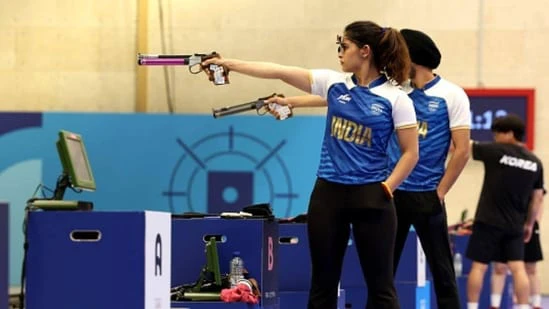
That experiment has now arrived at one of its most unlikely frontiers: shooting.
The Shooting League of India (SLI) is not just another addition to this ecosystem. In many ways, it is the most ambitious test yet of whether a league format can fundamentally reimagine a sport that has traditionally resisted spectacle.
Because unlike other sports that have successfully made the leap, shooting starts from a very different place.
Kabaddi and kho kho bring raw physicality. Football, badminton, and tennis carry familiarity. Pickleball found an audience even before its formal structure, thanks to social media. Shooting, however, has none of these advantages. It is a sport of stillness, precision, and margins invisible to the naked eye.
Which is precisely why its transition into a television product demands something more than repackaging.
“We are not simply repackaging shooting – we are redesigning it for a broadcast audience,” said Kalikesh Narayan Singh Deo, president of the National Rifle Association of India.
Reimagining the sport
At the core of this redesign is a shift in how shooting is experienced.
Traditionally an individual, technique-driven discipline, the SLI will present it as a team-based contest, one that introduces narrative, rivalry, and continuity across matches.
The league will feature mixed team events across pistol (10m, 25m), rifle (10m, 50m 3-positions), and shotgun (trap, skeet). Six teams of 12 players each will be divided into two pools, followed by knockout rounds.
Players will be drafted across four categories, elite champions, world elite, national champions, and junior/youth, ensuring a balanced mix within each franchise.
“By bringing together multiple disciplines within a single match, introducing team strategy, and creating identifiable franchise identities, we are shifting the focus from isolated performances to a collective, high-pressure contest,” Deo explained.
To further enhance its appeal, the league is also set to introduce spectator-friendly innovations.
Concepts such as ‘Distraction’ – featuring loud music and shifting lights – will test the focus of air rifle shooters, while ‘Brave the Elements’ will simulate crosswinds and rain for shotgun events, adding an extra layer of unpredictability.
 The timing of a transition
Launched in 2024, the SLI has already seen multiple scheduling shifts, from an initial March 2025 window to later timelines, with its debut now expected this year.
Despite the delays, the NRAI maintains that the timing is deliberate.
“India has emerged as one of the strongest shooting nations globally, with a deep pipeline of talent across senior and junior levels,” Deo said. “However, what has been missing is a structured, commercially viable platform that connects this excellence to a wider audience.”
That gap – between global success and domestic visibility – has long defined Indian shooting. The country consistently produces world champions and Olympic medallists, yet its athletes remain largely invisible outside marquee events.
The SLI, therefore, positions itself as more than just a competition.
“As the NRAI completes 75 years, SLI represents a natural next step – moving from success at the elite level to building a sustainable ecosystem that supports athletes, engages fans, and attracts investment into the sport,” he added.
Selling silence
The central question remains: can a sport built on silence translate into something that resonates with a mass audience?
The answer, according to the league’s architects, lies as much in presentation as in structure.
Beyond format changes, the NRAI is working on technical innovations – immersive camera angles, real-time data insights ranging from shot metrics to heart-rate tracking, and gamified graphics – aimed at making the viewing experience more engaging.
“Importantly, we are working closely with broadcast and production teams to ensure that the viewing experience is intuitive and engaging – from simplified scoring presentation to enhanced visual storytelling,” Deo said.
This is where the league model exerts its greatest influence. It forces sports to rethink not just how they are played, but how they are seen.
Yet, the intent is not to dilute the sport.
“This allows us to retain the precision and excellence of the sport, while making it accessible and compelling for a mainstream television audience, beyond just Olympic moments,” he said.
Getting everyone on board
Even the most successful leagues in India faced early resistance. The IPL itself took years to materialise, while the Pro Kabaddi League required sustained effort to gain stakeholder confidence.
For shooting, clarity of vision appears to have been key.
“What resonated most with stakeholders is that SLI is being built with a clear long-term vision and structure,” Deo said. “This is not a short-term, event-led initiative – it is designed as a sustainable sports property.”
From a franchise perspective, the league offers ownership and the opportunity to build a new sporting category. For athletes, it promises increased exposure, financial support, and access to high-performance environments alongside international shooters.
“Crucially, stakeholders also recognise that shooting offers a differentiated product – precision, pressure, and moments of high intensity – which, when presented correctly, has strong potential as a television and digital sport,” he added.
The ultimate test
At one level, the SLI offers visibility – a stage for India’s accomplished shooters beyond the Olympic spotlight, and an entry point for emerging talent.
At another, it is testing something more fundamental.
Whether a sport so deeply rooted in precision and quiet can successfully adapt to a format built on narrative, pace, and audience engagement.
If it works – if viewers begin to follow teams, anticipate match-ups, and respond to moments that once passed in near silence – it could redefine not just the future of shooting in India, but the outer limits of what a sports league can achieve.