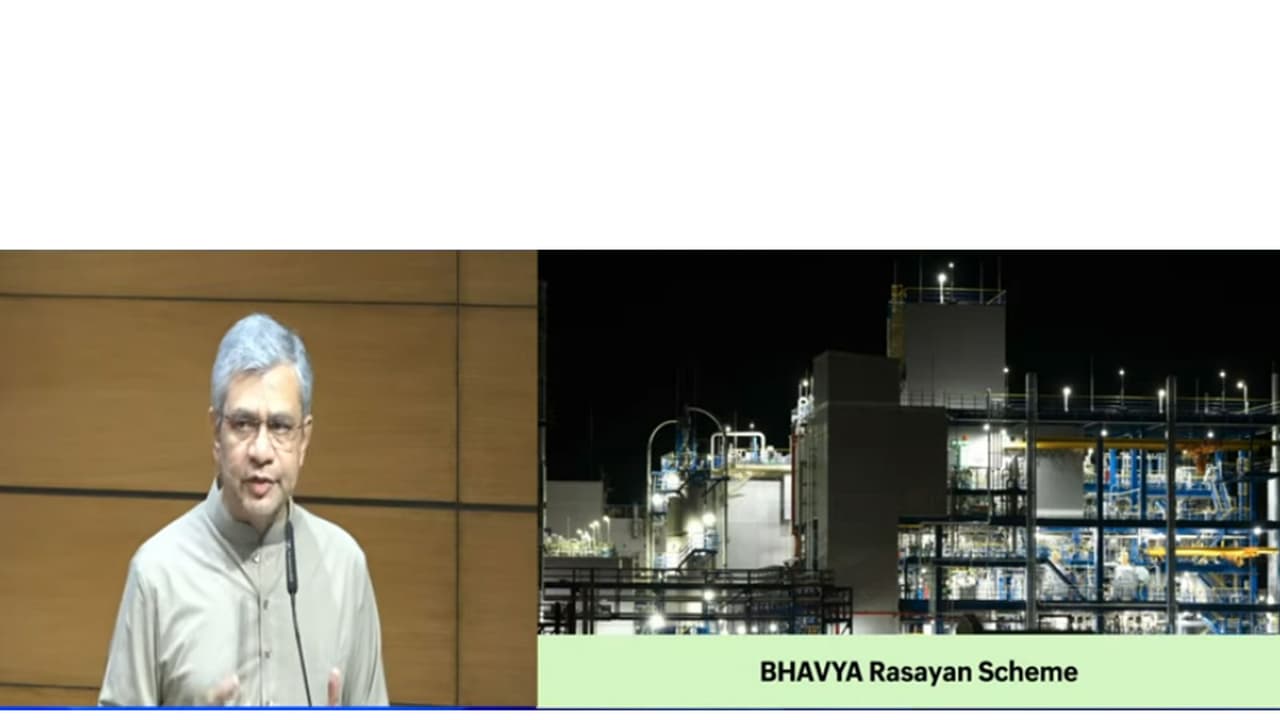
The Union Cabinet has approved the Rs 3,030 crore BHAVYA Rasayan scheme to set up three dedicated chemical parks. The five-year scheme aims to boost domestic manufacturing, attract investment, and make India’s chemical industry globally competitive.
BHAVYA Rasayan Scheme Approved with Rs 3,030 Crore Outlay
The Union Cabinet on Friday approved the Bharat Audyogik Vikas Yojana Rasayan (BHAVYA Rasayan) scheme with a financial outlay of Rs 3,030 crore to establish three dedicated chemical parks across the country, aiming to strengthen domestic manufacturing, attract investments and improve the global competitiveness of India’s chemical industry. Union Minister Ashwini Vaishnaw announced the Cabinet’s decision during a media briefing following the Cabinet meeting on Friday.
According to an official Cabinet release, the scheme, which was announced in the Union Budget for FY2026-27, will have a total outlay of Rs 3,030 crore, including Rs 3,000 crore for developing common infrastructure and basic utilities inside the parks and Rs 30 crore towards administrative expenditure. The scheme will be implemented over five years, from FY2026-27 to FY2030-31.
Funding and Park Development
The Cabinet said the Centre will provide a grant of up to Rs 1,000 crore for each chemical park, subject to a minimum contribution of Rs 500 crore by the respective state government. “The Centre would provide a grant of up to Rs. 1,000 crore per park. This will be subject to a minimum contribution of Rs.500 crore by the concerned State Government,” the release said.
The release said the three chemical parks will be developed by state governments through a challenge-based selection process, with each park spread across at least 8 square kilometres (2,000 acres) of contiguous, encumbrance-free land.
Infrastructure and Facilities
The parks will offer plug-and-play industrial infrastructure, including Common Effluent Treatment Plants (CETP), Treatment, Storage and Disposal Facilities (TSDF), water supply systems, solvent recovery and distillation units, steam generation and distribution networks, interconnected pipelines, and logistics and warehousing facilities.
Economic Impact and Competitiveness
Highlighting the expected impact of the scheme, the Cabinet said it “will promote development of the Chemical industry along the whole value chains including upstream, downstream and ancillary industries promoting efficient utilization of resources, leading to lower logistics cost.” It added that shared infrastructure “will lead to enhanced cost competitiveness and will make the Indian Industry globally competitive.”
The government also said the scheme would help integrate India’s chemical industry into global supply chains. “It will help the Indian Chemical industry better integrate in Global Value Chains leading to greater exports and higher import substitution,” the release said.
Environmental Sustainability
The Cabinet further said the parks would support environmentally sustainable industrial development by creating “an environment friendly ecosystem” with centralised facilities such as CETPs, hazardous waste management infrastructure and treatment, storage and disposal facilities, enabling better compliance with environmental regulations.
Investment, Employment and National Goals
According to the release, the scheme is expected to attract both domestic and foreign investment, increase domestic production capacity and generate employment, while supporting downstream industries including agriculture, textiles, pharmaceuticals, nutraceuticals, construction, automobiles and electronics.
“The development of Chemical sector will lead to a cascading effect through enhanced development of downstream sectors of the economy as well, thereby leading to higher employment generation and greater development of the economy, helping achieve the goal of Viksit Bharat @ 2047,” the Cabinet said. (ANI)
(Except for the headline, this story has not been edited by Asianetnews Editorial staff and is published from a syndicated feed.)