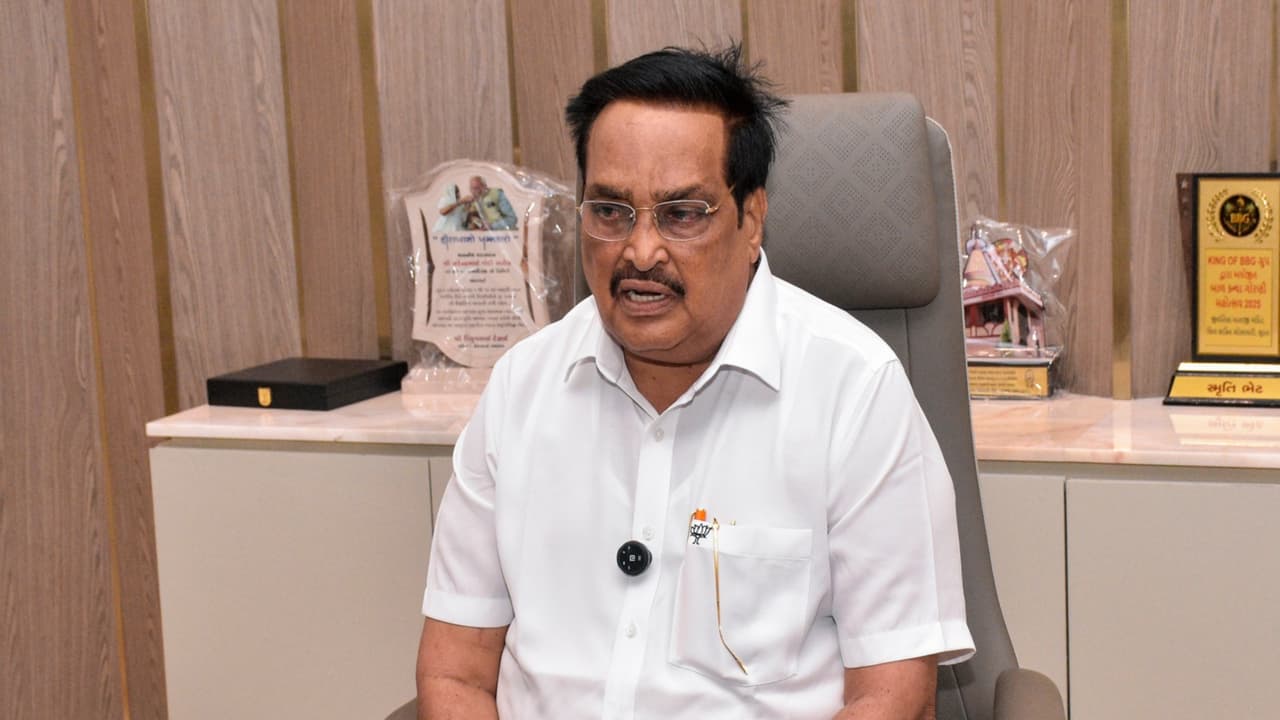
The 14th High-Powered Review Board meeting of the Brahmaputra Board, chaired by Union Minister CR Patil in Guwahati, reviewed river management progress and launched the State Water Reforms Framework to strengthen water governance across states.
The 14th Meeting of the High-Powered Review Board (HPRB) of the Brahmaputra Board was held on Tuesday at Guwahati under the chairmanship of Union Minister of Jal Shakti, CR Patil. According to an official statement, Union Cabinet Minister Sarbananda Sonowal, Minister of State Raj Bhushan Choudhary, Ministry of Jal Shakti, along with other Ministers, senior officials from the Centre and the North Eastern States, technical experts and stakeholders attended the meeting to review the progress of river basin management initiatives and provide strategic guidance for the future roadmap of the Brahmaputra Board. Calling it a ‘golden opportunity’ to utilise the rivers in Northeastern region, Union Minister Sonowal said, “This is a golden opportunity for us because through Brahmaputra Board, the utilisation of our river system in the northeastern region, from the mode of transportation to the best presentation of our projects – all of these were discussed today. Jal Shakti Minister CR Paatil organised this. I thank him especially for this.”
State Water Reforms Framework Launched
On the occasion, the Union Minister for Jal Shakti also launched the State Water Reforms Framework (SWRF), a landmark national initiative aimed at strengthening water governance reforms across States and Union Territories. Addressing the gathering, the Minister emphasised that water security is central to India’s development journey and a key pillar for achieving the vision of Viksit Bharat 2047. He stated that sustainable water management requires not only infrastructure creation, but also robust governance systems, sound policies, strong institutions, technological innovation and community participation.
HPRB Meeting Reviews Progress
As per the release, the HPRB meeting reviewed the progress of the Brahmaputra Board in the areas of river basin management, preparation and updation of masterplans, flood and erosion management, springshed rejuvenation, digital transformation, capacity building and institutional reforms. The HPRB appreciated the significant progress achieved by the Board over the last two years in strengthening integrated river basin planning and expanding technical support activities across the North Eastern Region and West Bengal.
During the meeting, detailed discussions were held on the preparation and updation of river basin masterplans using advanced technologies such as GIS, remote sensing, LiDAR and hydrological modelling. The Board informed that a total of 76 river basins and sub-basins have now been identified for preparation and updation of masterplans covering the Brahmaputra and Barak basins, said the release.
The HPRB also reviewed various ongoing and proposed projects related to flood management, anti-erosion works, drainage development, springshed management and water conservation initiatives in different states of the North Eastern Region. The Board highlighted major interventions being undertaken in Assam, Meghalaya, Mizoram, Manipur, Nagaland and Tripura in coordination with the respective State Governments.
Transformation of the Brahmaputra Board
As per the press release, the meeting deliberated upon the transformation of the Brahmaputra Board into a modern, technology-driven and knowledge-based River Basin Organization (RBO). In this regard, policy and strategic guidance was provided on organisational restructuring, strengthening of specialised technical units, digital governance initiatives and institutional reforms for improving efficiency, transparency and coordination.
NEHARI Revitalisation and Campus Redevelopment
The HPRB also reviewed the proposed revitalisation plan of the North Eastern Hydraulic and Allied Research Institute (NEHARI) to strengthen research, hydraulic studies, technical consultancy and capacity building activities in the region. Discussions were also held regarding the redevelopment of the Brahmaputra Board Office Complex at Basistha, Guwahati into a modern institutional campus aligned with future requirements, said the release.
Documentation of Traditional Water Practices
As part of the programme, the following books and documentaries on traditional water management practices of North East India were officially released: Traditional Water Management Practices of Northeast India – Resource Book, Traditional Water Management Practices of Northeast India – Picture Book, Paddy-cum-Fishery (Arunachal Pradesh) – Documentary, Dong System (Assam) – Documentary, Bamboo Drip Irrigation (Meghalaya) – Documentary, Bamboo Drip Irrigation (Meghalaya) – Documentary, Rainwater Harvesting (Mizoram) – Documentary.
As per the release, the HPRB appreciated the efforts of the Brahmaputra Board in documenting indigenous and sustainable water management practices of the region and emphasised the importance of integrating traditional knowledge with modern river basin management approaches.
Understanding the State Water Reforms Framework (SWRF)
The State Water Reforms Framework (SWRF), launched during the programme, is a reform-oriented governance framework developed by the Ministry of Jal Shakti to encourage and benchmark progressive water sector reforms across States and Union Territories. Embodying the spirit of cooperative federalism, the Framework has been designed in consultation with States and UTs, recognising water as a shared national resource that demands collective ownership, collaborative governance and joint accountability between the Centre and States and UTs, said the release.
The framework comprises 75 indicators across five dimensions, including Policy and Regulation, Project Monitoring, Digitalisation & R&D, Infrastructure, and Community Engagement. By establishing a transparent, evidence-based benchmarking system across these dimensions, SWRF simultaneously harnesses the power of competitive federalism by enabling States and UTs to learn from each other’s best practices, measure their performance against peers and strive for excellence in water governance. This healthy competition among States is expected to accelerate reforms, drive innovation and raise the overall standard of water management across the country.
According to the release, the framework seeks to encourage States and UTs to undertake measurable and verifiable reforms in critical areas such as groundwater regulation, floodplain zoning, wastewater reuse, dam safety, participatory irrigation management, river basin planning, data integration and institutional strengthening. It seeks to support States/UTs in identifying policy gaps, undertaking measurable reforms and adopting best practices for building resilient, accountable and water-secure governance systems aligned with the vision of Viksit Bharat 2047.
The launch of the Framework gives the States/UTs an advanced period of seven months, till 31st December 2026, to undertake key reforms and provide responses on the indicators by 31st January 2027.
The meeting concluded with a collective commitment towards strengthening inter-state coordination, sustainable river basin management and long-term water resource planning for the North Eastern Region and West Bengal. (ANI)
(Except for the headline, this story has not been edited by Asianet Newsable English staff and is published from a syndicated feed.)